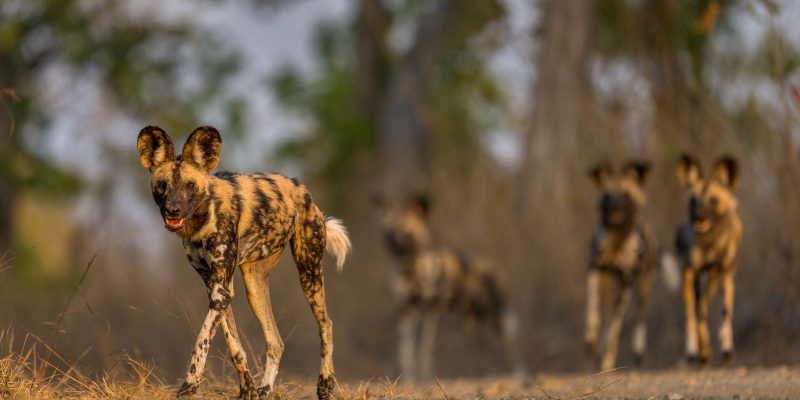
Twenty African wild dogs went into Matusadona National Park in February, in two established packs of six and fourteen, and they went into holding pens rather than straight onto the plain. That distinction is the whole operation, and six months later it is still the honest way to describe where the animals are.
The Zimbabwe Parks and Wildlife Management Authority and African Parks confirmed the translocation on April 24, 2026. The dogs were moved between February 15 and 17 into specialized holding facilities near Tashinga, inside the park, where the point is not containment but social repair: a soft release gives two packs time to settle, hold their bonds together and start building a territorial attachment to one patch of ground before anyone opens a gate. The species had been locally extinct at Matusadona for decades.
Twenty animals, two packs, one landscape that had none
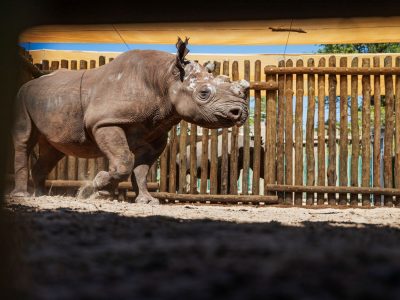
Matusadona sits on the southern shore of Lake Kariba, roughly 147,000 hectares of it, and the wild dogs are the latest arrivals in a restocking program that has been running since the parks authority and African Parks formalized their partnership in 2020. Zebra, buffalo, sable and eland went in first. Black rhino followed in June, which we covered when the count was being deliberately withheld. The predators were always the harder half, because a reintroduced carnivore has to survive the park and the park’s neighbors at the same time.
So the collars went on before the dogs went in. Every adult carries a GPS tracking collar, and the park has built the human side of the system to match: twelve Nyaminyami Rural District Council rangers seconded into the park’s operational structure, eight Human-Wildlife Conflict Ward Monitors posted into the chiefdoms around the boundary with motorcycles and radios, and geofences drawn around settlement areas that fire an automatic alert when a collared animal approaches. The monitoring is not only there to watch the dogs. It is there to get a person to a village before a dog does.
African Parks is explicit in its note to editors that the animals pose no threat to human safety, that there are no recorded cases of wild dogs attacking people, and that the species avoids human activity. Saying so in the press release is itself part of the reintroduction: a pack that frightens its neighbors does not stay long.
Where the dogs and the expertise came from
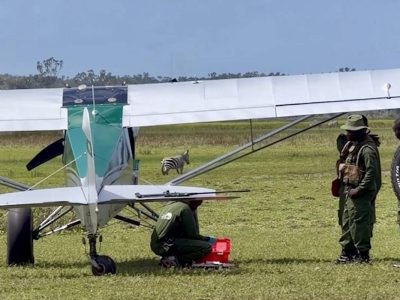
The animals were donated by Nuanetsi Ranch. Air transport came from Mack Air. The specialist expertise came from the Endangered Wildlife Trust, which has run wild dog work in southern Africa for years, and the veterinary side from African Wildlife Conservation and Management. The translocation itself was paid for by an anonymous donor family. African Parks separately credits the European Union, Stichting Natura Africae and the Wyss Foundation with the longer-term investment that made Matusadona a place worth putting wild dogs back into.
Michael Pelham, the park manager, said that “to witness wild dogs returning to Matusadona after all these years is profoundly moving,” and tied it to the ungulate translocations of 2025: predator and prey are restored in sequence, not together. Daniel Sithole, African Parks’ country manager for Zimbabwe, put the unglamorous version next to it. “Successful reintroductions do not happen by chance,” he said. “They are the result of long-term investment in people, partnerships and systems.”
We looked for the zoos behind this and did not find any
Carnivore reintroductions are frequently part-funded by accredited zoos and aquariums, so we go looking every time. On this one the trail does not reach one.
Not a single zoo or aquarium appears among the organizations African Parks names in this release, and we searched the organization’s own partners page and its strategic funding partners page again today for the words zoo, zoological, aquarium, AZA, EAZA and WAZA. There are no matches on either page. That is a stronger finding than an unsuccessful search, and it is the same answer we reached on the Matusadona rhino.
There is one thread worth naming honestly rather than quietly inflating. The Endangered Wildlife Trust, which supplied the expertise here, does take support from zoological institutions for other parts of its work: we wrote in October about Disney staff volunteering at an EWT conservation campus. None of that money or labor is attached to this translocation, neither organization says it is, and we are not going to imply otherwise. For scale on the other side of the question, the Association of Zoos and Aquariums reports that in 2025 its 235 accredited and certified facilities spent approximately $372.4 million on conservation across 139 countries. No published breakdown isolates how much of that reached Africa, so we will not estimate one.
What the assessment says, and what it counts
African Parks describes the African wild dog as Endangered with fewer than 7,000 individuals left in the wild, and the assessment supports both halves. Lycaon pictus is listed as Endangered under criterion C2a(i) on the IUCN Red List, in an assessment by R. Woodroffe and C. Sillero-Zubiri published in 2020 as an amended version of the 2012 assessment, which was dated May 18, 2012.
The figure is worth unpacking rather than repeating. The assessment estimates approximately 6,600 adults across 39 subpopulations, of which only about 1,400 are mature individuals, and those two numbers count different things. Wild dogs are obligate cooperative breeders: in most packs the alpha pair produces nearly all the surviving pups, so the great majority of adults in a healthy population are not breeding in a given season. The assessment is also dated 2012 at the point of assessment, which we would rather say out loud than treat 6,600 as this year’s census. Zimbabwe is one of the countries the Red List names as holding the species’ largest remaining populations, alongside northern Botswana, eastern Namibia and western Zambia, which is part of why putting two packs back into the Sebungwe matters more than twenty animals normally would.
The part that is not finished
We looked for anything published between April 24 and today about these packs, and the public record stops short of the thing a reader most wants to know. African Parks’ Matusadona news page carries no further item on the dogs. The trade outlet Tourism Update ran the story on October 9, 2026 under the headline “Wild dogs released into Matusadona,” and then described in its own body text the same soft release the April announcement described, with the animals held in the facilities before being let into the wider park.
So: no death, no disease outbreak, no failed release and no conflict incident has been reported, and no confirmation has been published that the packs are out of the holding facilities and running the park. This story stops where the record does. That is the second time this year a Matusadona reintroduction has left us writing that sentence, and it is still better than the alternative.
Quick answers
- What happened at Matusadona National Park?
Twenty African wild dogs were translocated into the park between February 15 and 17, 2026, in two established packs of six and fourteen animals. The Zimbabwe Parks and Wildlife Management Authority and African Parks confirmed the move on April 24, 2026. The species had been locally extinct there for decades.
- Are the wild dogs loose in the park now?
The public record does not say. The dogs went into specialized holding facilities near Tashinga for a soft release, which lets two packs settle and form a territorial attachment before the gates open. No published update confirms the release into the wider park has been completed, and we are not going to assume it.
- Why use a soft release instead of just opening the crates?
African wild dogs are obligate cooperative breeders and live in tightly bonded packs. A pack that scatters on arrival is no longer a pack, and the individuals rarely survive alone. Several weeks in holding keeps the social structure together and anchors the animals to one part of the landscape.
- Do wild dogs pose a danger to people living nearby?
African Parks states in its note to editors that they pose no threat to human safety, that there are no recorded cases of wild dogs attacking people, and that the species avoids human activity. Every adult dog carries a GPS collar, twelve district council rangers have been seconded into the park and eight conflict ward monitors are posted in the neighboring chiefdoms, with geofence alerts around settlements.
- How endangered is the African wild dog?
The IUCN Red List lists Lycaon pictus as Endangered under criterion C2a(i), in an assessment by R. Woodroffe and C. Sillero-Zubiri published in 2020 as an amended version of the 2012 assessment, dated May 18, 2012. It estimates about 6,600 adults across 39 subpopulations, of which roughly 1,400 are mature individuals.
- Which zoos funded this translocation?
None that we could verify. The translocation was paid for by an anonymous donor family, with animals donated by Nuanetsi Ranch, air transport from Mack Air, specialist expertise from the Endangered Wildlife Trust and veterinary support from African Wildlife Conservation and Management. African Parks lists no zoo or aquarium on its partners page or its strategic funding partners page. We report that as a finding rather than reaching for a connection.
- What else has been put back into Matusadona?
Zebra, buffalo, sable and eland were translocated in before the carnivores, and black rhino followed in June 2026. The restocking has run since the parks authority and African Parks formalized their partnership in 2020, alongside anti-poaching systems, ranger training and community programs.