The Kgalagadi Transfrontier Park was the first of its kind in southern Africa, a single conservation area stitched across the Botswana and South Africa border by a bilateral agreement signed in 1999. Twenty-seven years later it has a 30-month project and 2.5 million euros aimed at the unglamorous half of the job: management systems, land use plans and a fence.
Partners launched the project in Gaborone on May 12, 2026. Its full title is “Integrated Management for Biodiversity Conservation and Community Resilience in the Kgalagadi Transfrontier Park,” it is funded by the European Union under the Global Gateway flagship initiative NaturAfrica, and it is implemented by African Parks in partnership with the International Union for Conservation of Nature and in collaboration with the governments of Botswana and South Africa. Partial funding also came from the Dezzy Foundation through the Global Wildlife Fund. The grant agreement between IUCN and African Parks was signed in March 2026.
What 30 months actually buys
Not animals, and not a new park. The work concentrates on the Botswana side, with selected activities in the South African section including engagement with the ǂKhomani San community, and the early priorities read like an administrator’s list because that is what they are: project governance structures in Botswana, individual management plans for the four Wildlife Management Areas around the park, a tourism development plan for the park itself, and a community development plan for the greater landscape.
That is the part of conservation nobody photographs. A transfrontier park with two national bureaucracies, two sets of regulations and one ecosystem does not fail because the animals leave. It fails because nobody can agree who approves what, and the plans that would settle it were never written. IUCN’s own account of the launch frames the project the same way, around institutional capacity and operational effectiveness rather than species counts.
There is one piece of concrete in it. South Africa’s deputy minister of forestry, fisheries and the environment, Narend Singh, told the launch that “the construction of the fence is expected to create temporary employment opportunities for members of the local community during the implementation phase,” which is the project’s clearest short-term benefit to the households living along the boundary and also the clearest signal that human and wildlife movement through this landscape is about to be managed more tightly.
Who said what
Singh called the launch a reaffirmation of “the enduring commitment of our two governments to the full implementation of the Bilateral Agreement signed by our predecessors in 1999, which established the Kgalagadi Transfrontier Park as a symbol of peace, cooperation, and shared stewardship.”
Petra Pereyra, the European Union ambassador to Botswana and the Southern African Development Community, described the 2.5 million euro investment as a pivotal moment for conservation and community resilience in southern Africa, and made the point that the Kgalagadi “is not just a biodiversity hotspot, it is a shared heritage that demands shared responsibility.”
Botswana’s minister of environment and tourism, Wynter Boipuso Mmolotsi, placed the project against his country’s Economic Transformation Plan and National Tourism Strategy and Master Plan, and added the sharper observation of the three: the project will put Botswana’s new Community Based Natural Resources Management Act to the test, and show how community governance structures hold up when real money and outside partners arrive.
We looked for the zoos behind this and did not find any
The parties here are two governments, the European Union, IUCN, African Parks, a private foundation and the communities of the landscape. No zoological institution is among them, and African Parks’ own partners page and strategic funding partners page return no match for zoo, zoological, aquarium, AZA, EAZA or WAZA, checked again today. We report that as a finding rather than reaching for a connection, which is the same answer this organization’s funding chain has given us on the Boma-Badingilo World Heritage inscription.
For scale on the other side of the question, the Association of Zoos and Aquariums reports that in 2025 its 235 accredited and certified facilities spent approximately $372.4 million on conservation across 139 countries. No published breakdown isolates how much of that reached Africa, so we are not going to estimate one.
Why an arid park is worth 30 months of paperwork
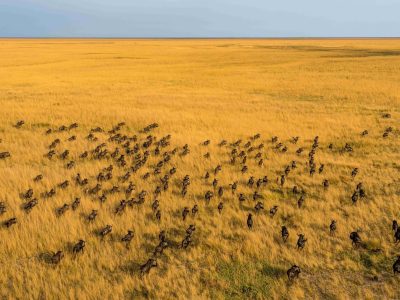
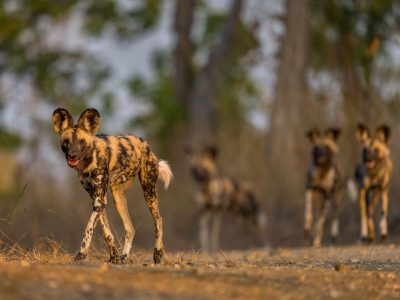
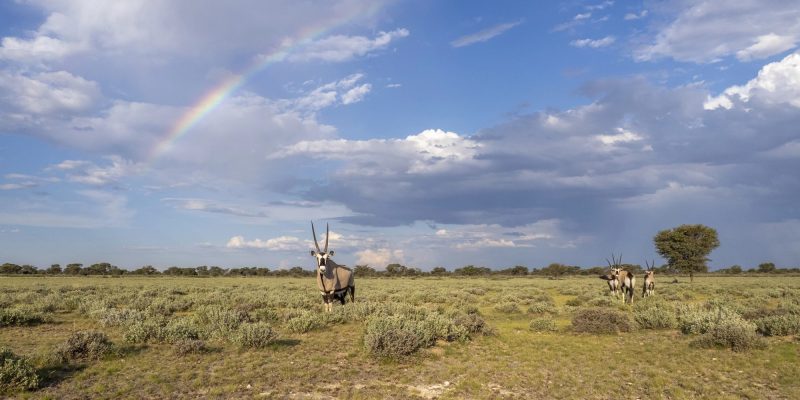
The Kgalagadi protects one of southern Africa’s most intact desert ecosystems, red dunes and fossil riverbeds and open savanna, and the species that live in it are wide-ranging by necessity: in a landscape where rainfall arrives unevenly, the animals have to be able to cross the whole thing. Ecological connectivity across a national border is therefore not an abstraction here, it is the mechanism by which the park’s wildlife survives a dry year.
That is also why the project’s outcomes are written as capacity rather than numbers. Strengthened protected area management, improved operational readiness, planning frameworks, community participation and socio-economic opportunity are not a result anyone can photograph in 30 months. They are the conditions under which the next three decades of this park either work or do not, and the 1999 agreement that created it was signed on exactly that understanding.
Quick answers
- What was launched in Gaborone on May 12, 2026?
The Kgalagadi Transfrontier Park Project, formally "Integrated Management for Biodiversity Conservation and Community Resilience in the Kgalagadi Transfrontier Park." It is a 30-month initiative funded by the European Union under the Global Gateway flagship initiative NaturAfrica, implemented by African Parks with the International Union for Conservation of Nature.
- How much money is involved?
The European Union ambassador to Botswana and SADC, Petra Pereyra, put the EU investment at 2.5 million euros. Partial funding also came from the Dezzy Foundation through the Global Wildlife Fund, and African Parks is providing co-financing.
- What will the project actually do?
Mostly governance and planning rather than animals. Early priorities are project governance structures in Botswana, management plans for the four Wildlife Management Areas around the park, a tourism development plan and a community development plan for the greater landscape. A fence is also to be built, which South Africa’s deputy minister said would create temporary local employment during construction.
- Where is the Kgalagadi Transfrontier Park?
It straddles the border between Botswana and South Africa in the southern Kalahari. It was established by a bilateral agreement signed in 1999 and was the first Transfrontier Conservation Area in the Southern African Development Community.
- Which part of the park does the project cover?
Primarily the Botswana section, with selected activities in the South African section including engagement with the ǂKhomani San community.
- Which zoos are behind this?
None that we could verify. The parties are the governments of Botswana and South Africa, the European Union, IUCN, African Parks, the Dezzy Foundation and the communities of the landscape. African Parks lists no zoo or aquarium on its partners page or its strategic funding partners page.
- Why does a transfrontier park need management plans more than animals?
Because the ecosystem is one unit and the administration is two. A park with two national bureaucracies, two sets of regulations and one set of wide-ranging animals fails on coordination rather than on wildlife numbers, and the plans that would settle who approves what had not been written.