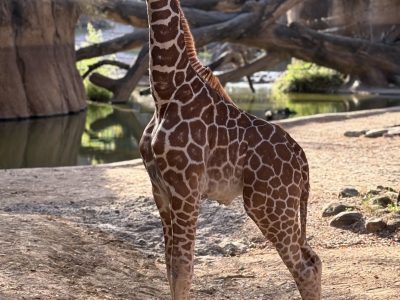

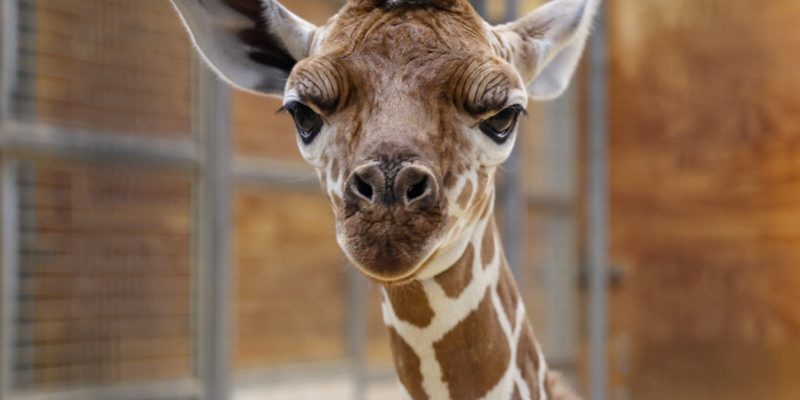
A male reticulated giraffe calf was born at the Fort Wayne Zoo in Indiana on the morning of August 10, 2026. He stood 6 feet tall and weighed 196 pounds within days of arriving, and he is the 22nd giraffe born at the Indiana zoo.
Faye’s calf, and a herd of seven
The calf’s mother is 12-year-old Faye; his father is 16-year-old Ezeji. His arrival brings the Fort Wayne herd to seven reticulated giraffe, five females and two males. A name will be announced later.
“We are thrilled to see the herd grow by one,” said Rick Schuiteman, the zoo’s CEO and executive director. “This is the 22nd giraffe born at the Zoo and his Animal Care Team, along with his mother Faye, have all been attentive to his care.”
Why the calf is not outside yet
A giraffe calf does not go straight out into a habitat the day it is born, and the deliberate pace is the interesting part. The calf has spent his first days with Faye inside the giraffe barn while the rest of the herd looks in.
“While the rest of the herd have been curious to meet the little one, introductions will happen slowly over the coming weeks,” said Ty Laemmle, director of animal care. “After the introduction period, the next step will be to venture out into the outdoor habitat, which usually starts slow as he gains confidence.”
The zoo has asked visitors for patience on that timeline. In the coming weeks the calf may have access to the outdoor habitat, but he may also decide to stay in his behind-the-scenes space, and that choice is his to make.
African Lion Safari in Ontario went through a comparable slow-introduction period with its own giraffe calf earlier this year.
The health checks behind a healthy calf
“We are pleased with how this calf is progressing in his first days of life,” said Dr. Kami Alvarado, director of animal health and conservation. “He is bright, alert, nursing well, and showing all the signs we look for in a healthy newborn giraffe. Our animal care and veterinary teams continue to monitor both mom and calf closely. Along with a normal neonatal exam, he is currently meeting developmental milestones.”
Reticulated giraffe are an endangered species, and Fort Wayne participates in the Association of Zoos and Aquariums Species Survival Plan, the program that manages a genetically diverse population across accredited institutions. The zoo also partners with the Giraffe Conservation Foundation, which researches giraffe and works on protecting them in the field. Giraffe are already extinct in seven African countries, and wild populations continue to fall because of poaching, habitat destruction and civil unrest.
When can guests see him?
There is no fixed date, and the zoo has been upfront about that: the calf goes out when the calf is ready. What that means in practice is that anyone visiting Fort Wayne over the next several weeks has a real chance of catching a six-foot newborn giraffe stepping into a yard for the first time and working out what to make of six adults and a lot of sky. That is worth the uncertainty.
The Fort Wayne Zoo, known for most of its history as the Fort Wayne Children’s Zoo, is an AZA-accredited facility in northeast Indiana.