
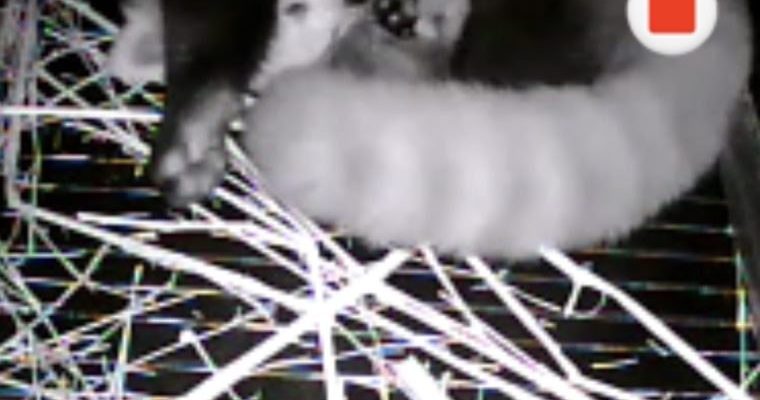
A red panda cub was born at the Sacramento Zoo in the early hours of June 24, 2020, to a four-year-old mother named Amaya. Staff watched the birth on a remote camera, which is how they knew almost immediately that something was wrong.
Amaya had two cubs. One was under-developed, was assessed by the veterinary and animal care teams, and did not survive. The other was healthy, and at the time the zoo announced the birth it was gaining weight steadily.
The numbers behind the caution
Roughly half of red panda cubs survive to the one-month mark. That single statistic explains why the zoo kept the surviving cub off exhibit and behind the scenes, and why the announcement came three weeks after the birth rather than the day of.
The cub weighed 91 grams at its first neonatal exam on June 26. Weighed weekly after that, it passed 200 grams by the time the zoo went public. Keepers described it as robust and active.
Red panda cubs stay in the nest with their mother for at least 90 days, and they are sensitive to disturbance during that period. Males do not help raise them. Females give birth in spring and summer to litters of one to four.
A recommended pairing
Amaya’s pairing with David Bowie, a two-year-old male, was recommended under the Association of Zoos and Aquariums Red Panda Species Survival Plan. Her one-year-old, Gizmo, became a big brother.
Red pandas are listed as Endangered by the IUCN. The species has no close living relatives, sitting alone in its own family, which means losing it would remove a whole branch rather than one twig.
What the camera changes
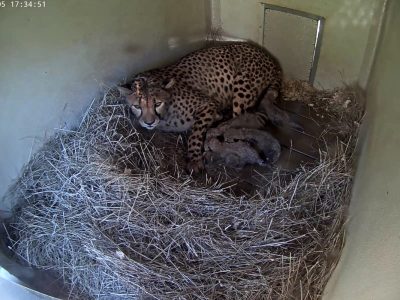
The detail worth keeping from this account is the remote camera system. It let staff observe the birth, identify the failing cub quickly enough to assess it, and then monitor a first-time-ish mother and a fragile newborn continuously without a person entering the den.
For a species whose cubs need 90 undisturbed days, the ability to watch without being present is not a convenience. It is the difference between knowing what is happening and finding out afterward.
Den cameras have become standard for exactly this reason across small-carnivore programs, including Calgary’s three cubs born behind the scenes during construction of their new habitat.