
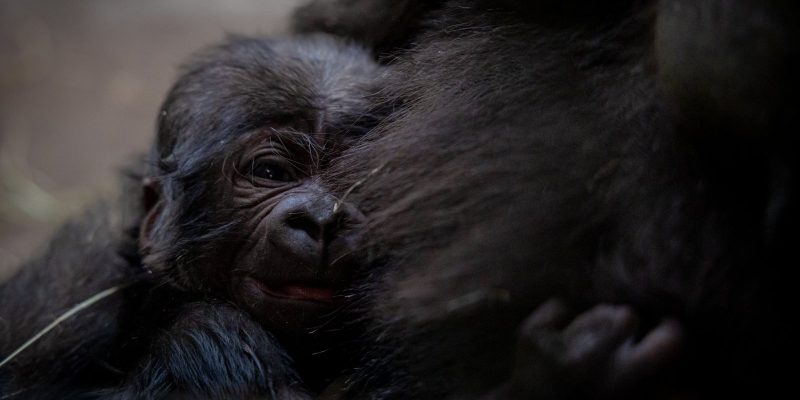
The Fort Worth Zoo announced the birth of a male western lowland gorilla on Nov. 6, 2022, only the second gorilla ever born at the zoo. He weighed an estimated four to five pounds, normal for an infant of the species, and he already had a name before anyone had seen him.
We don’t talk about Bruno
Keepers kept Gracie’s pregnancy quiet in the early months. But prenatal exams and wellness checks still had to be discussed among staff, and a pregnancy nobody was supposed to mention needed something to be called. The song was inescapable at the time. He was Bruno from the first sonogram onward, and the name stuck.
His parents are Gracie and Elmo. An older brother, Gus, was the zoo’s first.
Life in the troop
Bruno stayed close to his mother in the zoo’s World of Primates habitat while meeting the rest of the troop. The pair remained fully integrated rather than separated, which is the point: gorilla infants learn troop behavior by being inside one, and mother-and-infant pairs kept apart from the group miss that entirely.
He was visible in both indoor and outdoor areas of the habitat depending on weather and on his own activity level, which for an infant gorilla changes hour to hour.
The math behind the species
Western lowland gorillas are listed as critically endangered by the International Union for Conservation of Nature, driven by hunting and by disease. The reproductive arithmetic is the harder problem. Gorillas breed slowly enough that even an optimistic scenario, hunting stopped, disease contained, leaves population recovery running on a timeline measured in decades.
That is why a cooperative breeding program exists at all. Every birth in a managed population is a small hedge against a wild decline that no single intervention can reverse quickly.
Zoos have also put money directly into habitat on the other end: the Djéké Triangle in the Republic of Congo was gazetted as protected forest for exactly this reason.