
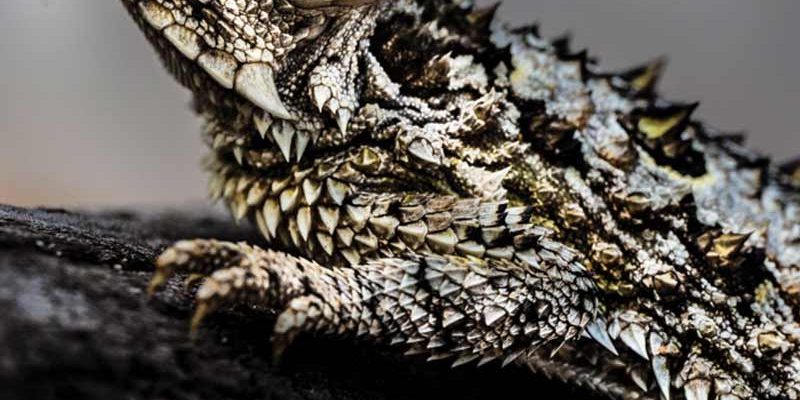
Sixty-four Texas horned lizards hatched at the Caldwell Zoo this season, and sometime this month they are going to Mason Mountain. The Tyler zoo’s Texas Horned Lizard Conservation Center has now run six hatching seasons, and this one produced three clutches, a clutch being a single set of eggs laid at one time by one female. Once the hatchlings are large enough to survive on their own, the zoo will transfer them to a protected habitat near Mason Mountain, Texas, inside the species’ original range.
What a horned lizard needs to hatch
The conservation center is a purpose-built facility, and almost everything in it exists because a horned lizard turns out to be fussy in ways that only become obvious when you try to breed one. Caldwell’s keepers work with egg incubators and custom-built habitats, and the hatchlings grow out in tanks fitted with hiding spots, basking areas, temperature monitoring and specialized lighting. The food is hand-picked, starting with fruit flies and moving to crickets and termites as the animals put on size.
That attention is the whole program. Caldwell opened the center quietly, worked with the Texas Parks and Wildlife Department to match breeding pairs, and got its first hatchlings in August 2021. The zoo marked its hundredth hatchling at the facility a few seasons after that. Sixty-four in a single season, from a species that had never bred there at all before 2021, is the shape of a program that has worked out what it is doing.
The decline runs through an ant
The Texas horned lizard is the state reptile, and for most Texans past a certain age it is a childhood memory rather than an animal they still see. Its range runs from Kansas and Colorado down through Arizona and Texas into northern Mexico, and it has fallen away across the whole of it. Texas Parks and Wildlife attributes the decline to four things: habitat lost to changing land use, collection for the pet trade, the invasion of the imported fire ant, and the overuse of pesticides.
The fire ant does its damage indirectly, and the mechanism is worth following, because it explains why you cannot fix this by leaving the lizards alone. Red harvester ants are the horned lizard’s primary food, more than 75 percent of the diet in most places. Fire ants compete with harvester ants for the same grass and forb seeds and can starve a harvester colony out. Then the insecticides aimed at the fire ants kill the harvester ants too, and in some places harvester ants are targeted directly. The lizard never meets its competitor. It simply runs out of lunch.
So the zoos went to work on the supply side. Caldwell is part of a coalition of institutions breeding the species in partnership with Texas Parks and Wildlife. Hatchlings are tagged before release, which is what turns a release into data: an animal recovered alive two years later tells the department something an untagged one never could.
A note on which list says what
Caldwell describes the Texas horned lizard as a threatened species, and under Texas state law that is exactly right. Texas Parks and Wildlife lists Phrynosoma cornutum as threatened in Texas. The IUCN Red List is a separate list with its own vocabulary, and it assesses the species as Least Concern, on the grounds that its range, area of occupancy and overall population remain large despite declines in parts of that range. Both statements are accurate, about different things, and the honest version names the list every time. Worth knowing: the Red List entry was assessed in 2007 and has not been revisited since, which is a long time in the life of an animal that is still losing ground. A lizard going back into protected habitat near Mason Mountain is the same good day whichever category it carries.
Seeing one
Texas horned lizards are among the threatened species the Caldwell Zoo keeps on its campus, and the breeding work does not stop at reptiles. The zoo also runs a captive breeding facility for the Attwater’s prairie chicken, one of the most endangered birds in North America, in partnership with the U.S. Fish and Wildlife Service. The zoo sits on Martin Luther King Boulevard in Tyler and is open from 9 a.m. to 5 p.m.
Caldwell’s own season update and conservation programs page set out the partnership and the husbandry; the hatch count comes from the zoo’s own video update, reported by KLTV in Tyler, and the harvester ant figures are from a Texas Parks and Wildlife landowner bulletin. For a close parallel in the region, see the Memphis Zoo’s Louisiana pinesnake release into Kisatchie National Forest, another breed-and-return program for a reptile most people have never knowingly seen. Ask a keeper where to look when you get there. A horned lizard sitting still on sand is a genuinely hard find, which is rather the point of being a horned lizard.
Quick answers
- How many Texas horned lizards hatched at the Caldwell Zoo this year?
Sixty-four, from three clutches, in the zoo's sixth hatching season. A clutch is a single set of eggs laid at one time by one female.
- Where are the hatchlings released?
To a protected habitat near Mason Mountain, Texas, inside the species' original range, once they are large enough to survive on their own. They are tagged before release so Texas Parks and Wildlife can track survival afterwards.
- Why has the Texas horned lizard declined?
Texas Parks and Wildlife names four causes: habitat lost to changing land use, collection for the pet trade, the invasion of the imported fire ant, and the overuse of pesticides.
- What do fire ants have to do with it?
The damage is indirect. Red harvester ants are the horned lizard's primary food, more than 75 percent of the diet in most places. Fire ants compete with harvester ants for the same seeds and can starve a colony out, and the insecticides used against fire ants kill harvester ants too.
- Is the Texas horned lizard endangered?
It is listed as threatened in Texas by Texas Parks and Wildlife. On the IUCN Red List it is assessed as Least Concern, in an assessment published in 2007. The two are separate lists with separate vocabularies and both statements are accurate.
- When did the breeding program start?
The Caldwell Zoo opened its Texas Horned Lizard Conservation Center in partnership with the Texas Parks and Wildlife Department and recorded its first hatchlings in August 2021.