
On Friday, September 26, a feature documentary about the people who keep Kenya’s rhinos alive gets its African premiere at the Trademark Hotel in Nairobi, and the guest list is the story. The film is RHINO, directed by Tom Martienssen and narrated by Academy Award nominee Tom Hardy. The evening is Kenya’s flagship celebration of World Rhino Day 2026.
Ol Pejeta Conservancy announced the premiere on September 9. Loisaba Conservancy is organizing it, with lead sponsorship from Ol Pejeta, Borana Conservancy, Lewa Wildlife Conservancy, the Elewana Collection, the Trademark Hotel, Dry Associates, Tusk Trust and the Pankaj Foundation. The Kenya Wildlife Service joins them, alongside Save the Rhino, Rhino Ark, the International Ranger Federation, Sera Conservancy and Big Life Foundation.
What is the film actually about?
Not rhinos in the abstract. RHINO follows the translocation of 21 black rhinos, a logistical operation that moves animals from established populations into landscapes where the species has room to expand. Loisaba Conservancy, writing about the film’s selection for the Raindance Film Festival in London this June, calls it “the ambitious and successful translocation of 21 critically important black rhinos” and says its own role was instrumental in making it possible.
Translocation is the unglamorous engine of black rhino recovery. A rhino population that fills its range stops growing, because breeding females need space and males will not tolerate crowding. Moving founder animals into a new, secured area starts a second population growing at the same time as the first. It takes veterinarians, helicopters, crates, road convoys, armed escorts and a receiving conservancy that has spent years building the fencing and the ranger teams to hold the animals once they arrive. Almost none of that is visible to anyone outside the operation, which is what a documentary is for.
The film had its red-carpet premiere in London on June 17 and a public screening at Vue Piccadilly on June 24, with a live question-and-answer session with Martienssen afterward. Nairobi is where it comes home.
Why Kenya, and why this year
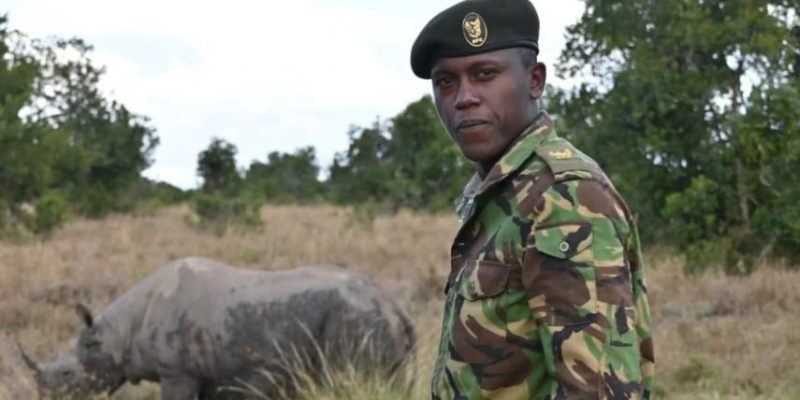
Kenya has spent four decades assembling the thing the film documents: rangers, private and community conservancies, government veterinarians, researchers and the Kenya Wildlife Service working as a single system. Justin Heath, Ol Pejeta’s chief executive, put the case for the evening plainly. “Kenya’s black rhino comeback is nothing short of a conservation miracle,” he said, calling it proof of what can be achieved when everyone works together. “This film honors the unsung heroes behind this success: the rangers, vets, scientists, and local communities who made it happen.”
The premiere will be led by Professor Erustus Kanga, director general of the Kenya Wildlife Service, as guest of honor, and hosted by the broadcaster TerryAnne Chebet, with a performance by the Kenyan artist Moso Pal, a silent auction and a showcase of Kenyan makers and vendors. Tickets are on sale through Mookh.com.
How endangered is the black rhino now?
The IUCN Red List assesses the black rhino, Diceros bicornis, as Critically Endangered under criteria A2abd+4abd. That assessment was published by R. Emslie in 2020 and last assessed on January 14, 2020. Two details in it are worth reading together, because they are the reason a celebration is defensible: the Red List puts the number of mature individuals at 3,142, and it records the population trend as increasing.
Both halves matter. Critically Endangered is the most severe category before extinction in the wild, and 3,142 breeding-age animals across an entire continent is a small number. An increasing trend inside that category is exactly what four decades of ranger work, translocation and anti-poaching enforcement is supposed to produce, and it is not a given anywhere else. Note that the Red List figure counts mature individuals, which is a smaller quantity than the total continental population that rhino programs often quote, so the two numbers are not interchangeable.
Is there zoo or aquarium money behind this?
We trace the accredited zoos and aquariums funding conservation work in this region before we write it up, and on this one the honest answer is that we did not find any. The premiere’s organizer, its eight lead sponsors and its named partners are Kenyan conservancies, a Kenyan government agency, international rhino charities, a ranger federation, a hotel group, an investment firm and two private foundations. Not one accredited zoological institution appears on the list, and none of the parties involved names one. We are not going to imply a connection that is not there.
That is a finding rather than a gap. Kenya’s rhino system is unusual precisely because it is funded from inside the country and from conservation philanthropy rather than from the zoological world, and knowing which model paid for a result is part of understanding the result. For scale on the other side of the ledger, the Association of Zoos and Aquariums reports that in 2025 its 235 accredited and certified facilities spent approximately $372.4 million on conservation across 139 countries. No published breakdown isolates the African share, so no African figure appears here.
We covered the other end of the same species this week, in the first year of an orphaned black rhino calf at a Nairobi nursery. One animal at a time and 21 animals at a time are the same argument made at different scales.
What a reader can do with this
If you are in Nairobi on September 26, tickets are still on sale. If you are not, the more useful thing is to notice what the film is for. Rhino conservation is usually reported as a poaching statistic, and the statistic tells you nothing about the several hundred people who spend their working lives in the field making the number move. A documentary narrated by a recognizable voice is one of the few mechanisms that gets those people in front of an audience that would never read the annual report.
Source: Ol Pejeta Conservancy, Press Release: Kenya Hosts the African Premiere of RHINO for World Rhino Day 2026, dated September 9, 2026, with additional detail from Loisaba Conservancy, RHINO charges into the Prestigious Raindance Film Festival London 2026, and the IUCN Red List assessment for Diceros bicornis.
Quick answers
- When and where is the African premiere of RHINO?
Friday, September 26, 2026, at the Trademark Hotel in Nairobi, as Kenya's flagship celebration of World Rhino Day. Tickets are on sale through Mookh.com.
- What is the documentary about?
It follows the translocation of 21 black rhinos, an operation Loisaba Conservancy describes as ambitious and successful. It is directed by Tom Martienssen and narrated by Tom Hardy.
- Who is behind the premiere?
Loisaba Conservancy is organizing it, with lead sponsorship from Ol Pejeta, Borana and Lewa conservancies, the Elewana Collection, the Trademark Hotel, Dry Associates, Tusk Trust and the Pankaj Foundation, joined by the Kenya Wildlife Service.
- Do any accredited zoos or aquariums fund this?
We looked and did not find any. The organizer, the eight lead sponsors and the named partners are Kenyan conservancies, a government agency, rhino charities, a ranger federation, a hotel group, an investment firm and two foundations.
- How endangered is the black rhino?
The IUCN Red List assesses Diceros bicornis as Critically Endangered under criteria A2abd+4abd, last assessed on January 14, 2020. It puts mature individuals at 3,142 and records the population trend as increasing.