Zambia had no facility capable of raising an orphaned elephant calf when Rachael Murton arrived at the Elephant Orphanage Project in 2008. Eighteen years later the program has responded to 69 orphaned elephants, 20 of them are back in the wild, and two calves have been born there to a female who was herself rescued as an orphan.
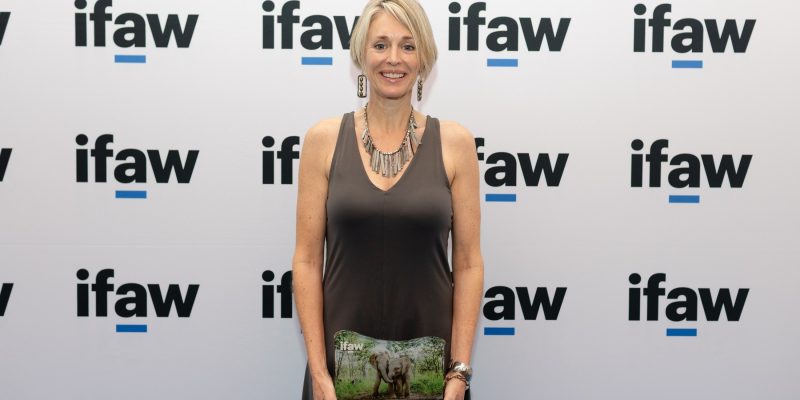
On October 15 the International Fund for Animal Welfare gave Murton, now country director of Game Rangers International, an Animal Action Award at a ceremony in London. Game Rangers International published its account of it the following day.
What 69 orphans turned into
The Elephant Orphanage Project began in 2007. Murton joined the year after, working with Zambia’s Department of National Parks and Wildlife to build what is still the country’s only elephant orphanage, for calves orphaned by poaching, by conflict with people, and by causes nobody records.
It now runs on two sites. The Lusaka Elephant Nursery takes the youngest and most fragile animals and gives them intensive care. The Kafue Release Facility takes the older ones and lets them work their way back toward independence at their own pace. The point of the second site is that an elephant cannot be released on a schedule, and the organization’s position is that keeping an orphan alive is the easy half. The harder half is rebuilding the social and emotional structure a calf would have had, so that it can function in a herd it was not born into.
The number that measures whether that works is not 69, and it is not 20 either. It is two. Chamilandu was rescued after poachers killed her mother, became the matriarch of the orphan herd during rehabilitation, returned to the wild, and has since given birth to calves of her own, Mutaanzi David and Lulangilo Dawn. She now leads a herd of released elephants. A rehabilitated orphan raising wild-born young is the only evidence that settles the question of whether the rehabilitation took.
Game Rangers International notes that more rehabilitated elephants are now living wild than remain in its care, which changes what the program is for. The work ahead is less about rescue and more about the landscapes those elephants now occupy, the rangers protecting them, and the neighboring communities who have to live with them.
What the award is
IFAW’s Animal Action Awards recognize people and organizations making an exceptional difference for animals. Murton received hers alongside other winners, with IFAW chief executive Azzedine Downes and the broadcaster Michaela Strachan, who the organization says was Murton’s childhood hero. She was appointed country director of Game Rangers International in 2025, with responsibility across its three strands of wildlife rescue, nature protection and community outreach.
The citation GRI emphasizes is not the orphanage itself but what she has done with what it learned. Drawing on nearly two decades of practice, Murton has advised other orphaned elephant rescue and rehabilitation programs internationally, which in a field with very few practitioners is how standards get set at all.
Which zoo pays for this
Colchester Zoological Society, through its conservation arm Action for the Wild, which has supported the Elephant Orphanage Project since 2010.
The society publishes the figure: £68,678 donated to the project since 2010, with a further £10,000 committed in 2023 toward elephant costs and the salary of the orphanage’s deputy head elephant keeper, Aaron. The Elephant Orphanage Project sits on Colchester Zoological Society’s current list of conservation projects alongside its work in Madagascar, Laos, Nepal and South Africa. We have written about that relationship before, and it remains one of the cleaner funder traces on this beat: a named program, a published total, and a specific salaried post at the other end of it.
That is worth stating plainly because it so often goes the other way. A great deal of African conservation work carries no verifiable zoological funder at all, and we say so when we cannot find one. Here the chain holds, and it holds down to a keeper’s wage.
What the elephants are
The animals in Zambia are African savanna elephants, Loxodonta africana. The IUCN Red List has assessed them as Endangered since March 25, 2021, when the African elephant was split into two species for assessment purposes. The savanna elephant’s numbers have fallen by at least 60 percent over the last 50 years; the forest elephant, Loxodonta cyclotis, was assessed as Critically Endangered in the same announcement after a decline of more than 86 percent across 31 years.
Game Rangers International does not quote a category in its announcement, and there is nothing to correct here. It is worth having the number anyway, because it is the context in which 20 released elephants and two wild-born calves are a meaningful quantity rather than a small one.
Source: Game Rangers International, announcement of 16 October 2026. Funding figures are from Colchester Zoological Society’s Action for the Wild project page for the Elephant Orphanage Project.
Quick answers
- Who is Rachael Murton?
The country director of Game Rangers International in Zambia. She joined the Elephant Orphanage Project in 2008, the year after it began, helped establish what is still Zambia’s only elephant orphanage, and was appointed country director in 2025.
- What is the IFAW Animal Action Award?
An award from the International Fund for Animal Welfare recognizing people and organizations making an exceptional difference for animals. Murton received hers at a ceremony in London on 15 October 2026, alongside IFAW chief executive Azzedine Downes and the broadcaster Michaela Strachan.
- How many elephants has the project rescued?
It has responded to 69 orphaned elephants over 18 years. Twenty have returned to the wild, and two calves have been born in the wild to a rehabilitated female.
- Who is Chamilandu?
An elephant rescued after poachers killed her mother. She became the matriarch of the orphan herd during rehabilitation, was released, now leads a herd of released elephants, and has given birth to two calves of her own, Mutaanzi David and Lulangilo Dawn.
- How does the orphanage work?
On two sites. The Lusaka Elephant Nursery gives intensive care to the youngest and most fragile calves. The Kafue Release Facility takes older animals and lets them regain independence at their own pace before release.
- Which zoo funds the Elephant Orphanage Project?
Colchester Zoological Society, through its conservation arm Action for the Wild, which has supported the project since 2010. The society publishes the figure: 68,678 pounds donated since 2010, plus a further 10,000 pounds in 2023 toward elephant costs and the salary of the orphanage’s deputy head elephant keeper.
- What is the conservation status of these elephants?
Zambia’s elephants are African savanna elephants, Loxodonta africana, which the IUCN Red List has assessed as Endangered since 25 March 2021. Savanna elephant numbers have fallen by at least 60 percent over the last 50 years. The African forest elephant, Loxodonta cyclotis, was assessed as Critically Endangered in the same announcement.