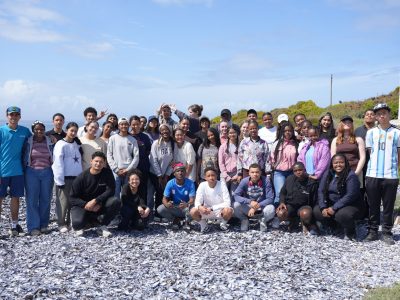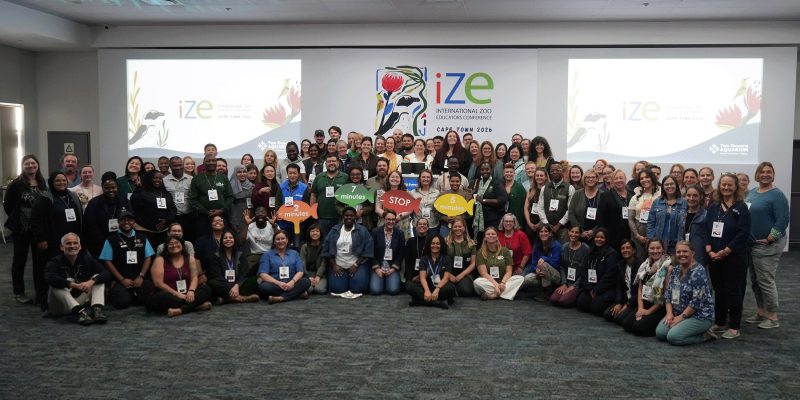
For five days in October the global conversation about how zoos and aquariums teach happened in Cape Town. The International Zoo Educators conference ran at the Two Oceans Aquarium from October 12 to 16, and the aquarium published its account of the week on October 17: 187 delegates from 35 countries and 124 organizations, in a building where the conference rooms sit alongside the exhibits.
That last detail is not decoration. Delegates had access to the aquarium throughout, and the sessions that mattered most were the ones that walked out of the room.
Who came, and who spoke
Four keynote speakers framed the week, and none of them gave the talk you would expect at a zoo conference.
Dr Gcina Mhlophe, the South African storyteller, opened the keynotes with an account of how stories had shaped her life and the lives of people she had met, including the tale of how the sun, the moon and the ocean met. Dr Margaret Otieno followed on Wednesday with a talk about carrying conference learning home, drawing on a Kenyan childhood that shaped her interest in getting people to act on what they know. Loyiso Dunga argued on Thursday that conservation has to include the communities with cultural and historical ties to protected land, and that cultural and natural heritage are protected together or not at all. Dave Morgan closed the series with a case that animal welfare standards belong at the center of interpretation rather than beside it.
“Each of our keynote speakers brought a unique perspective to the IZE Conference, challenging us to think differently about the role of education in conservation,” said Helen Lockhart of the IZE Local Organising Committee.
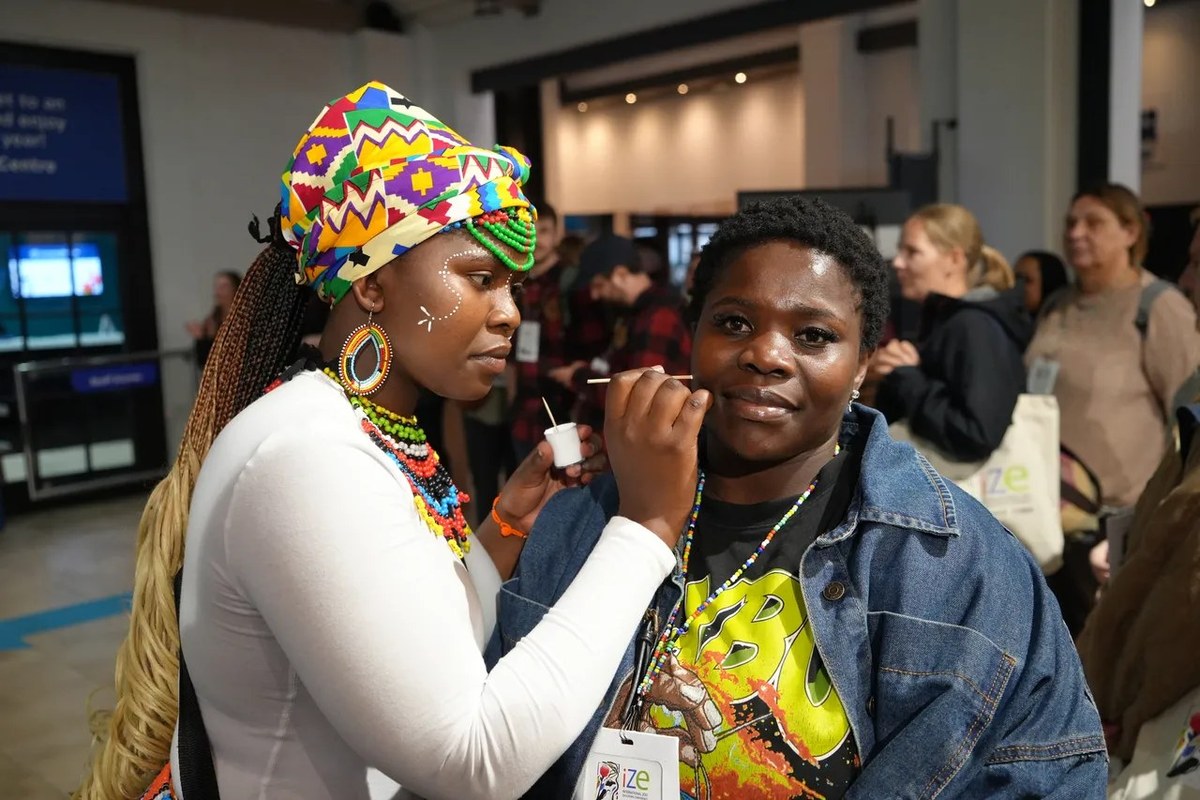
Aquarium chief executive Michael Farquhar and IZE president Dr Sarah Thomas opened the conference on the Monday evening, at an icebreaker where the Cape Minstrels performed at the aquarium entrance and face painters worked the queue, before delegates were let loose in the building after dark with the curatorial team on hand.
What the host put on the table
The part of this that travels is what the Two Oceans Aquarium Foundation’s own staff presented, because several of them brought numbers rather than descriptions.
Nathalie Viljoen presented an evaluation of the Young Biologist Course, which has taken more than 1,000 Grade 10 and 11 learners through marine biology since 2001. Roughly 100 former participants were surveyed. All of them said they would recommend the course, and 70 to 80 percent reported a greater interest in conservation, more confidence about environmental careers, changes in their own behavior, and better communication and teamwork. We covered this year’s course earlier in the week; this is the first published look at what happens to the people who took it twenty years ago.
Judy Mann-Lang presented findings from a study of community conservation education initiated by the African Conservation Education Network, covering six conservation organizations across Botswana, Tanzania, Zimbabwe and Zambia. The finding she emphasized is one that cuts against the grain of a lot of education evaluation: conservation programs that do not also improve the lives of the people living alongside the wildlife do not sustain support. She also ran a workshop on behavior change in biodiversity conservation, drawing on the work of the IUCN’s Behaviour Change Task Force, established in 2023.
Bianca Engel described a multisensory program built with St Dunstan’s and Innovations for the Blind to make the aquarium work for visitors with visual impairments, through touch, sound and guided interaction. After a successful pilot the aquarium made it an annual fixture during National Blindness Awareness Month in October. Wandiswa Jonga presented the Khayelitsha Wetland Programme, which took learners aged 12 to 14 from five Khayelitsha schools through bird identification and water sampling in their own neighborhoods before bringing them to the aquarium. Wafiqah Slamong and Aisha Martin showed what the Ocean Campus has done with puppets since 1995, for children aged 2 to 8, at the aquarium and on mobile outreach.
Three more staff presented posters: Anzio Abels on the Climate Action Now course built in 2024, Koelsum Petersen on the Ocean Funatics course for Grade 2 and 3 learners, and Jaide McKriel on a baseline survey of the Ocean Champions Community, which asked members what actually stops them taking conservation action.
The tours were the argument
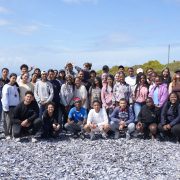
On two mornings delegates left the conference rooms entirely. The choices were a behind-the-scenes tour of the aquarium’s Turtle Conservation Centre, a marine wildlife walk around the V&A Waterfront with the aquarium’s wildlife monitors, or a beach cleanup and kelp holdfast dissection with the Ocean Campus team.
“These tours were a wonderful opportunity to take learning beyond the conference rooms, giving delegates firsthand insight into our conservation work while encouraging meaningful knowledge-sharing and collaboration with professionals from around the world,” said Heather Wares, the aquarium’s communications manager.
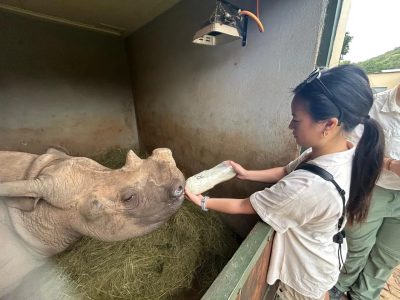
The Turtle Conservation Centre option is the one with a story attached. It is the unit that has spent this month rehabilitating Habanero, a loggerhead with an amputated flipper, and a hawksbill named Amber. Delegates walked through a working rehabilitation facility rather than a display about one.
Where the money comes from
On most conservation stories out of this region we have to go looking for the accredited zoo or aquarium behind the work, and often we cannot find one. This is the other case. The institution doing the work is the institution, and the funding question answers itself.
The Two Oceans Aquarium has been a member of the World Association of Zoos and Aquariums since 2019 and is a founder member of the African Association for Wildlife in Human Care. IZE is the professional association of zoo and aquarium educators, and WAZA itself lists IZE among the organizations it belongs to. The money and the people behind a week like this are the zoo and aquarium community paying to teach itself, which is a plainer answer than most of our funder traces produce.
The week closed with a gala dinner beside the I&J Ocean Exhibit, a performance by Dizu Plaatjies and the Ibuyambo, and dancing. The next question is where IZE goes in 2028, and whether the African institutions that set this agenda keep it.
Source: Two Oceans Aquarium, report of 17 October 2026. Conference dates and host confirmed independently on the World Association of Zoos and Aquariums events listing.
Quick answers
- What is the IZE conference?
The biennial conference of International Zoo Educators, the professional association of people who run education programs at zoos and aquariums. The 2026 edition ran at the Two Oceans Aquarium in Cape Town from 12 to 16 October, with 187 delegates from 35 countries and 124 organizations.
- Who gave the keynotes?
Four speakers: the storyteller Dr Gcina Mhlophe, Dr Margaret Otieno on turning conference learning into action, Loyiso Dunga on community-led conservation and the joint protection of cultural and natural heritage, and Dave Morgan on animal welfare standards as the center of interpretation.
- What research did the host present?
Seven presentations and posters from Two Oceans Aquarium Foundation staff. The two with the hardest numbers were Nathalie Viljoen on a survey of about 100 former Young Biologist Course participants, and Judy Mann-Lang on a six-organization study of community conservation education across Botswana, Tanzania, Zimbabwe and Zambia.
- What did the Young Biologist evaluation find?
All of the roughly 100 former participants surveyed said they would recommend the course, and 70 to 80 percent reported greater interest in conservation, more confidence about environmental careers, changes in their own behavior, and improved communication and teamwork. The course has taken more than 1,000 Grade 10 and 11 learners since 2001.
- What was Judy Mann-Lang’s finding?
That conservation education has to account for the needs and wellbeing of the communities living alongside wildlife. Her point was that programs which do not also improve people’s lives do not sustain support for conservation. The research was initiated by the African Conservation Education Network.
- What did delegates do outside the sessions?
On two mornings they chose between a behind-the-scenes tour of the aquarium’s Turtle Conservation Centre, a marine wildlife walk around the V&A Waterfront with the aquarium’s wildlife monitors, or a beach cleanup and kelp holdfast dissection with the Ocean Campus team.
- Is the Two Oceans Aquarium accredited?
It has been a member of the World Association of Zoos and Aquariums since 2019 and is a founder member of the African Association for Wildlife in Human Care. WAZA, in turn, lists International Zoo Educators among the organizations it belongs to.