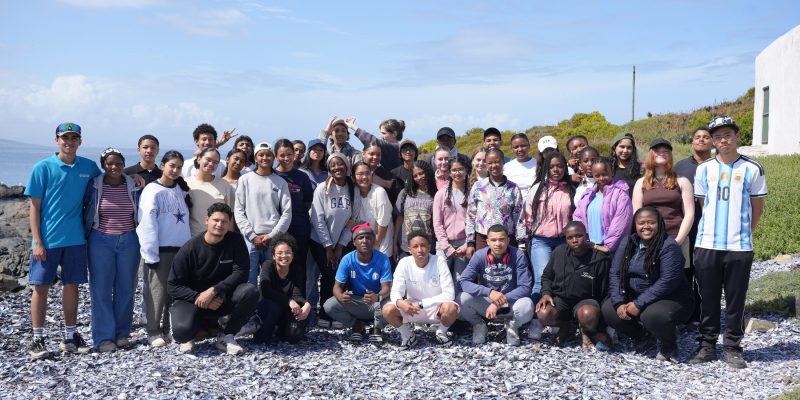
On a Saturday morning in late September, 42 Grade 10 learners walked into the Two Oceans Aquarium in Cape Town and sat a test before they were allowed to see anything. It was not a test they could fail. It was a baseline, so that the staff teaching them for the next seven days would know what each of them already understood about the ocean.
That is the shape of the Young Biologist Course, which ran from September 26 to October 2 this year, four days at the aquarium in Cape Town and three at a campsite at Bokbaai on the West Coast. The aquarium published its account of it on October 13. The course was sponsored by Upstream Technology.
Four days inside
The structure is a biology syllabus with the animals in front of you. The first day covered the two oceans that meet off Cape Town and then worked through the animal kingdom: sponges and sea plants, cnidarians, worms, arthropods, echinoderms, molluscs. Each morning opened with a short assessment of the day before, which is the detail that gives the week away. This is a course, not an outing.
Along the way the learners watched a ragged-tooth shark feed at the Save Our Seas Foundation Shark Exhibit, watched an African penguin feed at the penguin exhibit, took a boat onto Table Bay, worked the rocky shore to learn zonation, pulled apart kelp holdfasts to find the animals living inside them, dissected a fish, and sat a session on the Southern African Sustainable Seafood Initiative.
Then the aquarium did the thing that makes this different from a school trip. On day two the learners were briefed on the Microscope Exhibit and the Touch Pool and coached in presentation skills. On days three and four, supported by the aquarium’s volunteers, they stood on the floor and delivered those presentations to actual paying visitors.
A careers panel on day four put two staff members in front of them: Razaan Samuels, a sea turtle aquarist, and Tiffany Johnson, a penguin keeper. The aquarium’s own note on that session is the one worth repeating: for many of the learners it was the first time they had heard how varied the routes into marine science can be.
Three days on the West Coast
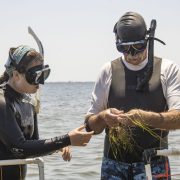
On September 30 the group drove north, stopping at Clifton Fourth Beach for a snorkeling session run by the aquarium’s dive school. Masks, snorkels, wetsuits. For many of them it was the first time they had looked at the ocean from underneath it.
Camp ran from Wednesday evening to Friday morning: a plastic pollution session, a scavenger hunt, a debate, a quiz, low-tide rocky shore work, a team obstacle course, a sunrise stretch on the beach and a solitary sunset exercise. They designed a logo and a brand identity for the Young Biologist class of 2026, and closed the week with a showcase night of skits.
Why a course like this counts as conservation work
Because the bottleneck in marine science in South Africa is not interest. It is exposure. A Grade 10 learner who has presented to strangers about a touch pool, watched a penguin keeper answer a question about her job, and put their face in cold water with a mask on has a concrete idea of what the work is. A learner who has only read about it has an abstraction.
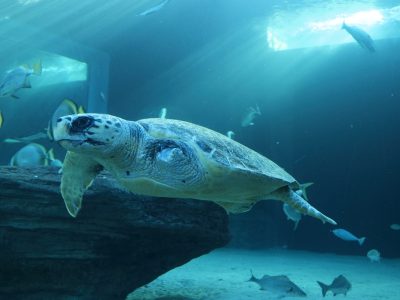
We have written before about the aquarium’s turtle rehabilitation work, including the three-flippered loggerhead being prepared for release at its Turtle Conservation Centre. The sea turtle aquarist on that careers panel does that job. The pipeline and the animals are the same institution.
Which zoo paid for this
This one is simple, and it is the uncomplicated case that makes the complicated ones legible. The Two Oceans Aquarium is itself the accredited facility. The course ran on its property, its Ocean Campus education team taught it, its volunteers supported the presentations, its dive school ran the snorkeling, and its staff sat the careers panel. The cash sponsor is Upstream Technology, a company rather than a zoological institution.
Most of what this region produces is field work by organizations that are not zoos, where the honest answer to the funding question is often that no accredited institution can be verified behind it. Here the facility and the funder of the work are the same building, and the hub on this story is attached for that reason.
What is next
The aquarium has not published dates for a 2027 course. Its education arm runs year-round through the Ocean Campus, and its newsroom carries the announcements, the newest of which is the return of its After Dark evenings.
Source: Two Oceans Aquarium, “Seven days, one ocean: Inside the 2026 Young Biologist Course” by Mkanyiseli Mbini, 13 October 2026. Background on the Southern African Sustainable Seafood Initiative is from the initiative’s own site.
Quick answers
- What is the Young Biologist Course?
A seven-day marine science course run by the Two Oceans Aquarium in Cape Town for Grade 10 learners. The 2026 edition ran from 26 September to 2 October, four days at the aquarium and three at a campsite at Bokbaai on the West Coast, with 42 learners. It was sponsored by Upstream Technology.
- What do the learners actually do?
Work through the animal kingdom from sponges to molluscs, watch a ragged-tooth shark and an African penguin feed, take a boat onto Table Bay, study rocky shore zonation, search kelp holdfasts, dissect a fish, and sit a session on sustainable seafood. Each morning opens with a short assessment of the previous day.
- Do they present to the public?
Yes. On days three and four, after a briefing and presentation coaching, the learners delivered their own Touch Pool and Microscope Exhibit presentations to aquarium visitors, supported by the aquarium’s volunteers.
- What happens at the camp?
A snorkeling session at Clifton Fourth Beach on the way, run by the aquarium dive school, then two nights at Bokbaai covering plastic pollution, low-tide rocky shore work, a debate, a quiz, a team obstacle course, a branding challenge for the class of 2026, and a showcase night.
- Who spoke on the careers panel?
Razaan Samuels, a sea turtle aquarist, and Tiffany Johnson, a penguin keeper, both aquarium staff. The aquarium notes that for many learners it was the first time they had heard how varied the routes into marine science can be.
- Will there be a 2027 course?
The aquarium has not published dates. Its education arm runs year-round through the Ocean Campus and announcements go on its newsroom.