
In March, veterinarians at Zoo São Paulo put blood from one jaguar into another jaguar. As far as the record shows, nobody in Brazil had done that before.
The transfusion worked. It is a small procedure in human terms and a significant one in veterinary terms, because a species that has never had a documented transfusion has no established protocol for one: no blood typing convention, no cross-matching practice, no body of cases telling you what goes wrong. Somebody has to be first, and then everybody else has a reference.
The jaguar, Panthera onca, is classified as Vulnerable to extinction by Brazil’s Chico Mendes Institute for Biodiversity Conservation. It is also, as the zoo puts it, a symbol of Brazilian biodiversity. Being able to give one a transfusion is now a thing that Brazilian veterinary medicine knows how to do.
Five thousand three hundred procedures a year
The transfusion came out of an ordinary week at a very busy hospital. Zoo São Paulo cares for roughly 2,500 animals from nearly 300 species, and its veterinary hospital handles about 5,300 consultations and procedures a year. That is more than a hundred a week, every week, across a species list that runs from tree frogs to hippopotamuses.
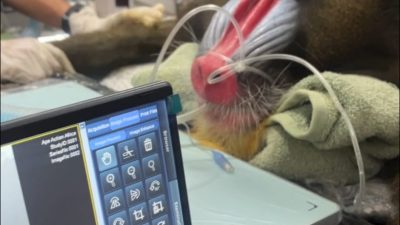
The hospital recently came through a modernization worth about two million Brazilian reais. It now holds a fully equipped operating room, a preparation room, a radiology unit and a pharmacy, plus separate areas for hospitalization, rehabilitation and quarantine.
Preparing for such a diverse routine requires continuous learning, planning and a great deal of teamwork. No two cases are alike. Being prepared to care for everything from a baby bird to a giraffe means mastering the anatomy, physiology and behavior of hundreds of different species. The key is to anticipate possible scenarios, discuss cases as a team and understand the particularities of each species so that we can act safely in a wide range of situations.
Maria Fernanda Gondim, head veterinarian, Zoo São Paulo
What a shift actually looks like
The list of procedures the hospital reports is worth reading slowly, because it is a good description of what this job is.
Laboratory work and diagnostic imaging on chimpanzees and other primates. Imaging on jaguars. Dental treatment for an alpaca. Preventive hoof trimming for African wild boars and for Barbary sheep. Ophthalmological care for amphibians, which means somebody at that hospital examines the eyes of frogs. Laser therapy for aquatic turtles.
In a single shift a veterinarian there may handle a small reptile and then, an hour later, a rhinoceros. Each one needs different anatomy, different physiology, different behavior and a completely different approach to restraint and handling. There is no general practice in this specialty. There is only a very large number of specialties held by the same small team.
The care that starts before anything is wrong
Most of what the hospital does is not emergency work. A continuous preventive medicine program runs regular health assessments across the collection, which is how problems get caught while they are still small and cheap to fix rather than large and irreversible.
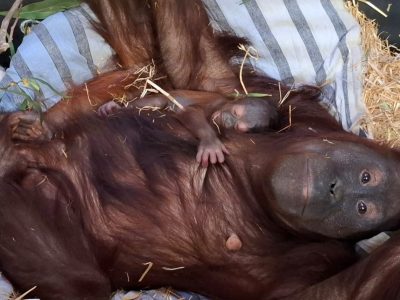
The team also takes over when an infant animal is rescued or rejected by its mother. That means specially formulated milk on a schedule, daily weight checks, developmental assessments and a purpose-built environment, sustained for months until the animal can look after itself. It is the least glamorous work in a zoo and among the most demanding.
Where veterinary medicine meets law enforcement
The hospital is also the front door for animals coming out of the wildlife trade. Animals seized from trafficking, abuse or other high-risk situations arrive at the zoo and go straight into strict quarantine, where they get clinical assessment, laboratory work and treatment before they go anywhere near the rest of the collection.
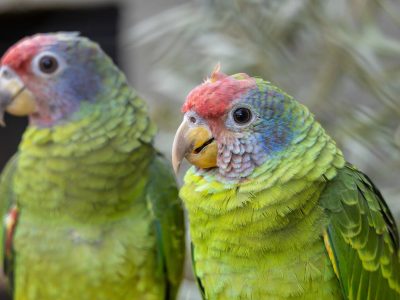
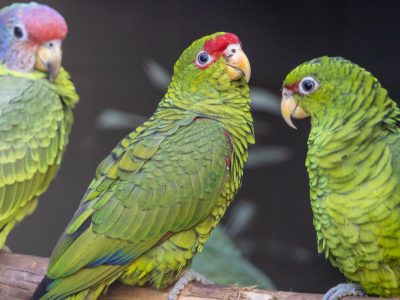
Earlier this year, nine parrots seized during an attempted international trafficking operation were handed to Zoo São Paulo by IBAMA, Brazil’s environmental protection agency. After quarantine and health checks they moved into the zoo’s Conservation Grove, an area set aside for threatened species. We covered those birds when they arrived.
None of that happens without a hospital behind it. A seizure is only a rescue if there is somewhere for the animals to go and someone qualified to receive them.
Why a zoo hospital matters beyond the zoo
Everything above is paid for by people walking through a gate in São Paulo. The visitors get the jaguars and the hippos and the primates. What they are also buying is a fully equipped veterinary complex sitting behind the exhibits, staffed by people who know how to anesthetize a Barbary sheep and now, as of March, how to give a jaguar a transfusion.
That knowledge does not stay in the building. It goes into the literature, into the next seizure, and into the next jaguar that needs blood.