
On August 28, 2026, the Endangered Wildlife Trust’s Birds of Prey Unit was told that a number of vultures had been found on a property in Limpopo, South Africa, unable to fly. Eighteen of them were collected and taken to the Moholoholo Wildlife Rehabilitation Center. Two died. The other sixteen were back in the sky eight days later, on International Vulture Awareness Day, and the ones carrying tracking units went straight home to their nests.
What happened on the ground
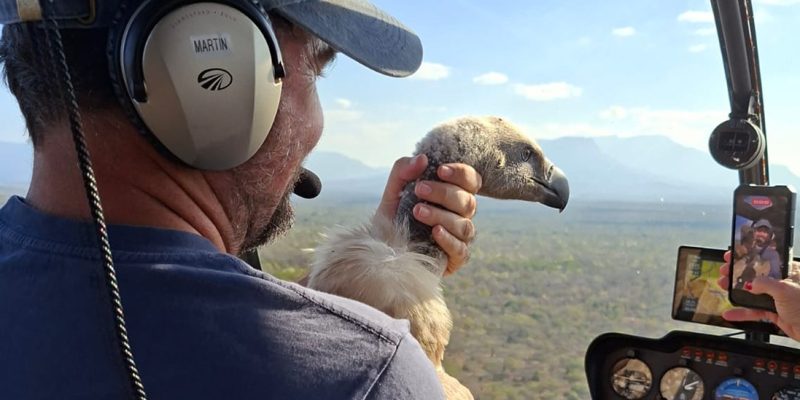
The Hoedspruit Endangered Species Center helped collect the grounded birds and move them to Moholoholo. A helicopter flown by pilot Jana Meyer of Hope for Wildlife took the team over the surrounding country to look for any others that had not been found, and one of the images the trust published is of a Cape Vulture riding in the cockpit on the way to the clinic.
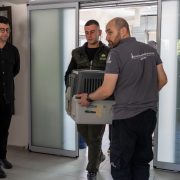
Eighteen birds reached Moholoholo. One died on arrival and a second died that night. The remaining sixteen came through, and the trust is plain about who did that part: rehabilitating vultures means round-the-clock care for the first forty-eight hours while the birds are stabilized, and the clinic team at Moholoholo is the reason there were sixteen to release.
The trust does not say in this account what put the birds on the ground, and we are not going to fill that in.
Sixteen birds, three species
They went back at Moholoholo on September 5, International Vulture Awareness Day, about a week after they arrived: three Hooded Vultures, twelve White-backed Vultures and one Cape Vulture.
The timing mattered for a reason that has nothing to do with the calendar. Winter is the breeding season, and most of the rescued adults had brood patches, the bare area of skin a bird develops to warm eggs and chicks. That meant nests with young in them somewhere out in the Limpopo bush. Male and female vultures share incubation and chick-rearing, so a missing parent is not an inconvenience to the other one, it is half the food supply gone. Every day the adults spent in a clinic was a day their chicks were on a reduced ration.
This is the part of the story that a release photograph does not show, and it is the part that decides whether the rescue worked. The trust reports that the tracked birds returned to their nests straight away.
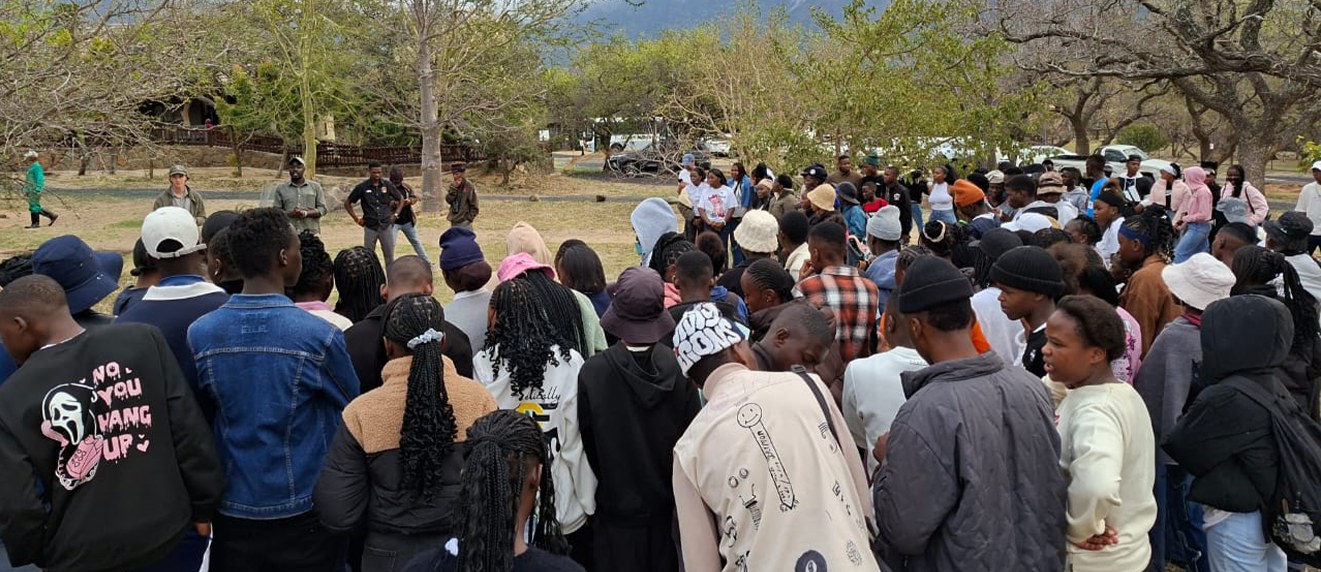
The trust also supported 250 schoolchildren to visit the Cape Vulture Nature Reserve and then travel to Moholoholo to watch the birds go. Two hundred and fifty people who have seen a Critically Endangered vulture leave a box under its own power is a different proposition from two hundred and fifty people who have read that vultures are in trouble.
Which zoo is behind this?
One, and the honest answer has a boundary drawn through the middle of it.
This rescue was funded by the Critical Ecosystem Partnership Fund, through its Rapid Response to Conservation Crises mechanism. That is the funding line the trust prints at the foot of its own account, and it is not a zoo.
The wider program is a different matter. The Birds of Prey Unit’s Vulture Safe Zone work, which is the unit’s long-running effort to make whole landscapes survivable for these same species, names its partners and its funders on the trust’s own website. Among the partners is the Moholoholo Rehabilitation Center, the clinic that treated these eighteen birds. Among the funders, in the trust’s own list, is Cleveland Zoo, alongside the Disney Conservation Fund, Puy du Fou, Alu-Cab, the Bio-Bridge Initiative, Cennergi, Rand Merchant Bank, the Roy Mc Alpine Foundation, the Rupert Nature Foundation, the SANParks Honorary Rangers and WindLab.
So the chain is real and it is also specific: Cleveland Metroparks Zoo helps pay for the vulture program that this rescue’s team runs and that this rescue’s clinic belongs to. It did not pay for these eighteen birds’ week in a clinic. Both sentences are true and we would rather print both than round one of them off.
Worth noting which direction the evidence runs. The Endangered Wildlife Trust publishes the relationship; Cleveland Metroparks Zoo’s own wildlife conservation pages list Andean bear, Asian turtle, giraffe, gorilla, illegal wildlife trade, and lion and cheetah, and name no vulture program at all. That is the same one-sided shape we found in Nigeria, where the Pangolin Conservation Guild named an American zoological society that had not named it back. Zoos are consistently worse than their partners at saying what they fund.
For scale, the Association of Zoos and Aquariums reports that its 235 accredited and certified members spent approximately $372.4 million on conservation across 139 countries in 2025. No published breakdown isolates the African share of that figure and we are not going to invent one.
What the Red List says
The trust called all three species correctly, which is worth saying because we more often end up writing the other kind of paragraph.
The Hooded Vulture, Necrosyrtes monachus, is Critically Endangered on the IUCN Red List with a decreasing population. The White-backed Vulture, Gyps africanus, is Critically Endangered and decreasing. The Cape Vulture, Gyps coprotheres, is Vulnerable and decreasing. Critically Endangered, Critically Endangered, Vulnerable: exactly as the trust wrote them.
Fifteen of the sixteen birds released were Critically Endangered. That is the number to hold on to. An African vulture rescue is not a welfare footnote to species recovery, it is species recovery, because the populations are small enough that sixteen adults with chicks in the nest is a measurable quantity.
What we do not know
The trust has published nothing further about these birds since the release, and its news archive currently stamps every item with the same site date, so the dates in this story are taken from the body of its own account rather than from its feed. The last word on the sixteen is the trust’s own: the tracked ones went back to their nests. How many chicks were still alive to meet them is not reported.
We have written before about the collapse of West African vulture populations and the zoo money behind the response. Limpopo is the same continental problem caught a week earlier, when the birds are still alive to be picked up.
Quick answers
- What happened to the vultures in Limpopo?
On August 28, 2026 the Endangered Wildlife Trust's Birds of Prey Unit was told that a number of vultures had been found unable to fly on a property in Limpopo, South Africa. Eighteen were collected, with help from the Hoedspruit Endangered Species Centre and a helicopter search, and taken to the Moholoholo Wildlife Rehabilitation Centre. The trust does not state in this account what grounded them.
- How many survived?
Sixteen of the eighteen. One bird died on arrival and a second died that night. The rest were stabilized over about forty-eight hours of round-the-clock care and were ready to go back roughly a week later.
- When were they released and which species?
They were released at Moholoholo on September 5, 2026, International Vulture Awareness Day: three Hooded Vultures, twelve White-backed Vultures and one Cape Vulture. Fifteen of the sixteen are Critically Endangered.
- Did the released birds find their chicks?
The tracked birds returned to their nests straight away, according to the trust. Winter is the breeding season and most of the rescued adults had brood patches, meaning they had chicks waiting. Male and female vultures share incubation and chick-rearing, so every day a parent spends in a clinic is a day of reduced food for the nest.
- Which zoo funded this?
The rescue itself was funded by the Critical Ecosystem Partnership Fund through its Rapid Response to Conservation Crises mechanism, which is not a zoo. The wider Vulture Safe Zone programme that the same unit runs, and of which Moholoholo is a named partner, lists Cleveland Zoo among its funders on the trust's own site, alongside the Disney Conservation Fund and others. Cleveland Metroparks Zoo's own conservation pages name no vulture programme, so the evidence for this relationship runs one way only.
- How threatened are these vultures?
The IUCN Red List has the Hooded Vulture, Necrosyrtes monachus, as Critically Endangered with a decreasing population; the White-backed Vulture, Gyps africanus, as Critically Endangered and decreasing; and the Cape Vulture, Gyps coprotheres, as Vulnerable and decreasing. The trust's own wording matched all three.