
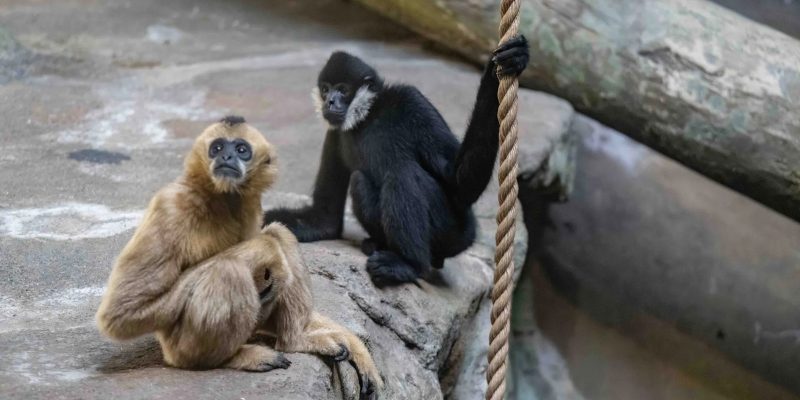
The Pittsburgh Zoo and Aquarium has two new apes, and they arrived just in time for the day built for them. Dennis, 12, and Anastasia, 7, are northern white-cheeked gibbons, and they came from the Gibbon Conservation Center in California to the zoo’s Tropical Forest Complex, where they are still settling in. World Gibbon Day is Saturday, October 24, and the zoo is marking it with activities from 10:30 a.m. to 3 p.m.
What is actually happening at the zoo on Saturday
Educational and hands-on activities about gibbons run through the middle of the day, and there is a collection drive attached to them. Bring old laptops, tablets and phones and the zoo will have them responsibly recycled through a program called Gadgets for Gibbons, which exists because the metals inside consumer electronics are mined in gibbon range countries. Recovering them from a drawer is cheaper, for the forest, than digging up more.
They are apes, and the giveaway is what is missing
Northern white-cheeked gibbons look like monkeys to most people and are not. They are apes, in the same broad group as chimpanzees, gorillas and orangutans, and the quickest tell is that they have no tail. Monkeys generally do. Gibbons are the small apes, which is a real category and not a diminutive: they are built on a completely different plan from the great apes, around speed through a canopy rather than weight.
The color difference in the photograph above is the species, not two different animals mixed up. Every northern white-cheeked gibbon starts life in tan fur. Adult males turn black and grow the large white cheek patches the species is named for. Mature females go the other way, to reddish brown, cream or beige. So a family group of this species looks, at a glance, like it contains two kinds of animal.
Built for the treetops
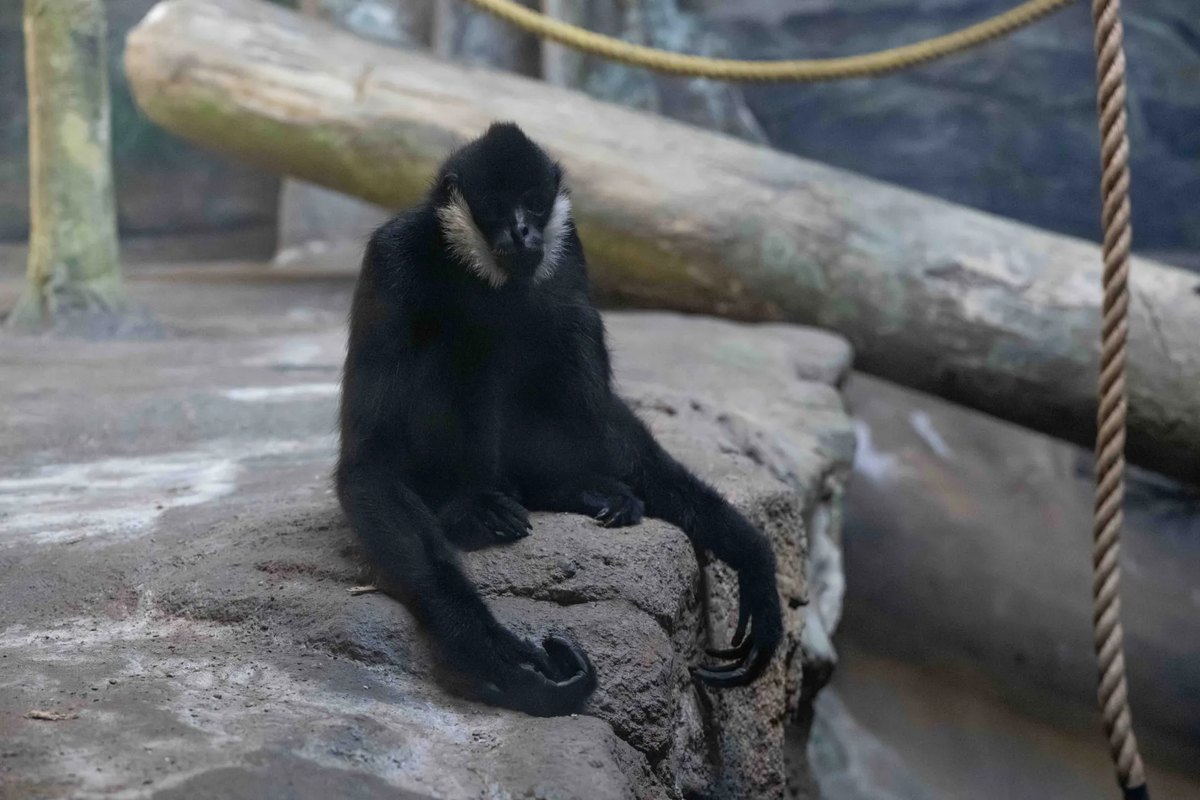
The arms are the point. Gibbons swing hand over hand between branches at speed, and the long forelimbs and hooked fingers you can see above are the machinery for it. On the ground they walk upright on two legs and hold their arms over their heads for balance, which is as close as any wild animal comes to looking like it is being arrested.
In the wild they live in evergreen and semi-evergreen forest in Vietnam, Laos and China. A group’s range can cover 100 acres and they may travel a mile in a day. Their diet is not fully described, but it appears to be mostly fruit, plus flowers, leaves and insects. Dennis and Anastasia are both reported to be enthusiastic eaters of fruit, greens and sweet potatoes. Dennis works puzzle feeders and throws noisy toys around. Anastasia is independent and playful.
How a gibbon family works
A typical group is two adults and their offspring. Pregnancy runs about seven months and a female has one baby every two to three years, which is a slow rate for an animal this size and part of why losses are hard to recover from. A newborn clings to its mother’s middle while she sits with her knees raised to cradle it, and as it grows it shifts to wrapping its long arms around her chest. Young gibbons become independent at around three, reach sexual maturity at six, and usually leave to find their own territory and mate between eight and ten.
Common in zoos, nearly gone in the wild
This is the uncomfortable fact behind World Gibbon Day. Northern white-cheeked gibbons are a familiar animal in zoos and have almost disappeared from the forests they come from. None have been seen in China since 1990 and the species may be gone there entirely. A few groups remain in Southeast Asia, some of them inside protected areas where wildlife law is weakly enforced. Laos is the stronghold, for the simple reason that it still has more habitat than China or Vietnam.
Habitat loss to fuel, timber and farmland is the background pressure. Hunting, for food and for traditional medicine, is likely the main driver of the decline. Scientists estimate the population has fallen by at least 80 percent over 45 years, which is the finding behind the species’ Critically Endangered listing on the IUCN Red List. We were not able to open the assessment page itself during this reporting, so the figure above is the one the zoo cites and we are not attaching an assessment year to it.
Treetop life protects gibbons from most ground predators. It does not protect them from any of this.
Go see them
Dennis and Anastasia are in the Tropical Forest Complex and are still getting used to the place, so expect two apes doing a lot of sitting and looking. The zoo is also midway through its Jack O’Lantern Extravaganza, which runs through November 1, so Saturday can be one trip. Bring the dead phone in your drawer.
Quick answers
- What is World Gibbon Day at the Pittsburgh Zoo?
Gibbon-focused activities run from 10:30 a.m. to 3 p.m. on Saturday, October 24. The zoo is also collecting old laptops, tablets and phones for responsible recycling through its Gadgets for Gibbons program.
- Are gibbons monkeys or apes?
Apes. Northern white-cheeked gibbons are in the same broad group as chimpanzees, gorillas and orangutans. The quickest way to tell is the tail: gibbons do not have one, and monkeys generally do.
- Why are the two gibbons different colors?
That is the species rather than a difference in the individuals. All northern white-cheeked gibbons are born tan. Adult males turn black and grow the white cheek patches the species is named for, while mature females turn reddish brown, cream or beige.
- Where did the Pittsburgh Zoo gibbons come from?
Dennis, 12, and Anastasia, 7, came from the Gibbon Conservation Center in California. They are in the Tropical Forest Complex.
- How endangered is the northern white-cheeked gibbon?
The IUCN Red List lists the species as Critically Endangered. None have been seen in China since 1990 and the species may be gone there. Laos is the stronghold because it retains more habitat than China or Vietnam.
- What is the main threat to gibbons?
Habitat loss to fuel, timber and farmland is the background pressure, but hunting for food and traditional medicine is likely the main driver of the decline.