
The Houston Zoo has announced a run of reptile births and hatchings this season, and one of them had never happened there before: Hosmer’s spiny-tailed skinks, the first of that species born at the zoo in its history.
The zoo, which opened in 1922, said the arrivals span four kinds of reptile. Several came out of pairings recommended through the Association of Zoos and Aquariums’ Species Survival Plan, the program that decides which animals at accredited institutions should breed with which.
What hatched, and what was born
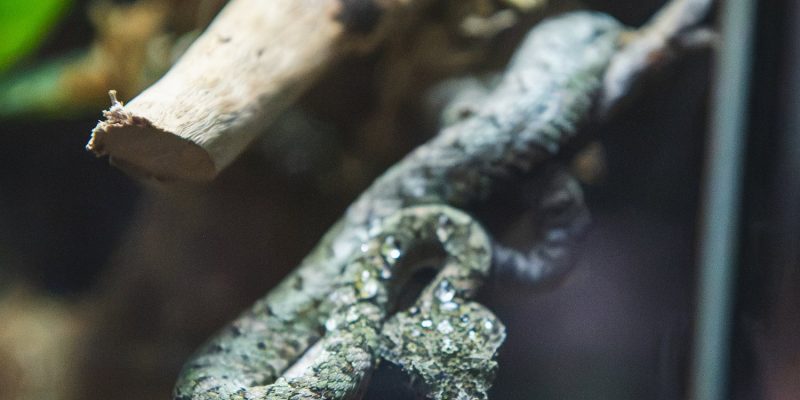
Five eyelash vipers are the showiest of the group. The species does not lay eggs. Females give birth to live young that arrive fully independent, with working fangs and venom from the first day. The feature that gives the snake its name is not hair at all: the raised scales above each eye only look like eyelashes.
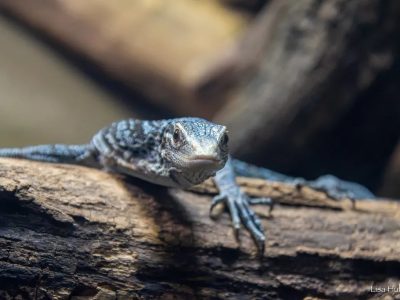
The Hosmer’s spiny-tailed skinks are the first-ever birth of that species at the Houston Zoo. They are live-bearing too, and the newborns emerge as miniature versions of their parents rather than as a different-looking juvenile stage. The body scales carry sharp ridges and the tail scales rise into pronounced spines, which is where the name comes from.
Baby Henkel’s leaf-tailed geckos came from Species Survival Plan pairings. And a group of young star tortoises gives visitors the first chance in recent years to see the species at the Houston Zoo. Star tortoises take their name from the radiating pattern on the shell, and no two of those patterns are alike.
Why does a first-ever birth matter more than it sounds?
A first birth at a given institution is a statement about husbandry rather than about rarity. Reptiles breed on cues: temperature cycles, humidity, day length, substrate depth, the texture of a nest site. Getting a species to reproduce for the first time usually means a keeper team worked out which of those cues the animals had been missing, and the result is repeatable once it has happened once.
That is the distinction worth holding onto with a season like this one. Four species reproducing in the same stretch is not four lucky events. It is one department getting four sets of conditions right.
What the Species Survival Plan is doing here
An SSP is a studbook plus a breeding recommendation. Across every accredited zoo and aquarium holding a given species, the program tracks who is related to whom and advises which pairs should produce offspring, with the aim of keeping the population in human care genetically varied for decades rather than years. A Henkel’s leaf-tailed gecko hatching in Houston under that system is a data point in a continental calculation, not a local decision.
The zoo notes that a portion of every ticket and membership goes to its wildlife conservation work. That is the same funding argument behind Houston’s own campaign against an elephant herpesvirus, where gate money paid for laboratory work nobody else was going to pay for.
When can visitors see them?
The zoo has not published a timetable for each species. The star tortoises are the headline for anyone planning a trip, since they are the group the zoo says has been absent from the visitor experience in recent years.
Quick answers
- What did the Houston Zoo announce?
A season of reptile births and hatchings across four kinds of reptile: five eyelash vipers, Hosmer's spiny-tailed skinks, Henkel's leaf-tailed geckos and young star tortoises.
- Which of them is a first for the zoo?
The Hosmer's spiny-tailed skinks. The zoo says it is the first time the species has been born there in its history. The Houston Zoo opened in 1922.
- Do eyelash vipers lay eggs?
No. The species gives birth to live young, and the newborns are fully independent from the first day, with working fangs and venom.
- Why are they called eyelash vipers?
Because of the raised scales above each eye, which look like eyelashes. They are scales, not hair.
- What is a Species Survival Plan?
An Association of Zoos and Aquariums program that keeps a studbook for a species across accredited institutions and recommends which animals should breed with which, so the population in human care stays genetically varied. Several of the Houston arrivals came from SSP-recommended pairings.
- Can visitors see the star tortoises?
The zoo says the star tortoises give guests the first chance in recent years to see the species at the Houston Zoo. It has not published a viewing timetable for the individual species.