
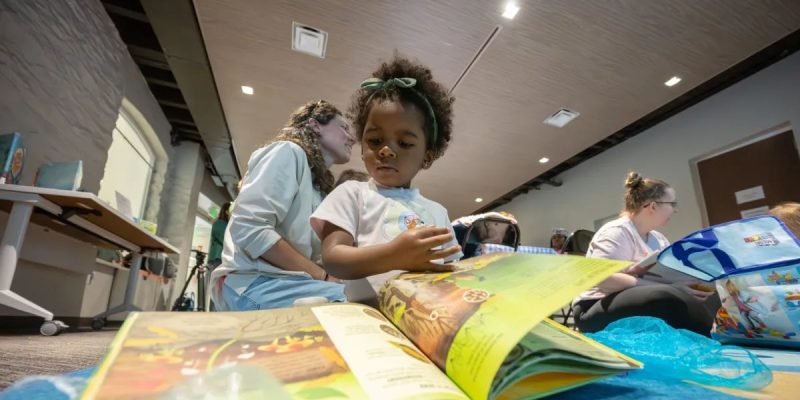
Read five books, get into the National Aquarium free. That has been the deal in Baltimore for ten years now, and the fall 2026 season of Read to Reef opened on October 1.
The program is run with the Enoch Pratt Free Library, and the mechanics are deliberately simple. A Baltimore-area family with a child in fifth grade or younger shows a library card at any Pratt branch and gets a Read to Reef bookmark, first come first served while supplies last. Read five aquatic or conservation-themed books, then redeem the bookmark online for free admission for up to six guests. Visits can be reserved through January 18, 2027, with some blackout dates.
The ten-year numbers
This is the tenth year, and the totals are the reason it is worth writing about rather than filing under nice idea. Nearly 27,000 Baltimore-area students have taken part since 2016. They have read more than 134,000 books between them. The program has produced more than 104,000 free aquarium visits for local families.
That last figure is the one that does the work. A child who reads five books about the ocean and then stands in front of a reef tank has closed a loop that a book alone cannot close, and a family of six walking in without paying is a different proposition from a family of six buying tickets.
“We’re excited to kick off the school year with another season of Read to Reef,” said Jennifer Driban, President and CEO of the National Aquarium. “Over the last ten years, the program has had an incredible impact on young Baltimore residents and their families, sparking curiosity, compassion, and connection with nature, both in the pages of books and in person at the Aquarium.”
Who picks the books
The booklist is put together jointly by Pratt librarians and Aquarium educators, which is an unusual pairing and shows in the range: read-aloud picture books at one end, nonfiction with real science in it at the other, so a second grader and a fifth grader can both find five books that are actually at their level.
The Enoch Pratt Free Library is Baltimore’s public library system, and its side of the partnership is the distribution network: every branch, every neighborhood, no sign-up form.
“Strong partnerships create strong communities, and our decade-long collaboration with the National Aquarium shows how Baltimore organizations can come together to make a lasting impact on their communities,” said Chad Helton, President and CEO of the Enoch Pratt Free Library. “Each year, the Read to Reef program introduces new readers to the world of conservation and marine science and encourages them to discover the things and places around them, from their local library to the depths of the ocean.”
Is it actually free?
Yes, on both ends. The bookmark costs nothing, the books come from the library, and the redeemed admission covers up to six guests. A parent whose family went through this year’s spring session told the aquarium that Read to Reef had been one of the most valuable local programs of their children’s childhood.
The aquarium’s other work in the city runs on the same logic of showing people the animal rather than describing it: in September it sent nine rehabilitated patients back into the Atlantic off Ocean City, every one of them named on a Baltimore theme.
Quick answers
- How does Read to Reef work?
A Baltimore-area family with a child in fifth grade or younger shows a library card at any Enoch Pratt Free Library branch and receives a Read to Reef bookmark, first come first served while supplies last. After reading five aquatic or conservation-themed books, the family redeems the bookmark online for free National Aquarium admission for up to six guests.
- When does the fall 2026 season run?
Bookmarks became available on October 1, 2026, and redeemed visits can be reserved through January 18, 2027. Some blackout dates apply.
- Does it cost anything?
No. The bookmark is free, the books come from the library, and the redeemed admission covers up to six guests.
- Who chooses the books?
Pratt librarians and National Aquarium educators put the booklist together jointly, covering read-aloud picture books through to nonfiction, so children at different reading levels can each find five titles.
- How many families have used it?
Nearly 27,000 Baltimore-area students have taken part since the program began in 2016, reading more than 134,000 books between them and producing more than 104,000 free aquarium visits.