
Breeding gharials in a zoo is hard enough that doing it once is a milestone. The Fort Worth Zoo has now done it in two consecutive years, and no other institution in North America has managed the same.
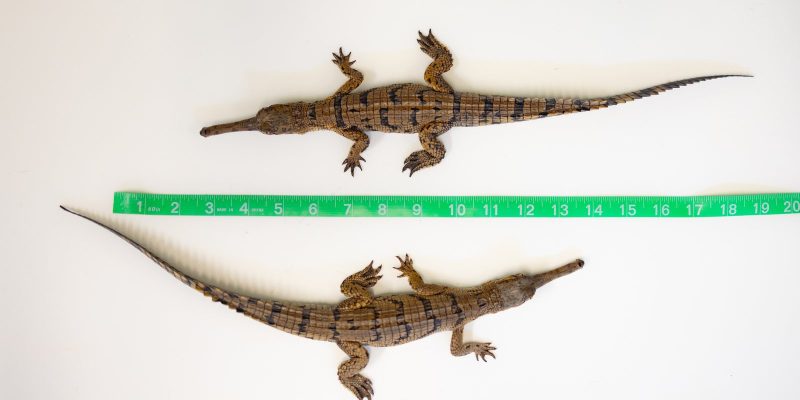
Two hatchlings emerged on June 16 and June 22, 2024, following the zoo’s first multiple hatching the previous summer. That 2023 clutch already made Fort Worth the only North American institution to produce multiple offspring of the critically endangered crocodilian. Repeating it in back-to-back years is the part that is genuinely unusual.
A habitat built for one job
The gharial habitat inside the zoo’s Museum of Living Art was designed in 2010 with breeding specifically in mind, and the design decisions are unusually literal about what the animals need.
Water temperature is regulated. The waterfront is angled rather than stepped, because gharials have short legs and need easy passage between wet and dry ground. And there are heat coils buried in the sand, so the sand stays hot enough for females to lay in.
Those are not general-purpose exhibit features. They are a list of the specific obstacles that stop gharials from nesting, solved one at a time.
Two mothers, not one
The 2024 hatchlings came from eggs laid by two different females in the zoo’s group. For a species with as few managed-care offspring as this one, that matters more than the headcount: it widens the genetic base of the population rather than deepening a single line.
Vicky Poole, the zoo’s assistant curator of ectotherms, accepted the 2024 Joseph Laszlo Memorial Award from the International Herpetological Symposium on behalf of the team, for the husbandry and breeding work behind the previous year’s hatchlings.
The animal itself
Gharials are among the largest crocodilians, and the most specialized. The long, thin snout is a fish-catching instrument. Males reach 16 feet and close to 1,500 pounds; females stay somewhat smaller. The hatchlings were just over 12 inches at the time of the announcement, with snouts that will keep elongating as they grow.
The species is listed as critically endangered by the International Union for Conservation of Nature. Habitat destruction, pollution and river fragmentation have all pushed it toward the edge in its native river systems, which is what makes a captive population that reproduces on its own worth this much engineering.
Other American facilities have taken similar long-horizon approaches to crocodilians in the wild: Gatorland now pays trappers not to kill the alligators they are called out to remove.