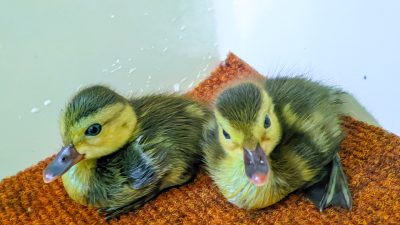

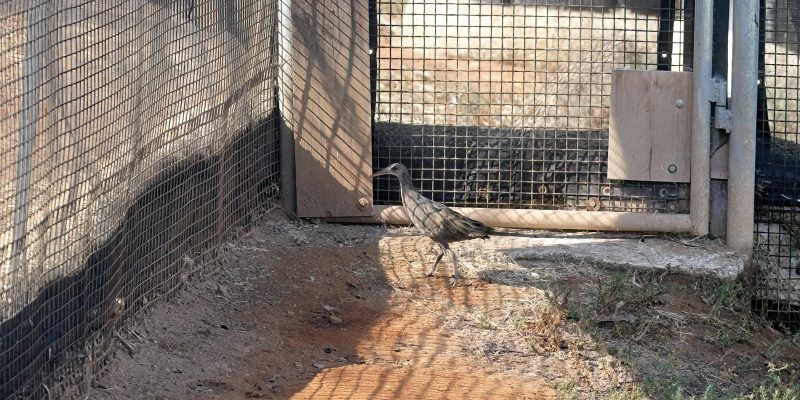
On August 18, two Ridgway’s rails hand-raised at SeaWorld San Diego‘s bird rescue center were moved to a protected marsh near Chula Vista. They will be released into the wild from the Living Coast Discovery Center in about two weeks.
They are the latest of more than 400 rails the partnership has bred and released since 2000.
A bird almost nobody has heard of
The Ridgway’s rail is endangered, native to the coastal salt marshes of Southern California and Baja California, and formerly known as the light-footed clapper rail. It is a secretive, chicken-shaped marsh bird that runs rather than flies and is heard far more often than seen.
Its problem is entirely a habitat problem. The species depends on tidal salt marsh, and Southern California has lost the overwhelming majority of its coastal wetlands to development. What remains is fragmented into pockets, and a marsh bird that will not cross open ground cannot move between pockets on its own.
That is why captive breeding matters here in a way it does not for every endangered species. The birds are not being rescued from hunting or disease. They are being carried, by people, across gaps in a landscape that no longer connects.
Team Clapper Rail
The program runs under the name Team Clapper Rail, a partnership of the U.S. Fish and Wildlife Service, the Living Coast Discovery Center, the San Diego Zoo and SeaWorld San Diego.
“The success of the light-footed Ridgway’s rail captive breeding program is a result of the strong, strategic partnership among the U.S. Fish and Wildlife Service, Living Coast Discovery Center, San Diego Zoo, and SeaWorld San Diego,” said Sandra Hamilton, a fish and wildlife biologist with the USFWS. “By incorporating new, genetically fit individuals, we continue to strengthen both the breeding population and the wild population.”
SeaWorld’s bird specialists hand-raised four rail chicks over three months this year. Rather than all going straight to the marsh, the birds will be introduced to future mates at SeaWorld San Diego, San Diego Zoo Safari Park and the Living Coast Discovery Center. The offspring of those pairings are what eventually goes into the wild.
It is a two-track program: some birds released, some held back to breed the next release. Twenty-six years of running it that way is what produces a number like 400.
The evidence it works
Releasing birds proves nothing on its own. What matters is whether released birds breed.
“In recent years, we learned that one of our chicks was spotted at the Bolsa Chica Reserve with a clutch of her own chicks,” said Katharine Leon, director of operations at the Living Coast Discovery Center. “One of the most rewarding parts of this work is knowing that a bird we helped raise is successfully reproducing in the wild.”
That single sighting is worth more than any release count. It is the difference between a population being restocked every year and a population that has started running itself.
Before release, the birds spend time at the Living Coast Discovery Center adjusting, with staff encouraging natural foraging behavior to improve their odds once they are out.
“We are honored to be a part of such an important conservation effort,” said Justin Brackett, curator of birds at SeaWorld San Diego.
The same measure, wild-born offspring rather than release counts, is what conservation programs are increasingly built to detect. The Wilds is funding isotope analysis for exactly that purpose on its burying beetles.