
Put a treat under one of two boxes, give a chimpanzee a hint about which one, then give her a better hint pointing the other way. What she does next turns out to be one of the more interesting questions in animal cognition, and the answer came from a sanctuary island in Lake Victoria.
Chimpanzees at the Ngamba Island Chimpanzee Sanctuary in Uganda held on to their first guess when the new evidence was weaker than the old evidence, and switched when it was stronger. They were not following whatever they had seen most recently. They were weighing it. The work was published in Science on October 30, 2025, and the sanctuary’s executive director is one of its authors.
What did the study actually test?
Belief revision, which is the unglamorous name for something people do constantly: you think one thing, you learn something new, and you decide whether the new thing is good enough to make you change your mind. Doing that well means keeping track not just of what you believe but of how good your reasons are. Philosophers have long treated it as a hallmark of human-level rationality, and the authors note that it had barely been tested in any other species.
The setup was two boxes and a food reward. The chimpanzee got a weak first clue about which box held it, then a stronger, more direct clue pointing at the other box. Between fifteen and twenty three of the sanctuary’s residents took part across five experiments, voluntarily and without sedation or restraint.
The pattern held up under modeling. When the researchers built formal models of how an animal weighing evidence should behave, the chimpanzees’ choices tracked those predictions rather than the simpler explanations, which are associative learning, or a bias toward the most recent thing seen. The paper’s own conclusion is that the animals “metacognitively evaluate conflicting pieces of evidence within a reflective process.” Metacognition here means thinking about your own thinking, and it is the part that makes the result notable rather than merely cute.
Who did the work?
An international team of eight, listed on the paper as H. Schleihauf, E. M. Sanford, B. D. Thompson, S. Zhang, J. Rukundo, J. Call, E. Herrmann and J. M. Engelmann, working across Utrecht University, the University of California, Berkeley, the University of St Andrews, the University of Portsmouth and the sanctuary itself. Joshua Rukundo is executive director of the Chimpanzee Sanctuary and Wildlife Conservation Trust, which runs Ngamba.
“This publication in Science demonstrates the immense global value of the work we do here at Ngamba Island,” Rukundo said. “Our non-invasive research protocols show that animal welfare and world-class scientific discovery can go hand in hand.”
The journal ran an accompanying commentary by the Duke University evolutionary anthropologist Brian Hare under the headline “Chimpanzees are natural scientists,” arguing that the machinery behind scientific reasoning, forming a hypothesis and abandoning it for a better one, runs deeper in our shared ancestry than had been assumed.
Why does a sanctuary produce this kind of result?
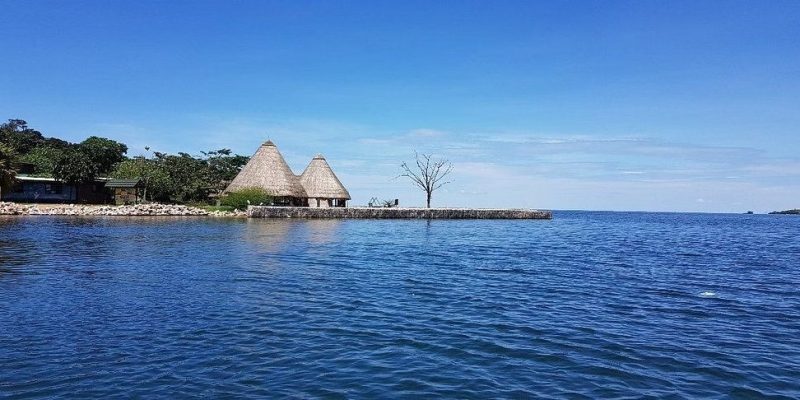
Because of how the animals live. Ngamba Island is a forested island in Lake Victoria, about ninety five acres of it, and the more than fifty chimpanzees there were all rescued rather than bred for research. They live as a social group with veterinary care and keepers, and they can decline to take part in a session and walk away.
That combination is rare. A troop that is settled, healthy, individually known and free to opt out is a population where you can ask a careful cognitive question and trust the answer, without doing anything to the animals that a welfare committee would object to. It is the same argument accredited zoos and aquariums make about their own research programs, made here by a sanctuary in Uganda.
Has the finding held up since?
It is still being argued about in the ordinary way, which is the healthy outcome. In September 2026, almost a year after publication, a commentary by K. Andrews titled “Epistemic rationality in chimpanzees” appeared in the journal Learning and Behavior, taking up what the Ngamba results mean for how we describe animal minds. We found no correction or retraction attached to the original paper.
Which zoo or aquarium funded it?
We could not establish one, and we want to be precise about the limits of that. Science sits behind a paywall we were unable to open, so we have not read the paper’s funding statement. What we can read is the sanctuary’s own account of who it works with, and it names the Uganda Wildlife Authority, the Jane Goodall Institute and what it describes as global primate welfare organizations. No accredited zoological institution appears there.
So the honest version is that the funding line behind this particular study is not something we can verify, and nothing on the sanctuary’s side points to a zoo. The Association of Zoos and Aquariums reports that 235 accredited and certified facilities spent approximately $372.4 million on conservation across 139 countries in 2025, and no published breakdown isolates a regional share of it. We are not going to attach an institution to this study on the strength of a general figure.
For another chimpanzee who arrived at an African sanctuary by an unlikely route, see our piece on Manno at Sweetwaters.
Sources: H. Schleihauf and colleagues, “Chimpanzees rationally revise their beliefs,” Science 390(6772), pages 521 to 526, doi:10.1126/science.adq5229; B. Hare, “Chimpanzees are natural scientists,” Science 390(6772), pages 444 to 445; and the Chimpanzee Trust’s account of the study.
Quick answers
- What did the study find?
That chimpanzees revise a belief when the evidence against it is stronger than the evidence for it, and hold on to it when the counterevidence is weaker. The authors conclude the animals were weighing the quality of the evidence rather than following the most recent thing they saw.
- Where was it published?
In Science on October 30, 2025, as H. Schleihauf and colleagues, Chimpanzees rationally revise their beliefs, volume 390, issue 6772, pages 521 to 526, doi 10.1126/science.adq5229. The same issue carried a commentary on it by Brian Hare of Duke University at pages 444 to 445.
- How were the chimpanzees tested?
With two boxes and a food reward. Each animal was given a weak clue about which box held the food, then a stronger clue pointing at the other box. Between fifteen and twenty three residents of Ngamba Island took part across five experiments, voluntarily, with no sedation or restraint.
- What is Ngamba Island?
A forested sanctuary island of about ninety five acres in Lake Victoria, Uganda, run by the Chimpanzee Sanctuary and Wildlife Conservation Trust. More than fifty rescued chimpanzees live there as a social group, and the sanctuary's executive director, Joshua Rukundo, is a co-author of the paper.
- Which zoo or aquarium funded it?
We could not establish one. The journal is paywalled, so we have not read the paper's funding statement, and the sanctuary's own account of its partners names the Uganda Wildlife Authority, the Jane Goodall Institute and global primate welfare organizations, with no accredited zoological institution among them.