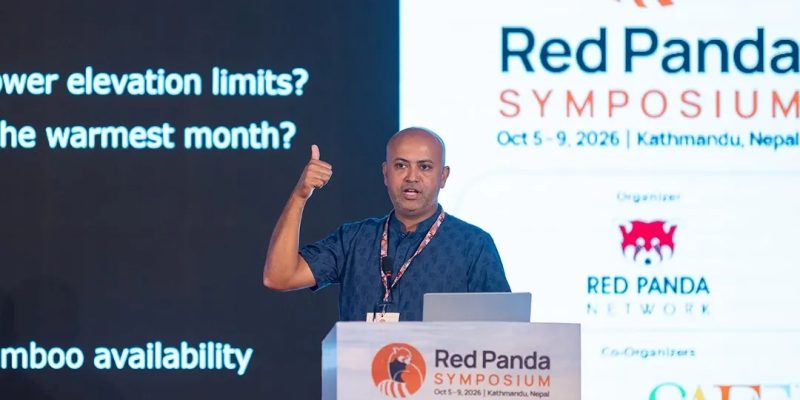
The first Red Panda Symposium closed in Kathmandu on October 9, and its last day started something the species has not had in eleven years: a new IUCN Red List assessment. The Pittsburgh Zoo and Aquarium helped fund the meeting and helped run it.
Dr. Shafkat Khan, the zoo’s Director of Conservation, moderated a session on conservation work across the red panda’s range and gave two presentations, one on how climate change is affecting red pandas and one on forest restoration guidelines for their habitat. The symposium ran from October 5 to 9 and brought together more than 60 people from all five range countries: Nepal, India, Bhutan, Myanmar and China.
The Red Panda Network hosted it, with support from SAFE Red Panda and the European Association of Zoos and Aquaria’s Global Species Management Plan. Pittsburgh Zoo leads the SAFE Red Panda program, and routed its support to the Red Panda Network through it along with organizational help and staff time.
What a Red List reassessment actually decides
The first two days were scientific presentations. The last three went to identifying gaps and agreeing on collaborative next steps, and the final day opened the Red List process: experts from the range countries will supply the data, and the assessors will then decide together which category the species belongs in.
One line in the zoo’s account is worth adjusting gently. It describes the experts as deciding whether the red panda “will be classified as threatened or endangered.” It already is. The IUCN Red List has carried Ailurus fulgens as Endangered since its assessment of April 11, 2015, under criteria A2cde+3cde+4cde, with a decreasing population trend and no global figure for mature individuals at all. What begins now is the first full reassessment since then, and the Red List’s own entry is annotated “Needs updating.” The symposium is answering a question the list has been asking.
That 2015 assessment names the same five range countries that sent delegates to Kathmandu, puts between 41 and 50 percent of the population inside protected areas, and gives the species a generation length of six years. A reassessment can move a category in either direction. The valuable part is not the label but the eleven years of field data that go underneath it.
Pittsburgh has been working this program at home too. We covered the zoo taking the lead of the AZA’s SAFE red panda program in September.
Sumatra, and a workshop about writing things down
The other half of the trip was North Sumatra, where Khan ran a conservation strategy workshop for the Orangutan Information Centre in Medan. OIC had asked the zoo for it after a field visit in April.
The portion Pittsburgh led was on theory of change, which is the discipline of writing down exactly what you are trying to cause, and then what would have to be true at each step for it to happen. It sounds like paperwork and it is the thing that separates a conservation program from a conservation intention. The teams used it to name their priority actions for each landscape and the drivers of forest and wildlife loss those actions are meant to address.
OIC works across several regional landscapes in northern Sumatra and they differ ecologically, so one program run everywhere fits none of them. Pittsburgh is now supporting OIC’s leadership in producing location-specific plans through the end of 2026, and those plans will guide how OIC allocates its own funding and people to regional projects. That is the unglamorous end of conservation money, and it is the end that decides where the rest of it goes.
Both orangutan species on Sumatra are in serious trouble. The IUCN Red List lists the Sumatran orangutan, Pongo abelii, as Critically Endangered, and the Tapanuli orangutan, Pongo tapanuliensis, which was described as a separate species only in 2017, in the same category. Both assessments were published in amended form in 2024 and both record a decreasing trend.
The coffee question
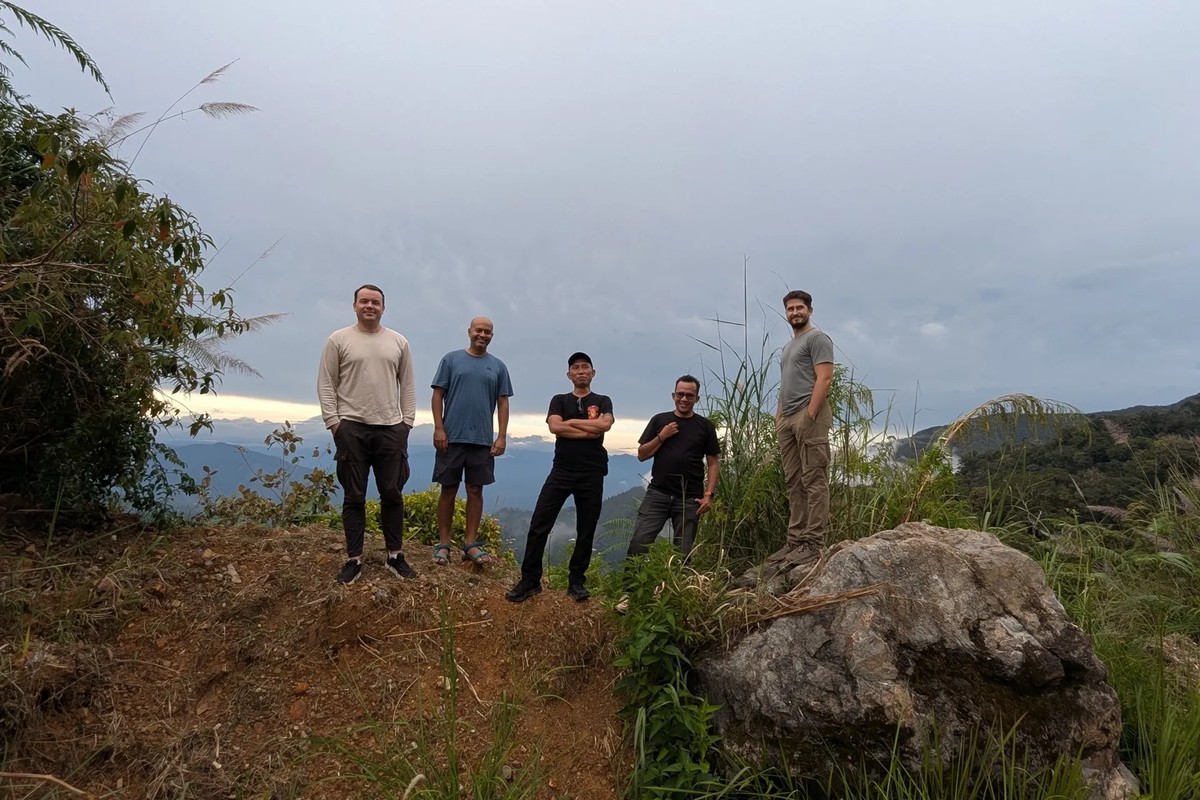
From Medan, Khan traveled to Gayo Lues province with OIC’s executive director Syafrizaldi Jpang, its director of sustainable landscape Binur D Naibaho, its strategist Sinan Serhadli, and Alex Clark of NoFilter Coffee. Gayo Lues is known internationally for high-grade coffee, and OIC is working with NoFilter to connect the coffee and cacao economy to forest protection, so that the industry supporting people in the province is also the reason the forest stays standing. Khan visited farmers in their fields in several villages and toured local processing centers. The zoo says it is now assessing whether it can bring that coffee to Pittsburgh.
A keeper from another American zoo went looking for wild red pandas in Nepal earlier this year, and we followed that trip too. The pattern is the same one: the work happens in the range country, and an accredited zoo in the United States is quietly underwriting a piece of it.
Neither half of this trip produced an animal. A planning workshop and a symposium do not photograph like a cub does. They are what decides where the money goes for the next several years, and a zoo that funds them is paying for the part of conservation nobody gets to visit.
Quick answers
- What was the Red Panda Symposium?
The first symposium devoted to red panda conservation, held in Kathmandu from October 5 to 9, 2026. More than 60 people attended from all five range countries: Nepal, India, Bhutan, Myanmar and China.
- Who organized it?
The Red Panda Network hosted it, with support from SAFE Red Panda and the European Association of Zoos and Aquaria's Global Species Management Plan. Pittsburgh Zoo and Aquarium leads the SAFE Red Panda program and routed its support to the Red Panda Network through it.
- Is the red panda endangered?
Yes. The IUCN Red List has listed Ailurus fulgens as Endangered since its assessment of April 11, 2015, under criteria A2cde+3cde+4cde, with a decreasing population trend.
- How many red pandas are left?
The IUCN Red List gives no global figure for mature individuals. Its 2015 assessment records a decreasing trend and puts between 41 and 50 percent of the population inside protected areas.
- What does a Red List reassessment do?
Experts from the range countries supply current data, and the assessors then decide together which category the species belongs in. The red panda's existing assessment dates from 2015 and the Red List annotates it as needing updating.
- What did the Pittsburgh Zoo do in Sumatra?
Its Director of Conservation, Dr. Shafkat Khan, ran a conservation strategy workshop for the Orangutan Information Centre in Medan and led a section on theory of change. The zoo is supporting the centre in producing location-specific plans through the end of 2026.
- What is theory of change?
The discipline of writing down exactly what you are trying to cause, and what would have to be true at each step for it to happen, so that a program has a stated mechanism rather than an intention.
- Which orangutan species live on Sumatra?
Two. The IUCN Red List lists the Sumatran orangutan, Pongo abelii, and the Tapanuli orangutan, Pongo tapanuliensis, both as Critically Endangered and both with a decreasing trend.