
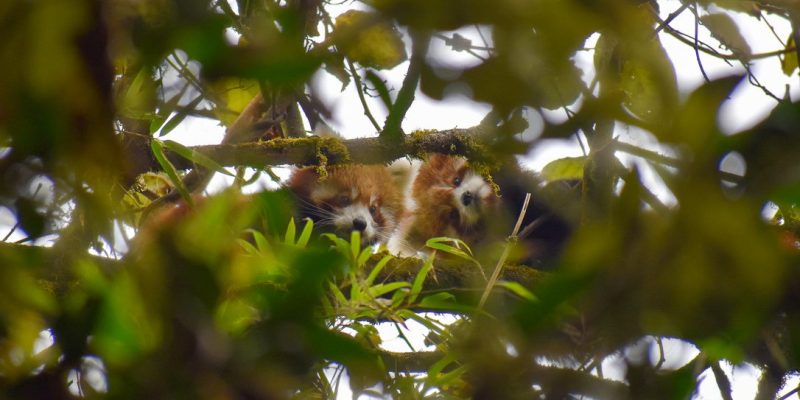
A Virginia Zoo keeper spent part of last December walking Nepalese hill forest with the people paid to protect it, and came home with a list of trees. Lead Keeper Kristin Cruise, who runs Asia: Trail of the Tiger, traveled to Nepal with the Red Panda Network on a grant from the zoo’s own Conservation and Research Grant, and the zoo published her account on September 19.
Her group saw eight red pandas. The usual figure for a two-week trip is one to three.
Who the Forest Guardians are
The Red Panda Network is a nonprofit working on red panda habitat in the Eastern Himalayas, and the Forest Guardian program is its central mechanism. Guardians are local people paid to monitor and protect red panda forest and to run conservation education in their own communities. More than 150 of them work across the network’s project areas in Nepal, covering over 75 community forests.
The design does two things at once. It puts eyes in forest that no visiting biologist could cover, and it makes protecting that forest a source of household income rather than a cost imposed on people who need firewood.
Cruise spent hours tracking with them. The guardians record where nests are, the apparent health of individual animals, the environmental conditions where pandas turn up, and scat. That last one is not an afterthought: knowing precisely which conditions a red panda chooses is what lets the network recreate those conditions in forest that has been cleared.
Watching animals without wrecking them
The trip ran to rules, which is the part of wildlife tourism that usually goes unmentioned. Groups spent no more than 30 minutes observing any individual panda, and kept a greater distance from cubs under six months old.
Cruise also saw Bhumo, a red panda she already tracks remotely through the Fahlo app, which is a strange and rather modern experience: meeting an animal you have been following as a dot on a map.
What 956,000 trees buys
Habitat loss is the single largest threat to red pandas in Nepal, and the specific damage is fragmentation. Human encroachment, overuse of forest resources and unsustainable livestock practices have broken Nepal’s red panda forest into roughly 400 disconnected pieces. Historically the deforestation was severe enough that pandas moved into protected national forest across the border in India to get away from the disturbance.
The Red Panda Network’s answer is the Plant a Red Panda Home campaign, which is closing on a goal of one million trees planted in red panda habitat. More than 956,000 are in the ground.
The interesting number is a different one. Through years of trial and error, the survival rate of nursery-raised seedlings planted into the wild has gone from under 30 percent to over 60 percent. Doubling that rate is worth more than doubling the number of seedlings, and it is the sort of result that only shows up if somebody stays for a decade.
Cruise visited a Forest Conservation Nursery at Jaubari, a restoration site, and planted a tinga tree, one of the species red pandas favor. She brought the list home: rhododendron, tinga, banjh oak and malingo bamboo, which she has since handed to the Virginia Zoo’s horticulture team to work out whether any of them, or close relatives, will grow in coastal Virginia as browse for the zoo’s own red pandas.
That is a small thing and a good example of what these trips are actually for. A keeper who has seen which tree a wild red panda sits in can change what the animals in Norfolk are offered on a Tuesday.
The rugs
The network also runs skills training for women in the region, which in Ilam Bazar means hand-knotted rug weaving. The Red Panda Network supplies the materials, pays a wage for the labor, buys the finished rugs and sells them at a margin that goes back into conservation. One rug takes about a week.
It works the way the Forest Guardian program does. In communities where women are the primary collectors of firewood and fodder from red panda habitat, an income that does not depend on that habitat being cut is a conservation intervention, even though it looks like a craft workshop.
Who paid for it
The Virginia Zoo, out of a grant program it runs for its own staff. The Conservation and Research Grant exists to put keepers into field projects and community science, and this is what the money bought: a keeper with first-hand knowledge of a species she cares for daily, and a set of concrete husbandry changes.
The zoo timed the account to International Red Panda Day, September 19. Its red panda hub is a small one, alongside coverage such as its first green oropendola chick this summer, and the same reforestation work turns up in Tierpark Berlin’s account of its own red panda cub, which cites the same tree total from the other side of the world.
The Plant a Red Panda Home campaign publishes its running tree count. It is worth checking where it has got to.
Quick answers
- What is a Forest Guardian?
A local person paid by the Red Panda Network to monitor and protect red panda habitat and run conservation education in their own community. More than 150 work across the network's project areas in Nepal, covering over 75 community forests.
- How many trees has the Red Panda Network planted?
More than 956,000 in red panda habitat, against a goal of one million. The survival rate of nursery-raised seedlings planted into the wild has risen from under 30 percent to over 60 percent.
- How many red pandas do people usually see on one of these trips?
About one to three. Kristin Cruise's group saw eight, close to the Red Panda Network's record of nine.