
Fifty-two young lesser white-fronted geese went into the Swedish mountains this summer. Fifteen of them are carrying GPS transmitters, and those fifteen are the point.
Nordens Ark, the conservation breeding center on the Bohuslan coast, released 28 birds in the Arjeplog mountains in the first week of July and another 24 in the Gallivare mountains. The zoo announced the second release on Friday, July 10, 2026, and said it would happen “on Sunday,” which was July 12.
How a release works here
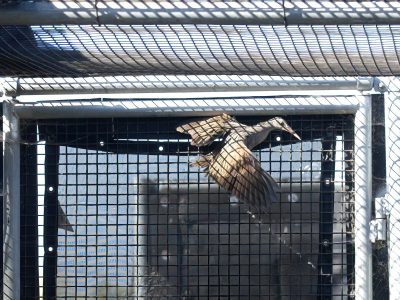
The geese are not simply let out of a crate. Before release they are placed in temporary pens on site, where they settle after the journey and get used to the ground they are about to live on. The pens are opened the following day and the birds leave on their own.
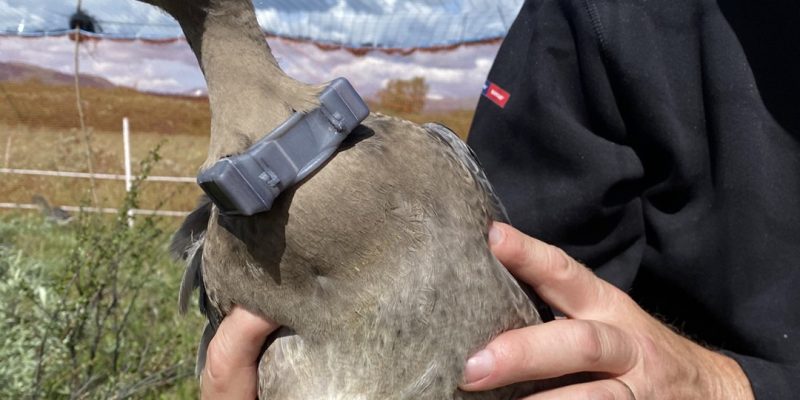
Every bird is ringed so it can be identified later. This year fifteen also carry satellite transmitters, which is a change in what the project can learn. Rings tell you that a bird came back. A transmitter tells you the route it took, where it stopped, where it spent the winter and, when the signal ends, roughly where it was lost.
Opening the pen and watching the geese head out into the mountains is always just as special. Every bird represents many months of work, but also new hope for the species. We know that more and more of the released geese survive and return to the Swedish mountains after their first migration, and it is fantastic to be part of that work.
That is John Soderlindh, an animal keeper at Nordens Ark, in a statement translated from Swedish. The original reads: “Att fa oppna hagnet och se gassen ge sig ut i fjallvarlden ar alltid lika speciellt. Varje fagel representerar manga manaders arbete, men ocksa ett nytt hopp for arten.”
The status change, and which list it is on
Earlier in 2026 the lesser white-fronted goose was moved from Critically Endangered to Endangered on the Swedish national Red List. That is the news, and it is the kind of outcome this beat exists to record: a category that moved the right way because of work somebody did on purpose for fifty years.
It is a national assessment, not a global one, and the two should not be run together. On the IUCN Red List the species is Vulnerable, assessed in 2018, with a global population of 16,000 to 27,000 mature individuals and a declining trend. Sweden’s birds are a small northern piece of that range. The Swedish downlisting says the Swedish population is in better shape than it was. It does not say the species is.
Nordens Ark stated this correctly in its own announcement, naming the Swedish Red List specifically. We are spelling it out because national and global Red Lists share a vocabulary and mean different things, and the difference is the whole meaning of the sentence.
That the lesser white-fronted goose is no longer classed as critically endangered shows that long-term and purposeful conservation work can make a difference. At the same time the species is still strongly threatened and entirely dependent on that work continuing.
Emma Nygren, head of nature conservation at Nordens Ark, in a statement translated from Swedish.
Fifty years, three organizations
Project Fjallgas is one of Sweden’s oldest species conservation projects. The Swedish Hunters’ Association started it in the 1970s. Nordens Ark has been a partner since 1989. Annual releases in the Norrbotten mountains have run since 2010.
Today the project is run jointly by the Swedish Hunters’ Association, Nordens Ark and the Norrbotten Ornithological Society, working closely with the Norrbotten County Administrative Board. The breeding happens at Nordens Ark and at Oster Malma.
Four organizations, one goose, five decades. It is the same shape as the other European recoveries that have actually worked, and it is why a turtle release in Hesse or little owls in the Harz foreland read as routine. Routine is the achievement.
What the announcement does not say
Nordens Ark gives no survival rate for previous years’ birds beyond the statement that more of them are returning, no total for how many geese the project has released since 2010, no cost, and no figure for the current size of the Swedish breeding population. It does not say how long the GPS transmitters are expected to last or who funded them.
Source: Nordens Ark, July 10, 2026. Global Red List category, assessment year and population estimate from the BirdLife International species factsheet for Anser erythropus, the IUCN Red List authority for birds.
Quick answers
- How many lesser white-fronted geese did Nordens Ark release in 2026?
Fifty-two young birds: 28 in the Arjeplog mountains in early July and 24 in the Gallivare mountains on July 12. Fifteen of the 52 carry GPS transmitters and all are ringed.
- Why put GPS transmitters on them?
To record migration routes, stopover sites, wintering areas and survival. A ring only tells you a bird came back; a transmitter tells you the route it took and roughly where it was lost.
- Is the lesser white-fronted goose still critically endangered?
Not on the Swedish national Red List, which moved it from Critically Endangered to Endangered earlier in 2026. Globally the IUCN Red List still lists the species as Vulnerable, assessed in 2018, with 16,000 to 27,000 mature individuals and a declining trend.
- Who runs the project?
Project Fjallgas is run jointly by the Swedish Hunters' Association, Nordens Ark and the Norrbotten Ornithological Society with the Norrbotten County Administrative Board. It began in the 1970s; Nordens Ark joined in 1989 and breeding happens there and at Oster Malma.