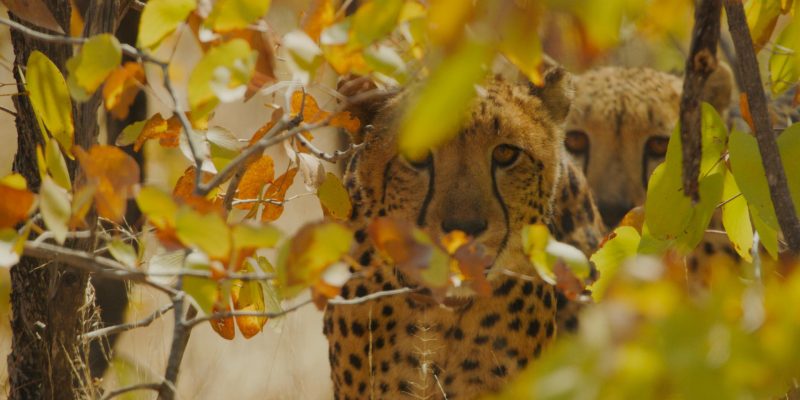
Six cheetahs have been flown from South Africa into a remote southern corner of North Luangwa National Park, the first of the species to stand in Zambia’s Greater Luangwa Ecosystem in more than thirty years. Three males and three females arrived in July 2026, and they are the opening cohort of a plan to put at least eighteen cheetahs into the landscape over two years.
The Endangered Wildlife Trust announced the translocation on July 22, 2026. It is led by Zambia’s Department of National Parks and Wildlife and funded by the Howard G. Buffett Foundation, and behind it sits more than a decade of planning by a coalition that includes one zoological institution doing work no NGO in the group could have done alone.
Why did cheetahs disappear from the Luangwa Valley?
Cheetahs historically occurred there. The last recorded sightings in the valley were in 1998, and the disappearance is thought to have followed successive anthrax outbreaks together with wider human disturbance across the landscape. The Endangered Wildlife Trust describes the return as the first in more than thirty years; Africa Geographic, reporting on the project on August 5, 2026, dates the last confirmed sightings to 1998. Either way the ecosystem has carried lions, leopards, spotted hyenas and African wild dogs for a generation with one large carnivore missing from the set.
Restoring the cheetah completes what ecologists call the carnivore guild, the group of carnivore species occupying and interacting within the same system. That is the ecological argument. The practical one is that Zambia had nowhere to source cheetahs until South Africa’s managed population grew large enough to export some.
Where did the six animals come from?
From fenced reserves, by design. Most remaining wild cheetahs in South Africa live in a network of fenced properties run collectively as a metapopulation, a management approach that moves animals between reserves to keep the genetics and the demographics healthy. The Endangered Wildlife Trust established that metapopulation in 2012 with landowners and provincial and national government, and it has since grown at an average of 8.8 percent a year, which is what made it possible to spare six animals for somewhere else.
The Trust selected the six for relatedness and demographics from Thanda Private Game Reserve, Manyoni Game Reserve, Nkomazi Game Reserve and Dinokeng Game Reserve. One criterion mattered more than the rest.
“For these reasons we only selected cheetah for this project that came from reserves in which they co-exist with lions and where possible the full suite of competing predators,” said Olivia Sievert, who heads the Endangered Wildlife Trust’s Cheetah Conservation Project. “This will help mitigate for this risk but certainly won’t guarantee no loss of cheetah to competitors.”
Lions are the single largest cause of death in South Africa’s cheetah metapopulation, and North Luangwa has plenty of them. Sending in animals that have never met one would have been a way of donating cheetahs to lions.
The six were moved first to the WildlifeVets.com holding facilities near Mbombela for quarantine, then flown to the release site.
What did a zoo contribute to this?
The choice of where to put them.
The African Range-Wide Cheetah Conservation Initiative is listed as a project partner together with the Zoological Society of London, the science-driven conservation charity behind ZSL London Zoo and ZSL Whipsnade Zoo. ZSL ran a quantitative habitat suitability assessment for the project, built from movement and habitat-use data collected from cheetahs at other sites and then applied to the Luangwa Valley to identify suitable habitat and narrow down a release area. Four candidate sites were then scored against a matrix intended to find the safest and most appropriate one. The final choice is in a remote southern section of North Luangwa National Park.
That analysis produced a result worth repeating, because it contradicts the picture most people carry of the species.
“The association of cheetah in open plains is a bit of a false narrative we have created for ourselves over many decades,” Sievert told Africa Geographic. Cheetahs use mixed landscapes of woodland, thicket and open ground, and where other large carnivores are present that variety may be the point: it gives a cheetah more ways to keep out of a lion’s way.
“The scale and ecological integrity of this landscape make it uniquely suited to support wide-ranging wildlife, and provides a rare opportunity for cheetah restoration at a meaningful scale,” Sievert said.
The other named partners are the North Luangwa Conservation Programme with Frankfurt Zoological Society, the Zambian Carnivore Programme and Conservation South Luangwa. Frankfurt Zoological Society is a conservation organization rather than a zoo, and no accredited zoo or aquarium besides ZSL is named anywhere in the project’s own accounting of who did what.
How are the cheetahs being released?
In two stages, and slowly. After quarantine and transport the animals went into holding bomas for health monitoring and acclimatization. Some are being released into a 2,000-hectare predator-proof sanctuary, the rest directly into the wider ecosystem.
“The sanctuary has been specifically designed to help the Cheetah establish familiarity with the release area before entering the wider ecosystem,” Sievert said. “By temporarily concentrating animals within a defined space, it encourages interactions between males and females while promoting scent-marking and territory establishment. This is particularly important for males, whose scent-marking locations form a critical part of Cheetah social structure.”
Every animal carries a satellite collar, and Africa Geographic reports VHF collars as well. Trained monitors from the Zambian Carnivore Programme follow movement, hunting, health, behavior and interactions with other species, working with veterinarians and international specialists.
What the team is watching for is more specific than survival. “We are really focused on watching to see if the males begin to develop territories as that will play a big role in creating a population,” Sievert said. Territorial males anchor breeding, and breeding is the difference between six cheetahs in a park and a cheetah population in a valley.
A further six animals were expected later in 2026. Neither the Endangered Wildlife Trust nor the Zambian partners have published an update on the six founders since the announcement, so nothing is known publicly about how they have fared since July beyond the August 5 reporting above.
How threatened is the cheetah?
The IUCN Red List assesses Acinonyx jubatus as Vulnerable globally, with a decreasing population, which is exactly how the Endangered Wildlife Trust describes it. The Trust puts the global figure at approximately 6,500 mature individuals and reports a decline of around 37 percent over the past fifteen years, driven by habitat loss, conflict with people, illegal trade and shrinking prey.
Against that, six animals in one park is a small number. The point is the direction. Southern Africa holds one of the species’ last strongholds, and this is the first time the region’s managed population has been used to push the cheetah’s range outward rather than simply hold it steady. The project’s stated ambition is a self-sustaining population across a landscape of more than seven million hectares of suitable protected habitat.
For related coverage of southern African carnivore work, see our report on Namibia’s latest national estimates for cheetahs, wild dogs and desert lions.
Quick answers
- How many cheetahs were moved to Zambia?
Six, three males and three females, translocated from South Africa to North Luangwa National Park in July 2026. They are the first cohort of a plan to release at least eighteen cheetahs into the Greater Luangwa Ecosystem over two years, with a further six expected later in 2026.
- Where did the cheetahs come from?
From four fenced South African reserves: Thanda Private Game Reserve, Manyoni Game Reserve, Nkomazi Game Reserve and Dinokeng Game Reserve. All were selected from reserves where cheetahs already live alongside lions, because lions are the largest cause of death in South Africa's cheetah metapopulation.
- What part did a zoo play in the project?
The Zoological Society of London, the charity behind ZSL London Zoo and ZSL Whipsnade Zoo, is a named project partner through the African Range-Wide Cheetah Conservation Initiative. ZSL ran the quantitative habitat suitability assessment that identified suitable habitat in the Luangwa Valley and narrowed the release area to four candidate sites.
- How threatened is the cheetah?
The IUCN Red List assesses Acinonyx jubatus as Vulnerable globally with a decreasing population. The Endangered Wildlife Trust puts the figure at approximately 6,500 mature individuals and reports a decline of around 37 percent over the past fifteen years.