
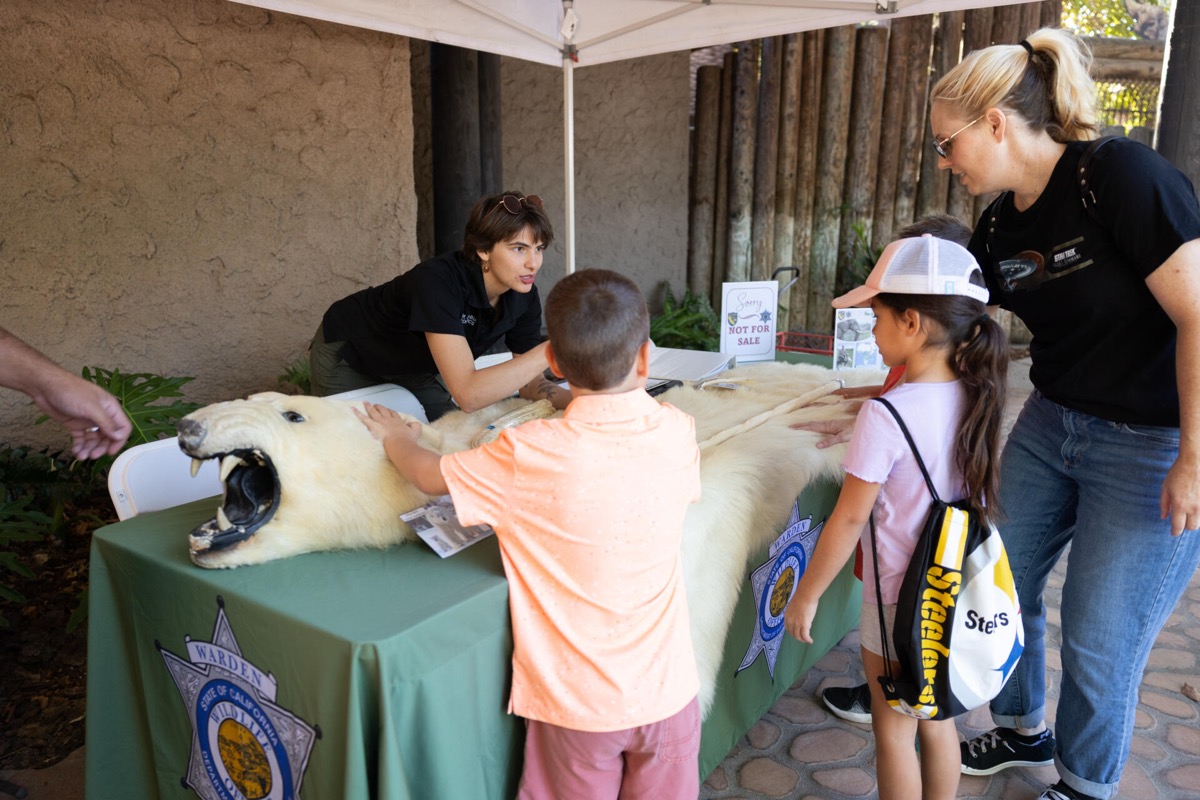
For two days in September the plaza outside Fresno Chaffee Zoo became a place to get rid of ivory. Wardens from the California Department of Fish and Wildlife set up booths at the gate on Friday, September 11 and Saturday, September 12, and anyone who arrived with a carving, a piece of jewelry, a fur or an antique made from a protected animal could hand it over. No questions asked.
The department calls these weekends Toss the Tusk. The interesting part is not the pile of objects. It is what the state does with them afterward.
Where does surrendered ivory actually go?
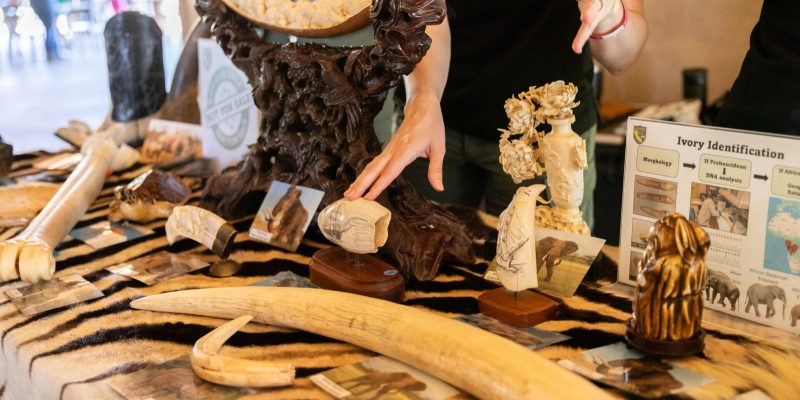
Not into a storage locker. The department takes surrendered items into its own training and research work. Some are handed to law enforcement agencies to teach officers and detection dogs what illegal ivory looks like, so that the next shipment moving through a port or a parcel hub has a better chance of being stopped. Others go to the laboratory bench, where an item can be tested to establish which species it came from, elephant or otherwise, and where that animal originated. That matters because ivory is not one substance. Elephant tusks, walrus tusks and sperm whale teeth all end up carved, and the legal status of a finished object depends on which animal is underneath the carving. Both uses point in the same direction: an object that was worth money to a poacher becomes evidence about poaching.
What is guaranteed is the negative. Anything surrendered to a warden cannot re-enter the market, which is the whole reason the amnesty exists. Fresno Chaffee Zoo did not publish a tally of what came in over the two days.
The law the weekend was marking
Toss the Tusk doubled as an anniversary for California Assembly Bill 96, which was approved on October 4, 2015 and took effect on July 1, 2016. The bill added Section 2022 to the state Fish and Game Code and made it unlawful to purchase, sell, offer for sale, possess with intent to sell, or import with intent to sell ivory or rhinoceros horn, with narrow exceptions. Enforcement sits with the Department of Fish and Wildlife. A violation is a misdemeanor and can also carry an administrative penalty of up to $10,000.
The quieter half of AB 96 is the part it deleted. Before 2016, California law carved out an exemption for elephant parts imported into the United States before 1977, which meant an antique could be sold legally and a modern tusk could be laundered into the trade by calling it one. AB 96 struck that exemption out. That is why a carved mirror frame in somebody’s living room can be contraband in 2026 when it was merchandise in 2015, and it is why a no-questions-asked surrender weekend is a useful thing for a state to offer.
The department set that context out for visitors across the two days with educational talks around the zoo grounds, a screening of a video it produced about the history of AB 96, and a Saturday press conference with remarks from Fresno Chaffee Zoo Director and Chief Executive Jon Forrest Dohlin and from Nathan Smith, the department’s Assistant Chief and Head of Special Operations.
“CDFW thanks all of the Fresno-area residents who came out to the Toss the Tusk event at Fresno Chaffee Zoo,” Smith said. “Those who surrendered wildlife products are doing their part to help us in our mission to stop wildlife trafficking that is very much taking place across California, including in the Central Valley. We are grateful to also have had the opportunity to connect with the community to educate and spread the word about our work to protect not just wildlife in this state, but wildlife around the world.”
Why a zoo is the right doorstep for this
A wildlife agency running an amnesty has a distribution problem: the people holding inherited ivory are not reading enforcement bulletins. A zoo gate on a Saturday morning solves it. The visitors are already there, already interested in animals, and a warden with a table of confiscated carvings is a more persuasive argument than a leaflet.
Fresno Chaffee Zoo has standing on both of the animals at the center of AB 96, the elephant and the rhinoceros. Its southern white rhino herd produced its fifth calf, Eloise, in November 2025, which makes rhinoceros horn a subject the zoo can speak to with the animals standing behind it. The broader pattern is one the accredited zoo world keeps ending up inside: the Bronx Zoo has taken in hundreds of trafficked turtles seized at ports and borders, because when enforcement works, somebody has to look after what is recovered.
The Central Valley is not an obvious front in the global ivory trade, which is precisely the point Smith was making. The trade runs through ordinary places, in ordinary living rooms, and a two-day table outside a zoo is one of the few ways to reach it.
Quick answers
- What is Toss the Tusk?
A surrender event run by the California Department of Fish and Wildlife at which people can hand over ivory, rhinoceros horn and other wildlife products with no questions asked. Fresno Chaffee Zoo hosted one at its gate on Friday, September 11 and Saturday, September 12, 2026.
- What happens to surrendered ivory?
It goes into the department's training and research work. Items are used by law enforcement agencies to teach officers and detection dogs to recognize illegal ivory, and can be tested to establish which species they came from and where that animal originated. Nothing surrendered can re-enter the market.
- What did Assembly Bill 96 change?
It removed an older exemption in California law that had allowed the sale of elephant parts imported into the United States before 1977, and it made the prohibition cover rhinoceros horn as well as ivory. The bill was approved on October 4, 2015 and took effect on July 1, 2016.
- What does the California ivory law actually prohibit?
The prohibition is written around commerce. Section 2022 of the Fish and Game Code covers purchase, sale, offering for sale, possession with intent to sell, and import with intent to sell, with narrow exceptions, and a violation is a misdemeanor that can also carry an administrative penalty of up to $10,000. Anyone with a question about a specific object should ask the department rather than rely on a summary.
- How much was surrendered at the Fresno event?
Fresno Chaffee Zoo did not publish a count. The items the department showed included whole elephant tusks, carved ivory, scrimshaw, furs and a polar bear hide.