
A team from the Lilongwe Wildlife Trust flew over Vwaza Marsh Wildlife Reserve in northern Malawi to do one job, and came back having done two.
The planned job was routine maintenance of a sort that rarely makes the news: a tracking collar on one of the reserve’s elephants had worked loose and needed to come off. The Trust was there to assist the Nyika-Vwaza Co-Management Trust, which manages the reserve jointly with Malawi’s Department of National Parks and Wildlife.
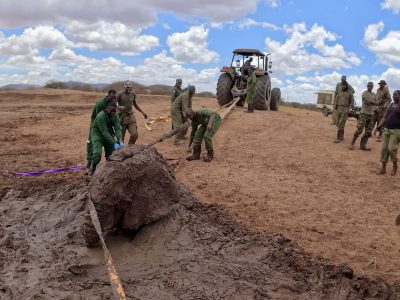
From the air, the team spotted a second African savanna elephant. She was significantly underweight and appeared to be injured.
Tracking her on foot
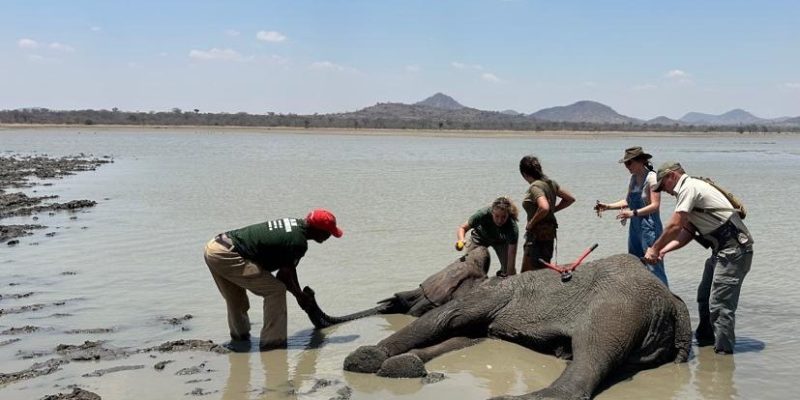
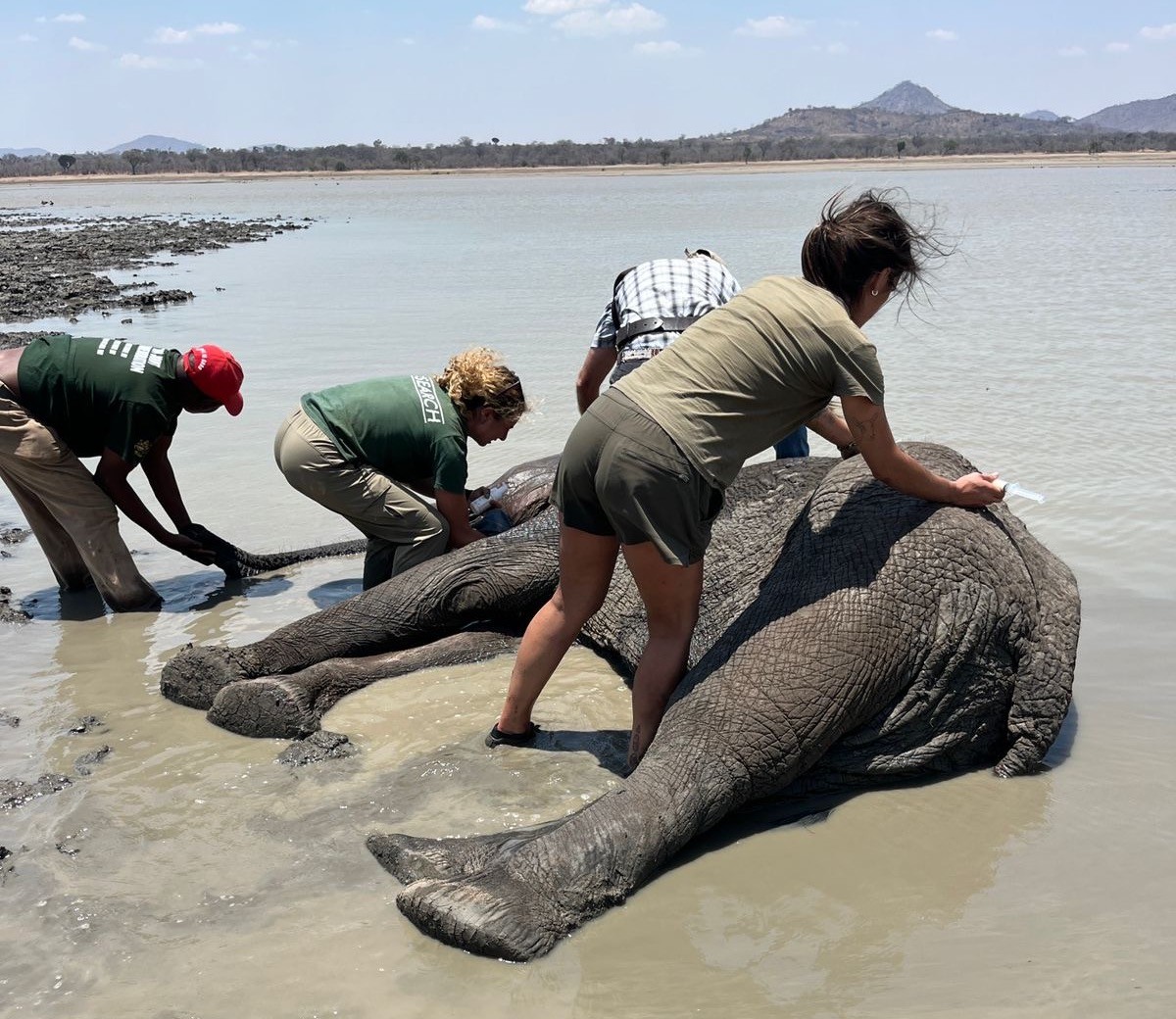
The bush was too dense to dart the animal from the aircraft, so the team landed and followed her on foot, using a drone to keep track of where she was. Getting into position took a while. They eventually darted her near the edge of a lake, which had the practical advantage of helping to keep a sedated elephant cool.
With her trunk held clear of the water, the team found and removed a snare that had caught around her neck and ears. The Trust judged that it had most likely been interfering with her ability to eat, which would account for her condition. The wound was treated, the anesthetic was reversed, and the team stayed with her until she was up and had walked away.
They found her again the following day in woodland, looking well. The collared elephant they had originally come for was located too, and its collar removed.
Not an isolated case
The Trust is explicit that this was not a one-off. In the months around the rescue it responded to snare incidents involving lions, antelopes, zebras and pangolins among others, and it describes snaring as a cause of intense and prolonged suffering rather than a quick death.
That matters for how a story like this should be read. A snare is indiscriminate. It is set for meat and it closes on whatever walks into it, which is why a single reserve can produce casualties across that range of species in a matter of months, and why removal work is continuous rather than occasional.
We checked the Trust’s newsroom for anything published after this rescue that would change the picture, and found nothing: the elephant has not been the subject of a follow-up, and the Trust’s subsequent posts deal with its impact report, its volunteer placements and its education program. The last published word on her is that she was seen the next day and was well.
Who funds this work
This is a field organization rather than a zoo, so the question worth asking is which accredited zoological institutions pay for it. We went through the Trust’s published list of donors and partners, and the answer is none of them.
The Trust’s donors include the Animal Welfare Institute, the Beit Trust, the Born Free Foundation, the Elephant Crisis Fund, the Ernest Kleinwort Charitable Trust, Fondation Brigitte Bardot, Fondation Segré, the GEF Small Grants Program, GIZ, the IWT Challenge Fund, the Olsen Animal Trust, the Pangolin Crisis Fund, Tusk Trust, the Wildcat Foundation and the Woodtiger Fund, alongside the Nyika-Vwaza Trust. Its partner list runs to African Parks, PAMS Foundation, the Tikki Hywood Foundation, three Malawian universities and a number of government departments.
There is not a zoo or an aquarium anywhere on either list. That is a finding rather than a gap, and it is worth stating plainly, because the assumption that Western zoo money sits behind most African field conservation does not survive contact with the donor pages. The Nyika-Vwaza Trust appears on both the donor list and in this rescue, which is a tidier line than any zoo connection would have been: the body that co-manages the reserve also helps pay for the veterinary capacity that works in it.
For sector context, the Association of Zoos and Aquariums reports that its 235 accredited and certified members spent approximately $372.4 million on conservation across 139 countries in 2025. No published breakdown isolates an African share, and we are not going to invent one.
Because no zoological facility is part of this story, this report carries no facility hub. That is the correct outcome rather than a missing field.
The wider program
Veterinary response is one strand of the Trust’s work, which also covers wildlife rescue and rehabilitation at the Lilongwe Wildlife Centre, nature crime investigation and prosecution support, and environmental education. Earlier this year the same organization returned another troop of rehabilitated vervet monkeys to the wild, which is the other end of the same pipeline: animals that come into care because of snares, traps and the pet trade, and go back out when they are ready.
Source: Lilongwe Wildlife Trust, “Desnaring an elephant,” May 20, 2026. Donor and partner information from the Trust’s published donors and partners page.
Quick answers
- What happened to the elephant?
A Lilongwe Wildlife Trust team darted her at the edge of a lake in Vwaza Marsh Wildlife Reserve, removed a snare caught around her neck and ears, treated the wound and reversed the anesthetic. She got up and walked away, and the team found her again the next day in woodland, looking well.
- Why was the team already there?
To remove a tracking collar that had worked loose on a different elephant, assisting the Nyika-Vwaza Co-Management Trust. They spotted the injured animal from the air while flying to locate the collared one, and did both jobs in the same trip.
- Why did they land instead of darting from the air?
The bush was too dense to dart the animal from the aircraft, so the team landed and tracked her on foot, using a drone to follow her position.
- Why does a snare cause an elephant to lose weight?
The snare was caught around her neck and ears, and the Trust judged that it was most likely interfering with her ability to eat. Snares cause prolonged injury rather than a quick death, which is why animals caught in them are often found in poor condition.
- Which zoos fund the Lilongwe Wildlife Trust?
None that we could verify. We went through the Trust's published donor and partner lists, which run to roughly twenty-five donors and thirty partners including trusts, foundations, government departments and three Malawian universities, and found no zoo or aquarium on either list.
- Is snaring common in the reserve?
The Trust says this was not an isolated case and that in the months around this rescue it responded to snare incidents involving lions, antelopes, zebras and pangolins among other species.