
Namibia now has roughly 1,200 cheetahs, somewhere between 130 and 350 African wild dogs in about 35 packs, and around 12 desert-adapted lions using the coastal habitat of the Skeleton Coast. Those are the headline numbers from a national meeting held in Windhoek on August 7, 2026, and they were put on the table by the researchers who collected them.
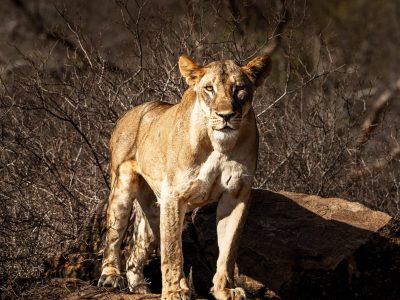
That last figure needs its qualifier attached to it or it will be misread, so here it is up front: the twelve lions are the exceptional group that uses the Skeleton Coast itself. They are not the whole desert-adapted lion population of northwestern Namibia, and the presenters said so.
Who was in the room
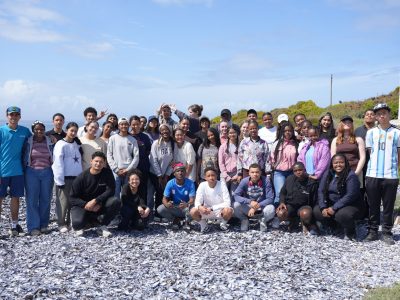
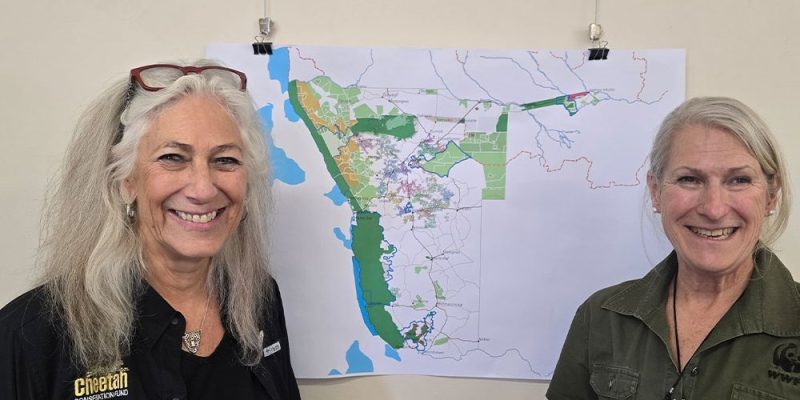
The Large Carnivore Management Association of Namibia convened the Multi-Stakeholder Working Meeting on Human-Wildlife Conflict and Large Carnivore Conservation in Namibia, working with WWF Namibia, at the Community Conservation and Inspiration Hub in Windhoek West. More than 30 people attended in person and another 10 online, from government, research, farming, hunting and tourism.
Formal presentations came from the Cheetah Conservation Fund, WWF, the Leibniz Institute for Zoo and Wildlife Research, the Desert Lion Conservation Project and the Kalahari African Wild Dog Conservation Project. The association itself is worth explaining, because its name understates it: formalized in 2001 after starting as an informal forum in 1996, it is a not-for-profit umbrella network that pulls farmers, researchers, conservationists, hunters and government into one place, and it is the body behind Namibia’s own Carnivore Red Data Book.
The numbers, and who produced them
Namibia is home to 34 terrestrial carnivore species. Dr. Tim Hofmann of the Cheetah Conservation Fund presented an overview showing that 11 of the 34 are considered either Threatened, which is six species, or Near Threatened, which is five. The large carnivores are in worse shape than the medium and small ones, and the cats are worse off than the other carnivore families: four of Namibia’s seven cat species are threatened.
The species estimates were each attributed to the person who produced them. The cheetah figure of approximately 1,200 animals came from Ruben P. of the Leibniz Institute for Zoo and Wildlife Research. The African wild dog estimate of 130 to 350 animals in roughly 35 packs, with the population potentially declining, came from Nadja La Roux of the Kalahari African Wild Dog Conservation Project. The count of about 12 desert-adapted lions on the coast came from Dr. Flip Stander of the Desert Lion Conservation Project.
These are estimates from different monitoring methods over different survey areas, and the release says so rather than presenting them as a single census. What they share is direction.
Naming the list, every time
The release describes African wild dogs as “classified as Critically Endangered in Namibia.” That is a national listing rather than a global one, and the distinction matters for a reader trying to place the animal.
The IUCN Red List assesses the African wild dog, Lycaon pictus, as Endangered globally, with a decreasing population, and the cheetah, Acinonyx jubatus, as Vulnerable globally, also decreasing. Namibia’s own assessment puts the wild dog a category higher within the country. Both are true. A national red list exists precisely to say something the global one cannot, which is how a species is doing inside one set of borders, and in Namibia the wild dog is doing worse than it is across its range as a whole.
One more piece of vocabulary, because it will otherwise mislead: the Leibniz Institute for Zoo and Wildlife Research is a research institute in Berlin, not a zoo. It works on the biology of wildlife in zoos and in the field, and it is the source of the cheetah number here. No zoological collection produced that figure.
What the meeting decided to do about it
The discussion turned on a point that every large carnivore program in southern Africa eventually reaches: protected areas alone cannot hold animals that range as widely as these do. Farmers, conservancies, traditional and local institutions, private landholders and rural communities are where the outcome is actually determined, and they need practical support to produce food alongside predators.
The approaches on the table included Other Effective Area-Based Conservation Measures, which recognize sustained conservation happening outside formal protected areas; wildlife credits and other results-based payments that direct money to communities and land managers delivering verified outcomes; early warning technology that lets landholders act before a conflict event rather than after it; livestock protection, deterrence and rapid-response measures fitted to local conditions; and ecosystem stewardship certification to give market recognition to responsible producers.
Four priorities came out of it: coordinated and comparable data on populations, conflict incidents and what mitigation actually achieves; getting proven conflict-prevention tools to more producers through training and trusted local partners; making sure the cost of conserving wildlife on working land does not fall mainly on the households and farms that share ground with it; and sustained cooperation across government, producers, conservancies, hunting and tourism interests, researchers and the private sector.
“The updated figures are a warning and a call to action. Namibia remains a global stronghold for large carnivores, but their future depends on practical support for the farmers, conservancies, and communities who share the landscape with them,” said Dr. Laurie Marker, founder and executive director of the Cheetah Conservation Fund and chair of the Large Carnivore Management Association of Namibia.
“The meeting showed that Namibia has the science, field experience and emerging finance tools to act. The priority now is to connect them through a coordinated national approach that reduces conflict and delivers measurable benefits for people and wildlife,” said Dr. Pauline Lindeque, wildlife and landscapes program director at WWF Namibia.
Is any zoo paying for this?
Not this, as far as we can establish. We read the release, the association’s own description of itself and the Cheetah Conservation Fund’s account of its organization, and no accredited zoo or aquarium appears as a convener, a presenter, an attendee or a funder of the meeting or the surveys behind it. The fund’s own partners page is not currently reachable, and its description of its structure names fundraising operations in Australia, Canada, Italy, the United Kingdom and the United States rather than institutional partners.
That is a real answer rather than a missing one. The Association of Zoos and Aquariums reports that its 235 accredited and certified facilities spent approximately $372.4 million on conservation across 139 countries in 2025, and a great deal of cheetah work worldwide runs on that money. This particular meeting did not.
Namibian carnivore research does draw zoo money elsewhere, and we have covered a case of it: the eight-year pangolin tracking study at Okonjima, which we wrote about in our report on the AfriCat Foundation’s research.
What the numbers are for
The point of putting three species estimates into one room on one afternoon is that nobody had them side by side before. They now function as a benchmark: the next survey can be compared to this one, which is the thing that has been missing. Namibia has the longest continuous record of community conservancy management in Africa and one of the largest free-ranging cheetah populations on earth. The task the meeting set itself is turning that into a system that keeps them.
Quick answers
- How many cheetahs does Namibia have?
Approximately 1,200, according to an estimate presented by Ruben P. of the Leibniz Institute for Zoo and Wildlife Research at a national working meeting in Windhoek on August 7, 2026. It is an estimate from field monitoring rather than a census.
- How many African wild dogs and desert lions are left?
About 130 to 350 African wild dogs in roughly 35 packs, possibly declining, presented by Nadja La Roux of the Kalahari African Wild Dog Conservation Project. Around 12 desert-adapted lions are known to use the Skeleton Coast, per Dr. Flip Stander.
- Are the 12 lions all of Namibia's desert lions?
No. The figure refers only to the exceptional group using the coastal habitat of the Skeleton Coast. It is not the whole desert-adapted lion population of northwestern Namibia, and the presenters said so.
- Why is the wild dog listed differently inside Namibia?
The IUCN Red List assesses the African wild dog as Endangered globally. Namibia's national assessment places it a category higher, as Critically Endangered within the country. A national red list exists to describe how a species is doing inside one set of borders.