
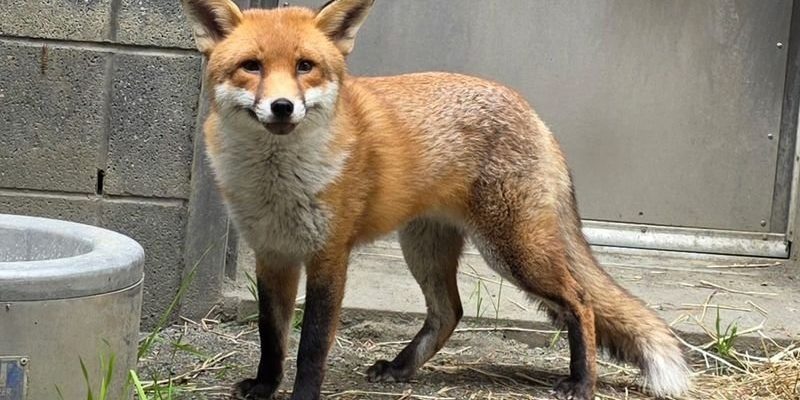
In February 2026, U.S. Customs and Border Protection officers found a red fox among the cargo of a ship that had arrived at the Port of New York and New Jersey from Southampton, England. The fox had crossed the Atlantic as a stowaway. He went to the Bronx Zoo.
By May the zoo could announce that the fox, now named Basil, had cleared quarantine and been successfully treated for a parasite that is rarely seen in this country.
A European parasite in a New York port
Basil, estimated at about two years old, arrived on February 19 and was examined at the zoo’s Wildlife Health Center. Veterinarians diagnosed Angiostrongylus vasorum, commonly called French heartworm.
The name is misleading. It is not the heartworm American dog owners know. A. vasorum infects the blood vessels of the lungs in wild canids, and untreated it can cause severe respiratory disease. It is associated with foxes and domestic dogs in Europe and is rarely found in the United States.
Finding it took blood testing, faecal examination, ultrasonography and molecular diagnostics. Treatment took roughly a month and three different deworming medications, and the team then repeated the diagnostics several times to confirm the infection had cleared.
Why this is a public health story
A fox in a shipping container is a small event with a large category behind it. Wildlife moves with cargo, and what moves with the wildlife is whatever it is carrying.
A parasite that is common in European foxes and rare in American ones has no natural route across the Atlantic. A container ship is a route. That is the same mechanism behind most of the damaging introductions in modern history, and the reason the veterinary work here mattered as much as the animal did: the zoo was not only treating a sick fox, it was making sure a pathogen that arrived in a hull did not go any further.
It is also a reminder of what a zoo hospital is for. Accredited zoos maintain diagnostic capability that most wildlife agencies do not have on hand, which is why a federal agency with an unexpected animal calls one.
The Bronx Zoo does a great deal of this work. It has taken in confiscated animals for federal authorities across birds, mammals, reptiles, fish and corals, in numbers that have grown steadily for three decades.