
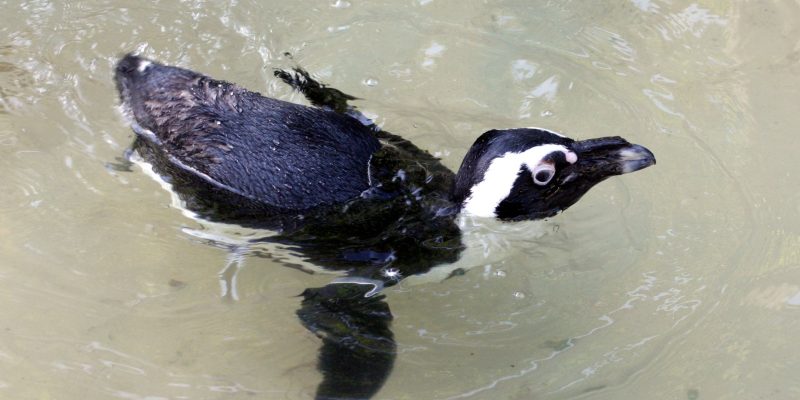
ARTIS in Amsterdam is converting its California sea lion enclosure into a new habitat for African penguins, a species the IUCN Red List moved to Critically Endangered in 2024. The zoo announced the plan on August 7, 2026. The penguins have been in their current spot for close to 70 years.
The rebuild gives them something the old pool cannot: depth. ARTIS says the birds can already swim a fair distance where they are, but the basin is not deep enough for them to dive properly, and diving is most of what an African penguin does for a living.
The sea lions are leaving
The last three California sea lions leave ARTIS after the summer holidays. The zoo’s reasoning is that the enclosure has real limits for a marine mammal and considerable room for a seabird once it is rebuilt, which is the kind of trade a zoo with a fixed footprint has to make sooner or later.
ARTIS says the design team is a working group rather than an architect alone: the penguin keepers, the team leader for birds, an architect, and the coordinator of the international species conservation program for African penguins.
What is going in
The new pool is built for diving, and the zoo is adding enrichment to the water itself, including a bubble curtain and water jets that come on at unpredictable moments. The point is to give the birds something to investigate rather than a tank to circle.
Windows below the waterline are the visitor-facing half of it. African penguins look ungainly ashore and are transformed underwater, where the wings work as paddles and the feet and tail steer, and ARTIS wants people to see that rather than read about it.
On land the count that matters is 110. That is the number of separate nest sites going into the habitat, which lets each breeding pair in the colony choose its own spot instead of taking what is left. The ground is being softened with sand and other substrate, and the layout mixes sunlit and shaded areas.
To find the space, the building that currently holds the kitchen is being removed, and ARTIS says extra habitat is being created on the visitor side as well.
Why the species matters
The African penguin was assessed by BirdLife International for the IUCN Red List on July 4, 2024 and listed as Critically Endangered, with about 19,800 mature individuals and a decreasing population trend. It is the only penguin that breeds in Africa, on the coasts and islands of South Africa and Namibia.
ARTIS describes the bird in Dutch as ernstig bedreigd, which is the Dutch rendering of the Critically Endangered category, so the zoo and the Red List agree. The zoo says the finished habitat will carry interpretation about the wild population and about what zoos and visitors can do, alongside the animals themselves.
What ARTIS did not say
The announcement gives no opening date, no construction cost, no dimensions for the pool or the habitat, and no figure for how many penguins the colony will hold. It also does not say where the three sea lions are going.
That is worth flagging rather than filling in. A 110-nest colony is a substantial build, and the numbers will presumably follow once the work is under contract.
The wider pattern
Rebuilding an existing enclosure for a different species is the most common form the European expansion story takes, because land inside a nineteenth-century city zoo is not available at any price. Koninklijke Burgers’ Zoo in Arnhem reopened its Desert hall this year after a renovation on the same logic, and Zoo Zurich has written the approach into a development plan running to 2050.
ARTIS opened in 1838 and is the oldest zoo in the Netherlands, which means almost every project it undertakes is a conversion of something that already exists.
Source: ARTIS, August 7, 2026. Red List category and population from the IUCN Red List assessment of Spheniscus demersus, published 2024.
Quick answers
- What is ARTIS building for its African penguins?
A rebuilt habitat on the site of the current California sea lion enclosure, with a pool deep enough for diving, underwater viewing windows and 110 separate nest sites. ARTIS announced it on August 7, 2026.
- Why move the penguins at all?
They have been in the same spot for close to 70 years. ARTIS says the existing pool lets them swim a fair distance but is not deep enough for them to dive, which is central to how the species lives.
- How endangered is the African penguin?
Critically Endangered. BirdLife International assessed the species for the IUCN Red List on July 4, 2024 and put the population at about 19,800 mature individuals, with a decreasing trend.
- When does it open and what does it cost?
ARTIS did not say. The announcement gives no opening date, no construction cost, no dimensions and no target colony size, and does not say where the three remaining sea lions are going.