
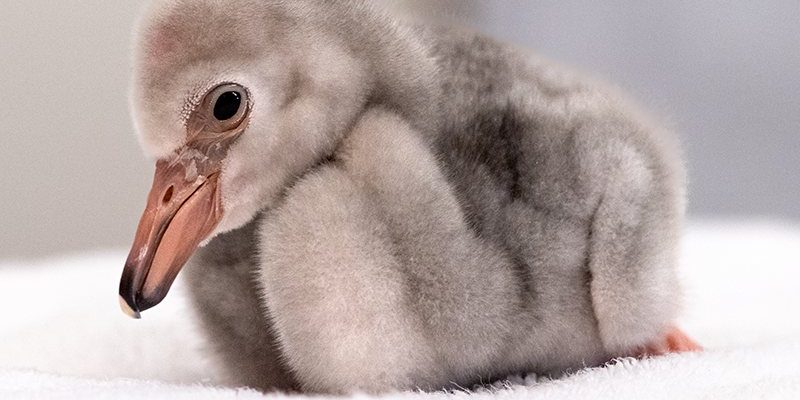
Lesser flamingos reproduce less readily under human care than any other flamingo species in U.S. zoos. The Fort Worth Zoo announced 17 chicks hatched in a single month in early 2023, with more eggs still to come.
The zoo runs what it describes as the most successful lesser flamingo breeding program in the world. Since the program began in 2002 it has hatched 382 chicks. The birds arrive fluffy white or grey and do not develop the pink plumage the species is known for until age three or four, when dietary carotenoids have had time to accumulate.
The habitat that wasn’t working
For years the colony lived in an outdoor habitat and produced almost nothing. The fix was not a bigger space. It was a set of specific adjustments to the nesting area: heat lamps, a small pool, and mirrors.
The mirrors are the interesting part. Flamingos are colonial breeders whose reproductive behavior is triggered in part by the presence of a crowd, and a small group often will not start. Mirrors give the illusion of more birds than are actually there. Staff called the result the “love shack,” and the first successful hatching followed.
Why a self-sustaining population matters
Lesser flamingos are listed as near threatened by the International Union for Conservation of Nature, primarily because of habitat alteration. The species is enormously numerous by raw count but concentrated at a very small number of breeding sites, which makes it far more fragile than the numbers suggest.
A breeding program that works is what allows U.S. zoos to maintain the species without drawing from wild populations. Fort Worth’s 382 chicks are, in practice, the reason the species is in North American collections at all.
The chicks from this hatch were housed behind the scenes, receiving round-the-clock feedings from keepers and from their parents.
Breeding programs for difficult birds tend to come down to this kind of granular habitat work: Como Zoo raised its first grey crowned crane chicks after years without success.