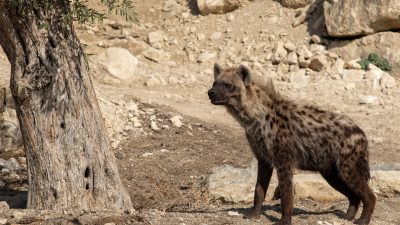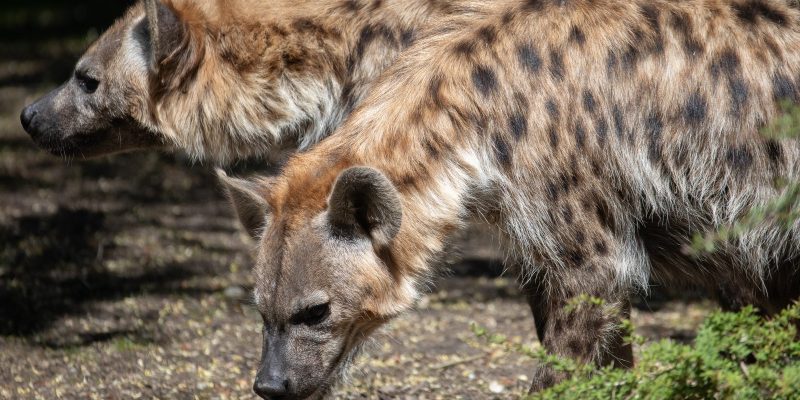
Spotted hyenas are back at Woodland Park Zoo after 25 years. Two males, three-year-old Razi and one-year-old Mosi, arrived from the Metro Richmond Zoo in Moseley, Virginia, and went on view in May in a yard of their own inside the African Savanna, next door to the lions. The last spotted hyena in Seattle was a female named Mara, who retired from public view in 2001.
Next door is the operative phrase, and it is worth being precise about it, because the alternative reading is the one people reach for. The hyenas have their own habitat adjacent to the lion habitat. The two species are not sharing a space and are not taking turns in one. In the wild, lions and spotted hyenas are direct competitors that kill each other’s young, which is why a zoo that wants both builds two yards. Busch Gardens Tampa Bay made exactly that choice this summer on a much larger footprint, and the reasoning is the same at either scale.
Why bring them back at all?
Because the collection is being deliberately widened. Woodland Park Zoo frames the hyenas as part of a near-term and longer-term plan to diversify the species it keeps, which is a quieter kind of zoo news than a new building but drives a great deal of what visitors eventually see.
“Animals and people are critically interconnected and all animals play a key role in their respective ecosystems,” said Dr. Luis Neves, Interim Chief Zoological Officer and Senior Director of Animal Care at Woodland Park Zoo. “Caring for a variety of animal species at the zoo enhances our ability to highlight their natural history, spotlight how they help their ecosystems, provide a snapshot of biodiversity and help visitors foster empathy for all wildlife.”
What should a visitor expect?
Patience, at first. Both animals are young, and the zoo said plainly at the debut that viewing would be hit or miss while they worked out the new ground.
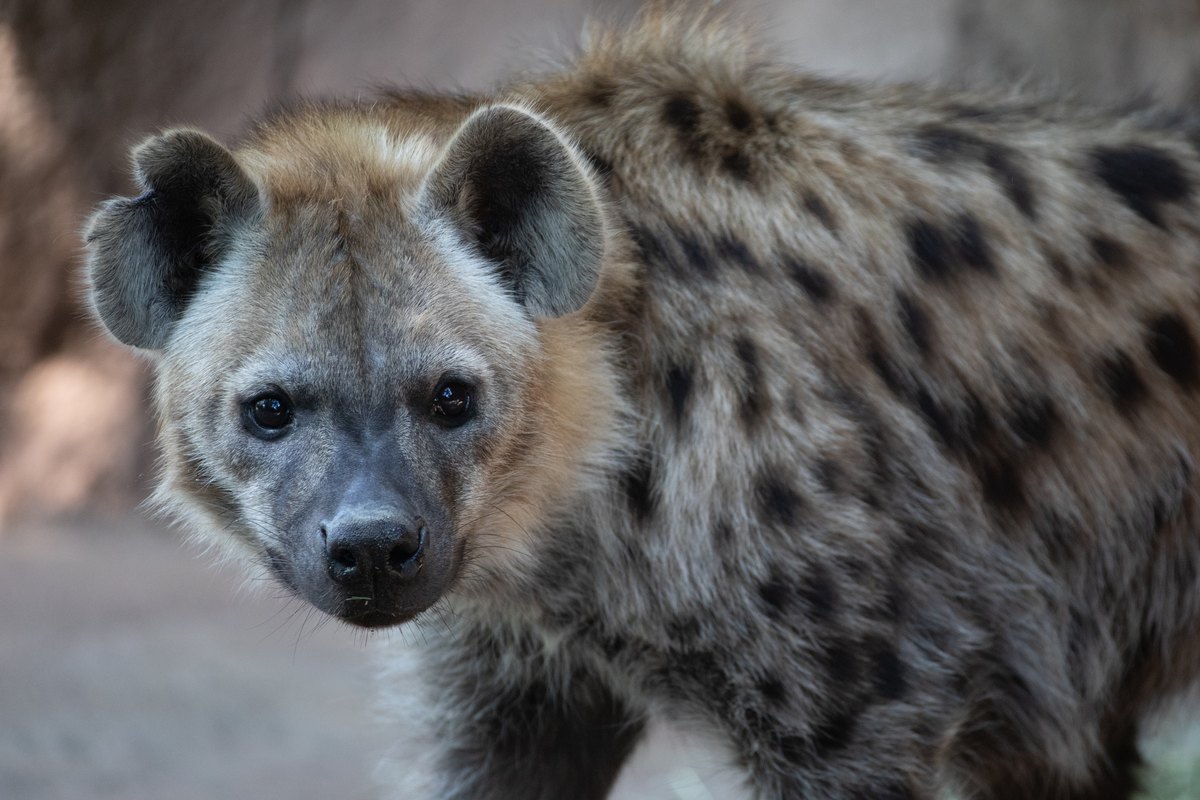
“Our new hyenas are young and pretty shy. As they explore the outdoor habitat, we’re continuing to give them access to the off-view indoor dens should they choose to retreat, so viewing opportunities may be limited initially,” said Martin Ramirez, Curator of Mammalogy at Woodland Park Zoo.
That sentence describes a design decision rather than an apology. A habitat with an open door to an indoor den gives the animal a say in whether it is on display, and an animal that can leave is generally an animal that chooses to stay out. Mosi is the smaller of the two and the easier to pick out, with a notch in one ear.
A clan is not a pack
The word for a group of hyenas is a clan, and the distinction from a wolf pack is not a vocabulary flourish. A wolf pack is usually a family led by a mated pair. A hyena clan, which can run to 130 animals, is a ranked society in which females outrank males absolutely: the lowest-ranking female in a clan still outranks the highest-ranking male, and cubs inherit their mother’s rank rather than earning one. Clan members hunt alone or in small groups and defend the territory and the communal den together.
Two young males in Seattle are not going to demonstrate most of that. They are, however, the reason the social structure is worth explaining, since almost everything odd about hyena behavior traces back to it.
The laugh is not a laugh
Spotted hyenas carry a large vocabulary of calls, and the giggle that earned them the name laughing hyena is the one everybody knows and nearly everybody misreads. It is not amusement. The laugh generally signals stress, competition, or the fear of being shut out of a carcass. The whoop that carries for miles is the call doing the social work of keeping a clan in contact.
The rest of the animal is built for the same job. Long front legs and shorter back ones give a spotted hyena a sloping back and a loping gait that looks awkward and is not: it can hold close to 37 miles an hour and will run prey down over distance. Its jaws exceed a lion’s in strength, and the teeth behind them crack hoof and bone that other predators on the same carcass cannot process. The scavenger reputation hides the fact that spotted hyenas are among Africa’s most successful hunters.
How they are doing in the wild
Spotted hyenas range across almost all of sub-Saharan Africa, absent only from the driest deserts, the highest mountains and the densest rain forest. They have proved unusually good at living alongside people: in Addis Ababa they work the city at night, filling roughly the niche coyotes have taken in American cities, Seattle included.
Where they run into trouble is where livestock is involved. Hunting and retaliatory killing after stock losses have pushed them, across much of the range, back into national parks and reserves. It is an old and specific conflict rather than a vague decline, and it is the reason a species that thrives in a capital city is still missing from a great deal of the countryside around it.
Razi and Mosi can be seen in the African Savanna at Woodland Park Zoo, 5500 Phinney Avenue North in Seattle. The zoo announced the arrival on May 19, 2026, on its blog and in a press release.
Quick answers
- When did spotted hyenas last live at Woodland Park Zoo?
The last one was a female named Mara, who retired from public view in 2001. Razi and Mosi, who arrived in 2026, are the first of the species in Seattle in 25 years.
- Do the hyenas share a habitat with the lions?
No. They have their own yard adjacent to the lion habitat inside the African Savanna. Lions and spotted hyenas are direct competitors in the wild that kill each other's young, so the two species are never given the same space at the same time.
- Where did they come from?
The Metro Richmond Zoo in Moseley, Virginia. Razi is three years old and Mosi is one.
- Will I definitely see them?
Not necessarily. Both are young and were shy on arrival, and the zoo keeps their indoor dens open so they can retreat if they want to, which means viewing can be limited. Mosi is the easier of the two to identify, by a notch in one ear.
- What is a hyena clan?
The social group spotted hyenas live in, which can run to 130 animals. Unlike a wolf pack, which is usually a family led by a mated pair, a clan is a ranked society in which the lowest-ranking female outranks the highest-ranking male, and cubs inherit their mother’s rank.
- Why are they called laughing hyenas?
For the giggling call, which is the most misread sound in the repertoire. It usually signals stress, competition or the fear of losing access to food rather than amusement.
- Are spotted hyenas endangered?
They range across almost all of sub-Saharan Africa and live successfully in cities such as Addis Ababa. Where they lose ground is around livestock: hunting and retaliatory killing have pushed them back into national parks and reserves across much of the range.