
Scouts from the Nasaru Olosho Conservancy, in the Amboseli ecosystem of southern Kenya, were on a routine patrol when they found hoofprints with drag marks beside them. That combination is not ambiguous. A wildebeest had been caught in a wire snare, and the log the snare was anchored to had broken off and was still attached to her.
Getting free of the anchor is the part that sounds like good news and is not. The broken log travels with the animal, and every step she takes pulls the wire a little tighter. The Sheldrick Wildlife Trust, which published both of these cases on October 8, describes it as a ball and chain, which is the right image: the thing that should have held her in place had instead become something she carried.
Two days of tracking, then sixty seconds of work
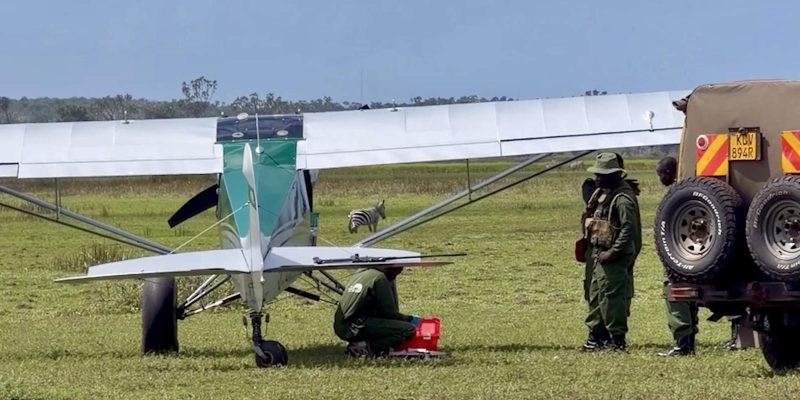
The scouts followed her tracks for two days. Roan, one of the Trust’s Aerial Unit aircraft, flew over the area to give them a view the ground team could not get for themselves, and once she was located the SWT/KWS Southern Mobile Veterinary Unit was mobilized. Dr Lawi darted her, the team cut the snare off and treated the wound underneath it, and the damage turned out not to be permanent. She is expected to make a full recovery.
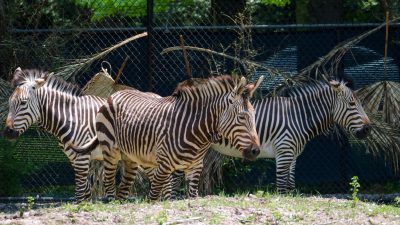
The second case was on the other side of the country, on a remote stretch of Kenya’s northern coast, and it was a zebra stallion with a snare around one leg. Rangers found him, Roan flew the veterinary team in, Dr Lawi darted him, and the team removed the wire. The injury was serious. The animal was back on his feet and moving well by the time he was revived, and he is also expected to recover fully. The Trust credits the Kenya Wildlife Service and the Kipini Conservancy with support on that operation.
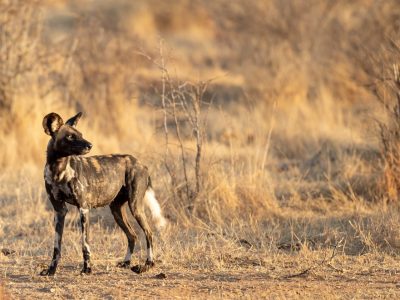
What the two have in common is not the species. It is that neither animal was the intended target. A snare is a loop of wire set at the height of an antelope and left, and it does not distinguish between the animal a poacher wanted and the one that walked into it. We have written before about what snares did to the wild dogs of northern Tsavo, which is the same wire doing the same thing to an animal nobody was hunting.
Why the aircraft is the expensive part
The veterinary work in both of these is quick. Darting an ungulate, cutting wire off a limb and treating the wound underneath is a procedure a mobile unit does many times a month, and the Trust publishes monthly caseload reports for its Amboseli, Mara and Tsavo units that make that plain.
The bottleneck is finding the animal and reaching it. Two days of tracking on foot, plus an aircraft to close the search, plus a vehicle to carry a veterinary team to a point on the northern coast with no road worth the name: that is the cost structure of this kind of work, and it is why a snare removal is not simply a matter of having a vet. Both of these animals were saved by logistics that were already in place before anyone knew they existed.
Who pays for it
We looked for a zoological institution behind the mobile veterinary units and did not find one. The units operate as a partnership between the Sheldrick Wildlife Trust and the Kenya Wildlife Service, which is a Kenyan government agency, and the Trust’s own public accounting of how it is funded runs through individual donors, animal adoptions and corporate partnerships. Its public pages name no accredited zoo or aquarium, no AZA or EAZA institution, and no zoo-sourced grant.
That is a finding rather than a gap in the reporting, and it is worth stating plainly because the alternative is implying a connection that is not there. It is also not the whole picture of snare work in Kenya. Other operations on the same problem do carry zoo money, and we have traced it: the KWS Mara unit’s giraffe snare removals and a lion freed from a snare in Meru National Park both have institutions attached. The Sheldrick units do not, on the evidence we can open.
There is a further reason not to paper over it. The Trust publishes a position opposing the capture of infant elephants for captivity, which puts a real distance between it and parts of the zoological world. Pretending otherwise would misrepresent both sides.
What to do with the number
Neither of these animals is a rare one. Wildebeest and zebra are among the most numerous large grazers in East Africa, and no one is going to lose a species to the snares in Amboseli. That is the honest frame, and it does not make the work pointless. A snare does not know what it has caught, so the only way to stop it killing something that matters is to take it out of the landscape while it is still holding something that does not.
The wire that held a wildebeest for two days in Amboseli is the same wire that kills wild dogs, lions and elephant calves. Each one cut off an animal and carried away is one that is not waiting for the next thing down the path.
Quick answers
- What happened to the wildebeest?
Scouts from the Nasaru Olosho Conservancy in the Amboseli ecosystem found hoof prints with drag marks, meaning a wildebeest was caught in a snare whose anchor log had broken off and was still attached. They tracked her for two days, an Aerial Unit aircraft helped locate her, and the SWT/KWS Southern Mobile Veterinary Unit removed the snare.
- Why is breaking a snare free dangerous?
The broken anchor log travels with the animal and tightens the wire with every step. The Sheldrick Wildlife Trust describes it as a ball and chain. Getting loose from the anchor point makes the snare itself worse, not better.
- What happened to the zebra?
Rangers found a zebra stallion with a snare around one leg on a remote stretch of Kenya northern coast. An Aerial Unit aircraft flew the veterinary team in, Dr Lawi darted him and the team removed the wire. The Kenya Wildlife Service and the Kipini Conservancy supported the operation.
- Did both animals survive?
Both are expected to make a full recovery. The wildebeest injury was not irreparable, and the zebra was already moving well when he was revived, despite the severity of the injury.
- Do zoos fund this work?
We looked and did not find a zoological institution behind the mobile veterinary units. They run as a partnership between the Sheldrick Wildlife Trust and the Kenya Wildlife Service, a government agency, and the Trust public pages name no accredited zoo or aquarium. Other snare work in Kenya does carry zoo funding.
- Who are snares set for?
Not these animals. A snare is a wire loop set at the height of an antelope and left, and it does not distinguish between the animal a poacher wanted and whatever walks into it.