Nigeria went to the seventeenth Conference of the Parties to the Convention on Biological Diversity in Yerevan, Armenia, and came back with $50,000 and a counting job.
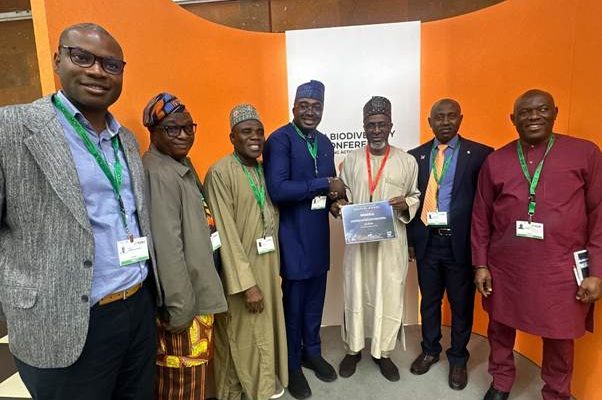
The money is a seed grant from the Rapid Deployment Mechanism, a small-grants facility run by the High Ambition Coalition for Nature and People. Nigeria was one of seven countries awarded one at the conference, alongside Costa Rica, Kenya, Mexico, Nepal, Rwanda and Zambia. The grant was received on Nigeria’s behalf by Sikeade Egbuwalo, the country’s focal point to the Convention, and came through the Federal Ministry of Environment. The Nigerian Conservation Foundation will implement it.
The project has a title that explains itself slowly: Strengthening Nigeria’s 30×30 Progress through Ecological Connectivity, Terrestrial and Marine OECMs, and Protected Area Management Effectiveness. Underneath it are three jobs, and the middle one is the interesting part.
What an OECM is, and why Nigeria wants to find its own
An OECM is an “other effective area-based conservation measure,” which is the Convention’s term for a place that is not a national park, not a reserve, not a formally designated protected area of any kind, and is nonetheless being managed in a way that keeps its wildlife alive. A community forest held under customary tenure is a candidate. So is a watershed a company maintains, a sacred grove, a fishing ground closed by local agreement. The category exists because conservation kept happening in places the official map did not count.
That matters for arithmetic. The Kunming-Montreal Global Biodiversity Framework, adopted in 2022, set 23 targets for 2030, and the one everybody quotes is 30×30: at least 30 percent of the world’s land, inland waters, coastal areas and oceans effectively conserved by the end of the decade. A country that counts only its gazetted parks is undercounting itself. A country that cannot say which of its unofficial conservation areas actually work is overcounting. Nigeria’s grant buys the survey that tells the difference, and the project will identify, map and profile priority terrestrial and marine OECMs, assess how well the formal protected areas are being managed, and build a national Management Effectiveness Framework out of what it finds.
The third job, ecological connectivity, is the one Egbuwalo singled out. “This support will not only help us to achieve the 30×30 targets,” she said, adding that it would address “the issue of fragmented habitat, which has been a big issue in Nigeria.” Fragmentation is the quiet version of habitat loss: the acreage survives, the corridors between the pieces do not, and animals that cannot move between fragments stop breeding across them.
The rest of a fortnight
The grant was not the only thing NCF did in Yerevan. Its director-general, Dr Joseph Onoja, sat on Nigeria’s official delegation and spoke on October 23 at a session on integrating climate and nature work, organized by the UN Development Program, KPMG and the NBSAP Accelerator Partnership.
On October 26, NCF and WWF ran a session at the High Ambition Coalition pavilion called Emerging Conservation Models for 30×30 Goals in Africa, moderated by NCF’s director of technical programs, Adedamola Ogunsesan. It put Nigeria’s Federal Ministry of Environment beside Zambia’s CBD focal point, Tanzania’s assistant NBSAP coordinator, the Society for the Conservation of Nature of Liberia and the Wildlife and Environmental Society of Malawi, and asked how community-run conservation gets recognized in national strategies and OECM registers rather than admired and ignored. Durrel Halleson, WWF International’s head of policy and partnerships for Africa, told the room the opening was there: “We have an opportunity here to really bring this up, talk about OECMs, scale it up.”
Ogunsesan also joined a BirdLife International panel on wetland finance, moderated by BirdLife’s chief executive Martin Harper, with the Asian Development Bank, Wetlands International, FSD Africa and Danone. He brought three examples of NCF’s own restoration deals: a 30-hectare watershed restoration in Olokemeji Forest Reserve funded by Unilever, mangrove work supported by the Ford Foundation, and mangrove restoration with NLNG. His argument was about the shape of the money rather than the size of it. Restoration finance that pays for planting and stops there buys a photograph. Paying through baseline assessment, community engagement, maintenance and monitoring buys a wetland.
We looked for the zoo money and did not find any
We trace the funding behind every conservation story in this region, because a great deal of African field conservation is paid for by accredited zoos and aquariums, and readers deserve to know when the animal they met on a Saturday is connected to the work.
Here the trace comes back empty, and that is a finding rather than a gap. Not one zoo or aquarium appears anywhere in this story. The funders named are a UN-linked coalition, a federal ministry, a development bank, two consumer goods companies, a gas company and a philanthropic foundation. NCF’s own partnerships page, read again this week, names IUCN, WWF, the RSPB and BirdLife International as its global conservation partners and no zoological institution at all. We reached the same conclusion about NCF’s vulture work, which is the organization’s most zoo-adjacent program and still has no zoo money behind it.
For scale: AZA reported that in 2025, 235 accredited and certified facilities spent approximately $372.4 million on conservation across 139 countries. No published breakdown isolates how much of that reached Africa, so we are not going to estimate one. What can be said is that Nigeria, a country of more than 200 million people with a freshly launched national business plan for biodiversity and an award-winning urban conservation center in Lagos, is doing this on domestic corporate money, foundation grants and a $50,000 seed.
COP17 closes on October 30. The grant, by then, will be the smallest number in the room and one of the few with a specific job attached to it.
Sources: the Nigerian Conservation Foundation’s account of its COP17 engagements, Premium Times on the grant ceremony and the 30×30 session, and the High Ambition Coalition’s own record of the first Rapid Deployment Mechanism round, which went to ten countries at the UN General Assembly in September 2025. Yerevan is the second round.
Quick answers
- What is an OECM?
An "other effective area-based conservation measure." It is the Convention on Biological Diversity's term for a place that is not a park or a formal reserve and is nonetheless managed in a way that keeps its wildlife alive: a community forest under customary tenure, a sacred grove, a company-maintained watershed, a fishing ground closed by local agreement.
- How much did Nigeria receive, and from whom?
A $50,000 seed grant from the Rapid Deployment Mechanism, a small-grants facility of the High Ambition Coalition for Nature and People. It came through the Federal Ministry of Environment and will be implemented by the Nigerian Conservation Foundation.
- Which other countries received one?
Six, at this round: Costa Rica, Kenya, Mexico, Nepal, Rwanda and Zambia. An earlier round in September 2025, at the UN General Assembly, awarded $50,000 each to ten different countries.
- What will the project actually do?
Three things. Identify, map and profile priority terrestrial and marine OECMs; assess how effectively Nigeria's existing protected areas are managed; and build a national Management Effectiveness Framework from the results. It is aimed at Target 3 of the Kunming-Montreal Global Biodiversity Framework, the 30x30 target.
- Why does ecological connectivity keep coming up?
Because fragmentation is the quiet version of habitat loss. The acreage survives and the corridors between the pieces do not, and animals that cannot move between fragments stop breeding across them. Nigeria's CBD focal point named fragmented habitat as the country's big problem when she accepted the grant.
- Which zoos or aquariums fund this work?
None that we could verify. NCF's own partnerships page names IUCN, WWF, the RSPB and BirdLife International and no zoological institution. The funders in this story are a UN-linked coalition, a federal ministry, a development bank, two consumer goods companies, a gas company and a philanthropic foundation.