
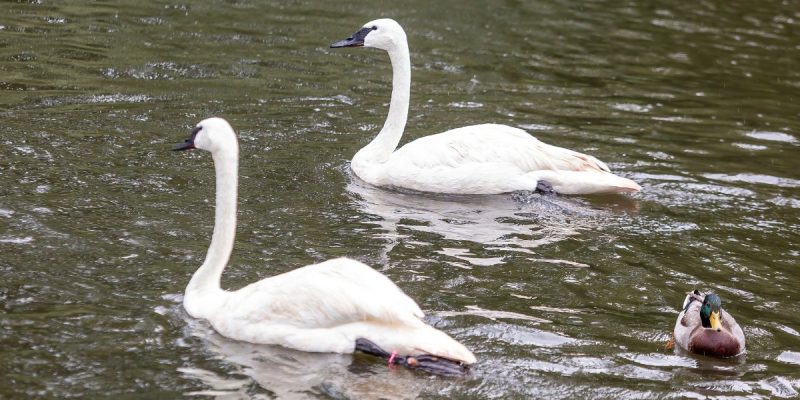
There are swans on Swan Pond again. A pair of trumpeter swans named Dean and Dolly moved into the Hope B. McCormick Swan Pond at Lincoln Park Zoo, the zoo announced on September 23, which puts the birds that started the place back at the front of it.
That is not a figure of speech. Lincoln Park Zoo exists because of swans. In 1868, two pairs of mute swans arrived in Chicago as a gift from New York City’s Central Park, other animals followed, and the park commissioners built a zoo around them. The zoo dates its own founding to that gift, which makes this year the 158th of a Chicago tradition that began with two pairs of birds nobody asked for.
Who Dean and Dolly are named for
The Women’s Board of Lincoln Park Zoo chose the names, honoring the late Dolly Parton and her husband, Carl Dean. Parton died in August, and the board picked her for a reason that maps onto its own work: a lifetime of giving to children regardless of background.
The Women’s Board is worth a sentence of its own here, because it is the reason the zoo is free. Over its 50-year history it has contributed more than $42 million to capital projects, animal habitats, and science and education programs at Lincoln Park Zoo. Chicago has one of the last free major zoos in the United States, open 365 days a year with no admission charge, and that model runs on exactly this kind of private giving. A naming honor from that board is not decoration. It is a marker on the thing that keeps the gate open.
What a trumpeter swan is
The largest swan in the world, and not by a small margin. A trumpeter can measure five feet from bill to tail, span six and a half feet or more across the wings, and weigh 29 pounds. The plumage is snowy white and the bill, feet and legs are jet black, which is the quickest way to tell one from the mute swans in the founding story: a mute swan’s bill is orange.
The name is literal. Trumpeters have a deep, bugling call, produced through a windpipe that coils inside the breastbone like the tubing of a brass instrument, which is what gives the sound its carry.
They pair for life and stay in pairs or family groups year-round. They favor lakes, rivers and ponds in forested parts of North America, including the northern United States and Canada, and where they migrate at all they go short distances. A clutch runs four to six eggs, hatching after five or six weeks. Cygnets swim before they are a day old and do not fly until three or four months, and both parents raise them.
If you visit, the likeliest thing you will catch them doing is preening. Swans run their feathers through their bills to spread oil from a gland at the base of the tail, which is the entire reason a bird that spends its life on water does not become waterlogged.
A species that came back
The trumpeter swan is one of North America’s better recovery stories, and it started from an almost unbelievable number. Hunted through the 19th and early 20th centuries for meat, skin and feathers, the species was down to 69 known birds in the wild by 1935.
Protection and reintroduction turned that around over the following decades. The zoo says the International Union for Conservation of Nature now lists the trumpeter swan as Least Concern, with more than 50,000 animals. Lincoln Park Zoo has had a hand in it directly, releasing more than 40 trumpeter swans into the wild as part of a reintroduction program aimed at building up local populations.
Which gives the pond a second meaning. A zoo founded by swans is now a zoo that puts swans back, and the two birds a visitor stops to watch are the public-facing end of work that happens out of sight in Illinois wetlands.
Where to find them
Swan Pond sits between the Regenstein Small Mammal-Reptile House and Park Place Cafe, just north of the Waterfowl Lagoon where the flamingos are. Admission is free, as always, and the zoo is open every day of the year.
Lincoln Park has had a steady run of arrivals lately, including Solana, a Hoffmann’s two-toed sloth, in August. Dean and Dolly are the ones that come with 158 years attached.
Source: Lincoln Park Zoo, September 23, 2026.
Quick answers
- Why does Lincoln Park Zoo have a Swan Pond?
Because swans are why the zoo exists. In 1868 two pairs of mute swans arrived in Chicago as a gift from New York City's Central Park, other animals followed, and the park commissioners built a zoo around them. The Hope B. McCormick Swan Pond sits between the Regenstein Small Mammal-Reptile House and Park Place Cafe.
- Who are Dean and Dolly named after?
The late Dolly Parton and her husband, Carl Dean. The Women's Board of Lincoln Park Zoo chose the names, citing Parton's lifetime of giving to children of all backgrounds. The board has contributed more than $42 million over 50 years to capital projects, habitats and science and education programs at the zoo.
- How big is a trumpeter swan?
The largest swan in the world. A trumpeter can measure five feet from bill to tail, span six and a half feet or more across the wings and weigh 29 pounds. The plumage is white and the bill, feet and legs are black, which distinguishes it from the orange-billed mute swan.
- Are trumpeter swans endangered?
Not any more. Hunted for meat, skin and feathers, the species was down to 69 known wild birds by 1935. Lincoln Park Zoo says the International Union for Conservation of Nature now lists the trumpeter swan as Least Concern, with more than 50,000 animals. The zoo has released more than 40 trumpeter swans into the wild through a reintroduction program.