
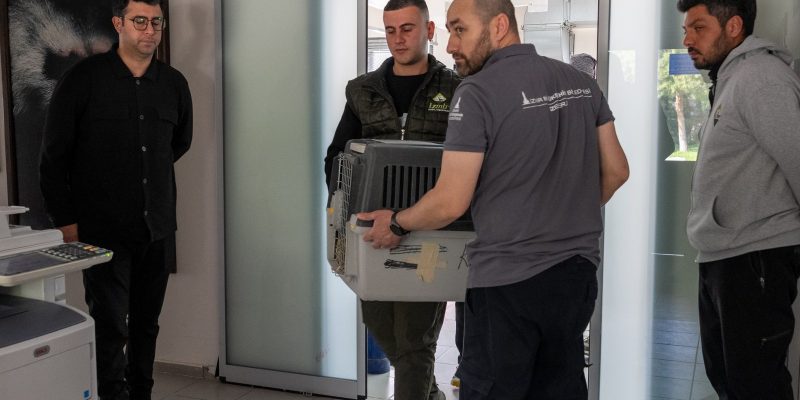
A jungle cat that could not stand up when it arrived at İzmir Doğal Yaşam Parkı has been released back into the wild in western Turkey, six months after teams from Turkey’s General Directorate of Nature Conservation and National Parks found it badly injured in Aydın province.
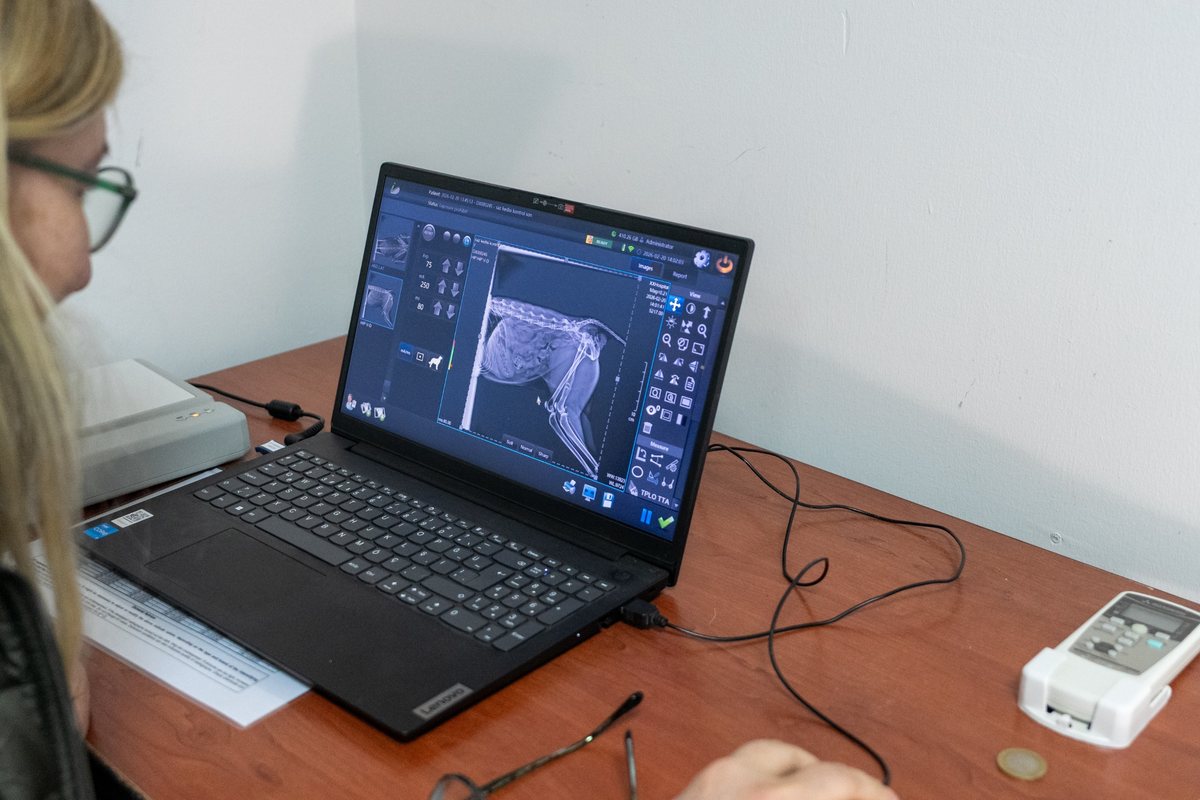
The cat, a wild Felis chaus, was picked up on August 27 of last year and taken to the clinic at the park, which the İzmir Metropolitan Municipality runs through its Department of Veterinary Affairs. Clinical and radiographic assessment found a dislocated hip, a comminuted open fracture of the right femur, and further fractures around the hip. The animal could not get to its feet and was dragging its hind leg.
What does it take to put a wild cat back together?
More than one operation and a great deal of patience. The park’s veterinarians stabilized the cat with intensive care and supportive treatment first, then carried out advanced orthopedic surgery, then began a controlled rehabilitation program that ran for roughly six months.
The notable part of this case is what the park did after the surgery worked. A rehabilitated wild animal has to be judged on whether it can survive without people, and the easiest way to ruin that judgment is to stand in the enclosure watching. So the team minimized human contact and put the assessment on cameras instead. Night vision and motion-triggered units recorded the cat’s natural behavior around the clock, and specialists reviewed its movement, its reflexes and its ability to orient and feed itself from the footage rather than from visits.
Only when that record said the animal was ready did the release go ahead, coordinated with the same national parks teams that had brought it in. Staff watched it run off into cover and away.
What is a jungle cat, and where does it live in Turkey?
The name is misleading. A jungle cat is a medium-sized wild cat of reedbeds and wetlands rather than of rainforest, and in Turkey it turns up along the Mediterranean and Aegean coasts, particularly around the Gediz Delta and the Büyük Menderes Delta and the wetlands nearby. It lives close to water, in reed stands, marshes, riverbanks and delta country. It is solitary and most active around dawn and dusk, which is part of why so few people who live alongside one ever see it.
The IUCN Red List assesses Felis chaus as Least Concern, in an assessment dated June 4, 2014 and published in 2021 as an amended version of the 2016 review. The global population trend is listed as decreasing, Türkiye sits inside the species’ native resident range, and the assessment itself carries an IUCN annotation that it needs updating. The park attached no conservation category to this animal in its own announcement, which is the honest position when the assessment is twelve years old and the decline is regional rather than uniform.
Why one cat matters
A single released animal changes nothing about a species’ trajectory, and nobody involved pretends otherwise. What it does show is capacity. A municipal wildlife park with an on-site clinic, orthopedic surgical capability, a camera-based behavioral assessment protocol and a working relationship with the national wildlife authority is infrastructure, and infrastructure is what decides whether the next injured animal found in a delta gets a stretcher or nothing at all.
İzmir Doğal Yaşam Parkı puts its own collection at roughly 1,800 animals of 140 species. It is the kind of facility that rarely reaches an English-language audience, partly because it publishes only in Turkish. This is the first story we have carried from it.
For a comparable rehabilitation and release at the other end of this region, see our report on Two Oceans Aquarium returning the ragged-tooth shark Blue to the sea.
A note on zoo funding
We look for the accredited zoological institutions behind conservation and rescue work in this region, because that connection is usually invisible and usually real. Here it is direct rather than hidden: the zoological facility is the one that did the work. İzmir Doğal Yaşam Parkı paid for the surgery, housed the animal, supplied the veterinarians and ran the release alongside the national parks directorate. No outside zoo funder appears in the account, and none was needed.
Quick answers
- What happened to the jungle cat?
Teams from Turkey's General Directorate of Nature Conservation and National Parks found it badly injured in Aydin province on August 27 of the previous year. It was taken to the clinic at Izmir Dogal Yasam Parki with a dislocated hip, a comminuted open fracture of the right femur and further fractures around the hip, and could not stand.
- How long did the treatment take?
About six months. The sequence was intensive care and supportive treatment first, then advanced orthopedic surgery, then a controlled rehabilitation program.
- How did the park decide the cat was ready to go back?
By camera rather than by eye. Human contact was kept to a minimum and night-vision, motion-triggered cameras recorded the animal's natural behavior, so specialists could judge its movement, reflexes and ability to orient and feed itself from the footage.
- How threatened is the jungle cat?
The IUCN Red List lists Felis chaus as Least Concern, in an assessment dated June 4, 2014 and published in 2021 as an amended version of the 2016 review. The global trend is decreasing and the assessment carries an IUCN annotation that it needs updating. Turkiye is inside the species' native resident range.