
Nashville Zoo runs a bird conservation program that has nothing to do with the birds in its exhibits. Since 2021 its avian keepers have monitored cavity-nesting species on the zoo’s own grounds, and in spring 2025 they opened the Nashville Zoo Bird Banding Station.
Starting with nest boxes
The work began with nest boxes on zoo property, monitoring local cavity-nesting populations including Eastern bluebirds and tree swallows.
In 2024 the team installed a Purple Martin gourd system. Purple martins are a species that has become remarkably dependent on people. Over generations they have shifted almost entirely to human-provided nesting cavities in much of their range, which means that if people stop putting up housing for them, they largely stop nesting.
What banding actually involves
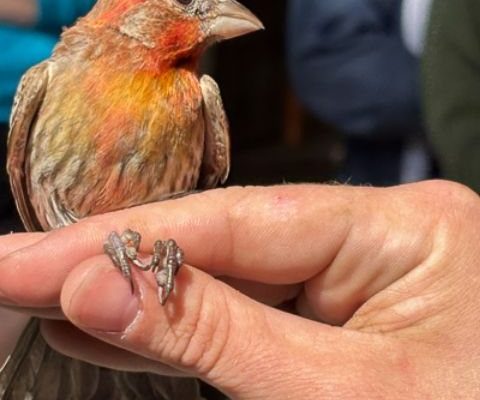
Bird banding means fitting a metal band, aluminium or stainless steel, carrying a unique eight or nine digit number, onto a bird’s leg, and taking measurements while the bird is in hand. Along with identification, staff record age, sex and health.
What that unlocks over time is the whole picture of a bird’s life: sex, age, health, survivability, reproductive success, migration. None of it can be learned from watching a bird through binoculars.
It also requires a level of skill that is easy to underestimate. Becoming a bird bander takes years of training to handle, identify, age, sex and band birds properly, and Nashville Zoo has a native bird conservation specialist on staff who does it.
Field and monitoring work by keepers turns up more than expected: a trail camera run by the Bronx Zoo’s education department documented a river otter on the Bronx River for the first time in a century.
Why a zoo does this
This is conservation work on the birds nobody bought a ticket to see: the wild population living in the trees around the parking lot and the exhibits. A zoo has land, staff with permits, and a reason to be on that land every day of the year, which makes it an unusually good place to run a long-term monitoring station.
The animals are not part of the collection. They fly off afterwards, carrying a number.