
The national zoo in Rabat has taken in 72 animals of 21 species of African reptiles and amphibians, filling out a vivarium that has been open since 2019 and was built for exactly this.
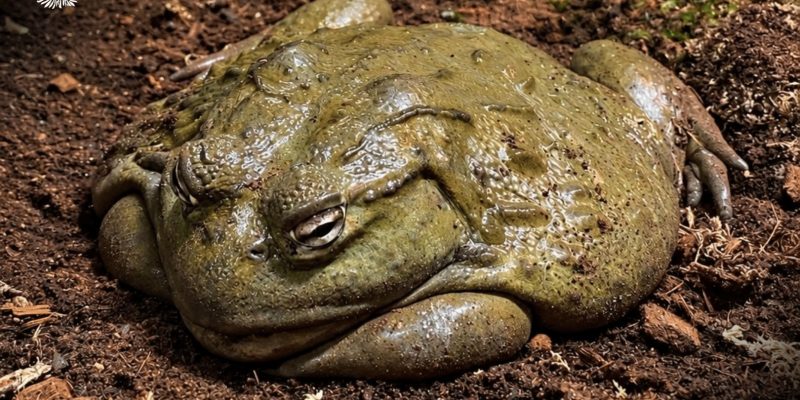
The Jardin Zoologique National de Rabat dated the announcement October 8, 2026. Among the arrivals it names five: the Nile monitor, Anchieta’s dwarf python, the panther chameleon, the African bullfrog and the Madagascar giant day gecko.
What came in
The five named species are a reasonable cross-section of what the continent does with the body plan of a reptile or an amphibian. The Nile monitor is a big semi-aquatic lizard that hunts in and beside water across most of sub-Saharan Africa. Anchieta’s dwarf python is a short, heavy-bodied constrictor from the rocky country of Angola and Namibia. The panther chameleon and the Madagascar giant day gecko are both Malagasy and both arboreal, one a slow stalker, the other a fast diurnal climber. The African bullfrog is a burrower that spends the dry months underground.
The zoo makes the point in terms of adaptations rather than rarity: camouflage, thermoregulation, locomotion, hunting and breeding strategies, developed separately in deserts, wetlands, forests and high ground. It does not claim a conservation status for any of the five, and neither will we.
All 72 animals went through quarantine under the zoo’s veterinary and zoological teams, which monitored their health and behavior before they were moved into the vivarium in stages.
The building they went into
The Vivarium opened in 2019 and covers close to 1,700 square meters. It is laid out as a route through six biogeographic zones: Moroccan, subtropical, Afro-alpine, sub-Saharan, equatorial and Malagasy.
The Moroccan zone is the one that explains the rest. Morocco runs from the Mediterranean to the Sahara by way of mountains, plains and wetlands, and carries a correspondingly rich herpetofauna including several endemic species. The zoo’s argument is that a visitor who starts with the animals living outside the gate is better placed to make sense of the continent on the other side of the corridor.
Rabat is also fairly direct about the public-opinion problem. Reptiles and amphibians are the animals people arrive having already decided about, and the zoo says part of the vivarium’s job is to take those assumptions apart: these are predators, prey and indicator species holding up ecological relationships that are mostly invisible, and their discretion does not make them unimportant.
Which zoo is behind it
This one is simple, and worth saying plainly because most conservation stories from this region are not. There is no NGO in the middle and no external funder to trace: the Jardin Zoologique National de Rabat is the zoological institution here, it holds the animals, and the vivarium is its own.
Rabat is the largest zoo in Morocco and keeps around forty Atlas lions, the largest managed population of that animal anywhere. It was rebuilt and reopened on its present site in 2012.
Reptile collections of this kind sit at one end of a trade that runs the other way too. The Endangered Wildlife Trust’s work on the illegal trade in sungazers and armadillo girdled lizards is the same group of animals seen from the enforcement side.
Why a vivarium is a strange thing to expand
Reptile and amphibian houses are not where zoos put their money when they are chasing gate numbers. They are small, dark, expensive to climate-control, and full of animals that spend most of the day not moving.
Adding 72 animals across 21 species to one is a bet on the opposite proposition: that the quiet building with the humidity controls does work the big enclosures cannot, which in Rabat’s framing means starting from observation and arriving at conservation rather than the other way around.
The announcement is on the zoo’s press page, in French.
Quick answers
- What did Rabat Zoo add to its vivarium?
Seventy-two animals representing 21 species of African reptiles and amphibians. The five the zoo names are the Nile monitor, Anchieta’s dwarf python, the panther chameleon, the African bullfrog and the Madagascar giant day gecko.
- When was the announcement made?
The Jardin Zoologique National de Rabat dated its announcement October 8, 2026. The zoo’s website displays a later stamp of October 23 on the same page; the dateline in the body of the release is the reliable one.
- What is the Rabat Vivarium?
A building of close to 1,700 square meters, opened in 2019, laid out as a route through six biogeographic zones: Moroccan, subtropical, Afro-alpine, sub-Saharan, equatorial and Malagasy.
- Did the new animals go straight on display?
No. All of them went through a quarantine period supervised by the zoo’s veterinary and zoological teams, which monitored their health and behavior before they were moved into the vivarium in stages.
- Why does the zoo emphasize Moroccan species?
Morocco runs from the Mediterranean to the Sahara by way of mountains, plains and wetlands, and carries a rich herpetofauna including several endemic species. The Moroccan zone gives those animals a place of their own within a wider reading of African diversity.