Morocco’s national zoo recorded births across about fifty species in the first three months of 2026, a spread wide enough that the list reads less like a birth announcement than like an inventory of what the place is for. The Jardin Zoologique National de Rabat dated the announcement April 30, 2026.
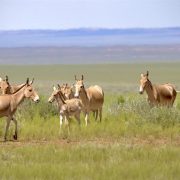
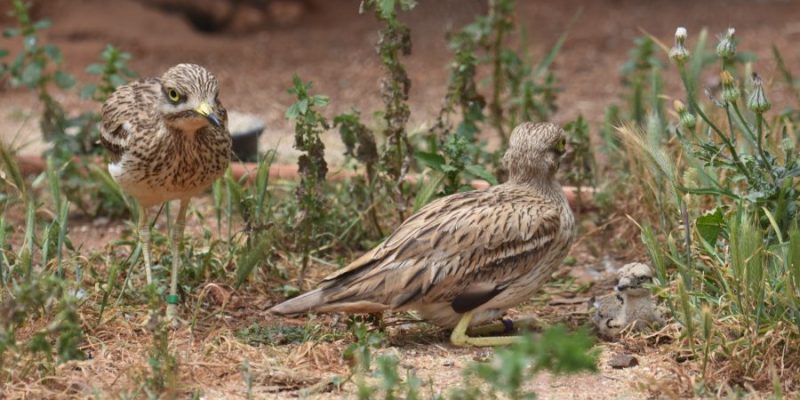
Three of the new arrivals carry real conservation weight. The zoo names the dorcas gazelle, the Barbary sheep and the griffon vulture as the species in the group with the highest conservation stakes. Alongside them came genets, baboons, glossy ibises, stone curlews and Greek tortoises, which the zoo offers as a measure of how broad its collection has become rather than as rarities.
The numbers behind the list
Rabat says it now holds more than 2,000 animals representing close to 170 species, 28 of which are threatened. Running alongside the collection are 22 conservation programs aimed at roughly fifty rare or endangered species, most of them endemic to Morocco or to North and West Africa more broadly. That ratio is the interesting part: the number of species the zoo runs a program for is about the same as the number that bred in a single quarter.
The zoo frames the quarter as evidence that its veterinary, scientific and husbandry systems are working, which is a modest way of describing what a fifty-species breeding quarter actually requires. Every one of those births sits on top of a diet, an enclosure, a pairing decision and a set of records.
Which of these species is actually in trouble?
Two of the three the zoo highlights are listed as Vulnerable on the IUCN Red List: the dorcas gazelle, a small desert antelope of North Africa and the Sahel, and the Barbary sheep, the aoudad of the Atlas and Saharan uplands. Both are animals whose wild range has been squeezed by hunting and by competition with livestock, and both are exactly the kind of species a North African institution is best placed to work on.
The third, the griffon vulture, is a gentler case than the grouping implies. The Red List assesses Gyps fulvus as Least Concern across its global range, which runs from Iberia across to Central Asia. We default to the assessment, as we do everywhere, and we read this one through GBIF’s Red List lookup because the Red List’s own interface is not open to us. None of that makes the bird a throwaway: a griffon vulture chick raised in Rabat is still a griffon vulture chick raised in a country where vultures have had a hard century, and the zoo’s own framing is about the husbandry, not about scarcity.
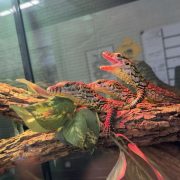
The Greek tortoise, the glossy ibis and the stone curlew all breed readily enough in good conditions that nobody would call them conservation victories on their own. They are, however, a decent test of whether an institution has got the unglamorous parts right, because birds and reptiles that nest on the ground are unforgiving about substrate, temperature and disturbance.
What this adds to the record
Rabat has been putting out a steady stream of this kind of release. In October the same zoo took in 72 reptiles and amphibians across 21 African species to fill out a vivarium it opened in 2019, which we covered at the time in our report on the Rabat vivarium. Read next to each other, the two announcements describe an institution moving in one direction: more species, more programs, more of the record published in public.
That matters for a region where very little zoo news is aggregated anywhere. A Moroccan quarterly birth summary runs once, in French, on the zoo’s own press page, and then disappears. There is no wire service picking it up and no English-language outlet carrying it forward.
Visitors can see the new animals at the park in Rabat, which is the ordinary and slightly underrated end of all this. A breeding program only ever becomes real to most people when they are standing in front of something small and new.
Source: Jardin Zoologique National de Rabat, April 30, 2026. Facts and figures in this report are translated from the zoo’s French-language release; it contains no direct quotations.
Quick answers
- How many species bred at Rabat Zoo in early 2026?
About fifty, across the first quarter, in an announcement the Jardin Zoologique National de Rabat dated April 30, 2026.
- Which species did the zoo single out?
The dorcas gazelle, the Barbary sheep and the griffon vulture, as the three with the highest conservation stakes.
- How large is the Rabat collection?
More than 2,000 animals representing close to 170 species, 28 of them threatened.
- How many conservation programs does Rabat run?
Twenty-two, aimed at roughly fifty rare or endangered species, most of them endemic to Morocco or to North and West Africa.
- Are the highlighted species endangered?
The dorcas gazelle and the Barbary sheep are both listed as Vulnerable on the IUCN Red List. The griffon vulture is listed as Least Concern across its global range.
- What else bred at the zoo that quarter?
The zoo also names genets, baboons, glossy ibises, stone curlews and Greek tortoises among the first-quarter births.