In June a conservation manager from a zoo in Colorado Springs went to the Ecuadorian Amazon to look at palm oil, and the most useful thing she found was a pricing failure.
Nicole Chaney, conservation programs manager at Cheyenne Mountain Zoo, was invited by the Roundtable on Sustainable Palm Oil and Conservation International to join a small delegation of RSPO member companies traveling the supply chain in person, from plantation to mill. Her account of the trip, published by the zoo this month, is more candid about what is not working than most field reports manage.
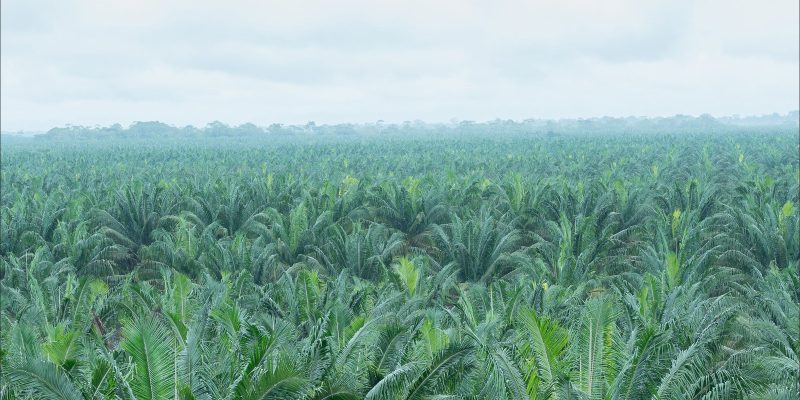
The destination was Shushufindi, a town east of the Andes where the mountains drop into the Amazon basin. Oil rigs and pipelines share the horizon with palm plantations. Both press against intact rainforest and against the ancestral lands of Kichwa communities. Chaney’s word for it is convergence, and she declines to simplify it: “It is not a landscape that lends itself to simple narratives.”
What the mill visit showed
At a large commercial plantation and processing mill the delegation watched the whole arc of production. Workers hand-pollinate the palms, because the disease-resistant hybrid grown in this region will not pollinate itself. Fresh fruit bunches, the dense clusters in which oil palm fruit grows, are cut and moved to the mill within hours, since the oil quality starts falling as soon as the fruit is off the tree. The mill turns that fruit into palm oil and its by-products.
It is a professional operation that has invested in sustainability practices. It is also the only processing facility serving the region, which makes it the sole buyer for many nearby growers. That detail is the hinge of the whole story. When one mill is the only door to the market, what the mill decides to pay for sets what every farm around it can afford to do.
Where the incentive breaks
The delegation visited two smallholder farms, meaning family operations rather than corporate estates. One family had achieved RSPO certification with help from ANCUPA, Ecuador’s national oil palm growers’ association, and had recently lost it. The other had never been able to pursue certification at all, blocked by the barriers smallholders routinely face: limited access to technology, to training, and to the documentation the process demands.
One of those families had gone further than certification required, improving labor standards and creating more opportunities for women on the farm, with no guarantee of a financial return. And there is the problem, stated plainly: the nearest mill does not pay a premium for RSPO-certified fruit. Certified and uncertified growers receive the same price.
So the standard exists and the reward does not reach the people meeting it. Chaney calls it a familiar challenge in ethical supply chains, which it is, but seeing it attached to two named farms is different from reading it as a generalization.
What a zoo can do about a price
More than it sounds. Cheyenne Mountain Zoo has worked on palm oil since 2010, and under direction from the World Association of Zoos and Aquariums it built PalmOil Scan, a free app that lets a shopper scan a product barcode and see how the company behind it rates on sourcing certified sustainable palm oil, on a scale running from “No Commitment” to “Excellent.” It is now run regionally by five institutions on four continents: Cheyenne Mountain for the United States and Canada, Chester Zoo in the United Kingdom, Auckland Zoo in New Zealand, Zoos South Australia, and Mandai Wildlife Group in Singapore.
The mechanism Chaney points to is narrower and more interesting than general awareness. Consumer demand gives companies a reason to buy RSPO Independent Smallholder Credits, a system in which a buyer purchases credits generated by certified smallholders and the money goes to those growers directly, without the fruit itself having to be traced through a mill that pays everyone the same. That is a route for a premium to reach a family farm in Shushufindi even when the local mill will not pay one.
The part about who gets to stay home
Conservation International’s work there runs across whole watersheds rather than farm by farm: land-use plans agreed between smallholders, Indigenous territories, local governments and industry, mapping to keep new plantations out of high-value habitat and river buffers, and investment in Indigenous-led businesses.
Chaney reports a conversation in a Kichwa community in which a matriarch explained why that last item matters. Many of the community’s men leave to work in the oil and palm industries nearby, she said, because there are few local livelihoods that let them remain at home. Community-owned enterprises make staying possible. It is a conservation argument and an economic one at the same time, and it does not fit the version of this story in which palm oil is simply the villain.
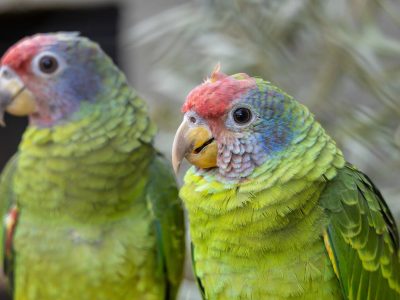
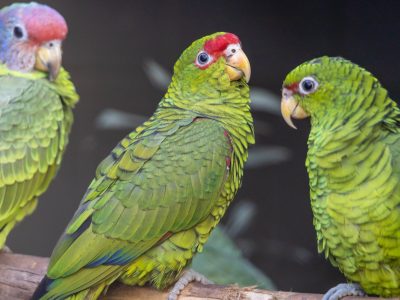
The reflex connection for an American visitor is orangutans, and Chaney’s point is that the reflex is now too narrow. Palm oil is grown across the tropics, and in Latin America the species a zoo can use to open the conversation are jaguars, tapirs, sloths, parrots, dart frogs, migratory birds and the monkeys of the Western hemisphere. Cheyenne Mountain has made this kind of long-horizon work its habit; it has also spent years on a national recovery plan for the pancake tortoise in Kenya.
What the Ecuador trip produced is not a success story, and the zoo did not dress it up as one. It is a precise description of where a sustainability standard currently stops working, and a specific lever for fixing it. That is more useful.
Quick answers
- What did Cheyenne Mountain Zoo find in Ecuador?
That the only mill serving the Shushufindi region pays no premium for RSPO-certified fruit, so smallholders who have invested in certification receive the same price as those who have not. One family visited had lost its certification and another had never been able to obtain it.
- What is an RSPO Independent Smallholder Credit?
A credit generated by a certified independent smallholder and bought by a company, so the premium reaches that grower directly rather than through the physical supply chain. It is a route for a family farm to be paid for certification even where the local mill will not pay more.
- What is PalmOil Scan?
A free app, developed by Cheyenne Mountain Zoo under direction from the World Association of Zoos and Aquariums, that lets a shopper scan a product barcode and see how the company behind it rates on sourcing certified sustainable palm oil, from "No Commitment" to "Excellent". It is managed regionally by Cheyenne Mountain Zoo, Chester Zoo, Auckland Zoo, Zoos South Australia and Mandai Wildlife Group.
- Is palm oil only an orangutan issue?
No. Oil palm is grown across the tropics, including in Latin America, where the species affected include jaguars, tapirs, sloths, parrots, dart frogs and migratory birds.