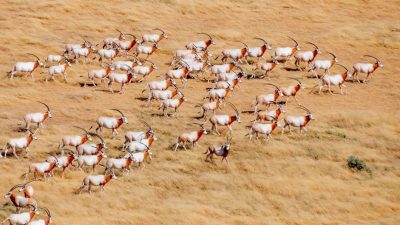

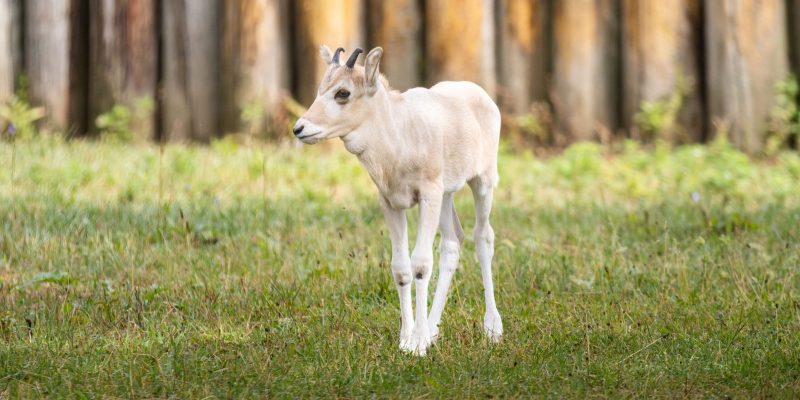
A critically endangered addax calf was born at the Buffalo Zoo on July 4, 2026, the 25th of its species born there since 1991.
The calf’s parents are Patricia, 4, and Dune, 3. It has been doing well in its mother’s care and went on view in the zoo’s addax habitat on Wednesday, August 5, where it can usually be seen in the mornings. Its sex and name have not been confirmed.
A hundred left in the wild
Addax are listed as critically endangered by the International Union for Conservation of Nature, and roughly 100 are estimated to remain in their native range, the deserts of North Africa. Drought, poaching and habitat loss from oil drilling drove the decline, and the zoo says conservation work is the only reason the species has not gone extinct in the wild.
Numbers are far healthier in zoos across the United States, Europe and Asia. Patricia and Dune both came to Buffalo through the Association of Zoos and Aquariums’ Species Survival Plan, the program that coordinates breeding across accredited institutions.
“This addax birth marks an extraordinary feat of conservation, helping save a critically endangered species from extinction,” said Buffalo Zoo president and CEO Lisa Smith. “The Buffalo Zoo is proud to have such a successful history of addax breeding, and this calf will serve as an integral ambassador for their wild counterparts.”
What an addax is
Addax are antelope, marked by a white patch of fur across the face in the shape of an X. They reach close to 250 pounds and stand about three feet at the shoulder. In the wild they are herbivores living on desert grasses.
Keepers have watched the calf running around the behind-the-scenes barn and the habitat while its mother keeps watch, and say it is getting on well with the rest of the herd.