

Global conservation policy talks about hectares and it talks about money. It almost never talks about the people who do the work. A study published in the journal Ambio has now put a number on that, and the number is 0.46.
That is how often words for rangers appear in global environmental policy documents, per 10,000 words. Terms about area appear 32.15 times in the same span. Terms about finance appear 37.88 times. Nature Seychelles, which manages Cousin Island Special Reserve with a team of wardens, flagged the finding this week, and it has a direct stake in it.
What did the study count?
The paper, titled “The ‘ranger blindspot’: Global policy and implementation gaps,” audited 45 global environmental governance documents and 21 National Biodiversity Strategies and Action Plans, the national-level plans that countries file under the Convention on Biological Diversity. It is open access and was published online on October 28, 2026.
The method is a text search, run carefully. The authors built a list of 30 English-language occupational terms for rangers, taken from the International Ranger Federation, including words like warden, guardian and patroller, and compared their frequency against 23 terms for area and a matching list for finance. Wildcards caught plurals and derivatives. A layout-aware text-mining pipeline read the documents and converted raw counts into a density per 10,000 words, so that a long document did not score higher simply for being long. The authors then re-read every ranger match by hand and discarded three false positives out of 215, an error rate of 1.4 percent.
Counting words in policy documents sounds like a thin exercise until you consider what the count is a proxy for. A workforce that is not named in a plan does not get a line in the budget that follows from the plan.
How thin are the mentions?
Twelve of the 45 global documents mentioned rangers at all. Only two integrated them into policy and forward planning in the way the authors set as their highest standard. None of the seven convention texts in the sample mentioned rangers anywhere, which the authors note is less damning than it sounds, since convention texts are not written to be operational.
The national plans do slightly better and still not well. Twelve of the 21 strategies referenced rangers, at an average density of 0.82 per 10,000 words, against 26.85 for area and 56.10 for finance. Of those twelve, nine reached the top standard, and the authors single out Cambodia and Lebanon, whose plans reference rangers in their targets, indicators, legislation and stated challenges rather than in a photo caption.
The comparison that makes the point lands hardest is with public health. The authors ran the same search over the World Health Organization and UNICEF’s Operational Framework for Primary Health Care, looking for health worker, nurse, midwife, doctor, surgeon, paramedic, medic and human resources. They found 88 matches at a density of 22.19 per 10,000 words, close to 53 times the rate at which conservation’s strategic plans and guides mention the people who implement them.
What is a ranger, for the purposes of this count?
Wider than the uniform suggests. The definition the authors work from covers marine rangers and community rangers, Indigenous stewards, wildlife scouts and fishery patrol officers, and the work covers biodiversity monitoring, habitat management, enforcement, community engagement, restoration and biosecurity.
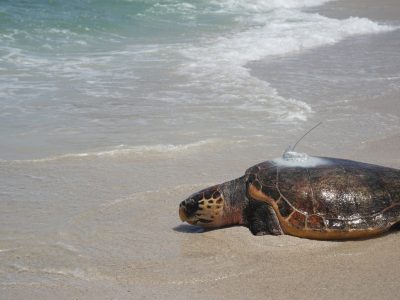
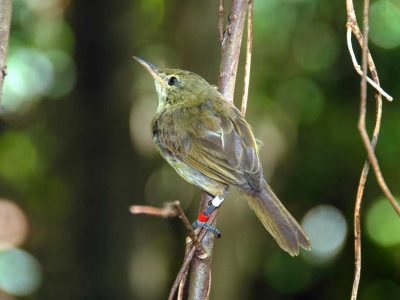
Cousin Island is a useful illustration of why the category is broad. The wardens there monitor wildlife and habitats, manage visitors and biosecurity, maintain the reserve and run surveillance, and they collect the long-run data on nesting sea turtles and seabirds that the island’s research and management decisions rest on. It is the same team whose decades of records underpinned this month’s chromosome-level genome for the Seychelles warbler. None of that is enforcement in the sense the word “ranger” usually conjures, and all of it is the job.
“If a workforce is not named, it cannot be planned for. If it is not planned for, it will not be funded, and if it is not funded, it cannot deliver what it’s intended to deliver,” Valerie Hickey, Director of Environment at the World Bank Group and a co-author of the paper, said in remarks reported by Nature Seychelles from the study’s presentation at a COP17 press conference.
Is an accredited zoo anywhere in this?
Yes, and in an unusual position: not as a funder but as an author. Mike Hoffman, Head of Wildlife Recovery at the Zoological Society of London, which runs ZSL London Zoo and ZSL Whipsnade Zoo, is one of the paper’s seventeen co-authors. The society’s contribution here is staff expertise rather than a grant.
The grant came from somewhere else. The paper’s funding statement names a fixed-fee research grant from the World Wide Fund for Nature, awarded to lead author Hannah Timmins under the Equilibrium Research partnership, covering the analysis, the drafting and the design of the policy communications that went with it. The rest of the author list is the ranger-support world rather than the zoo world: the International Ranger Federation, WWF, Equilibrium Research, the IUCN World Commission on Protected Areas, the World Bank, Chengeta Wildlife, Force For Nature, Re:wild, the South Asia Wildlife Enforcement Network, the International Big Cat Alliance and the Convention on Biological Diversity Secretariat. We looked for other accredited zoo or aquarium involvement in this study and in Nature Seychelles’ warden program and did not find any published.
That is worth stating rather than stretching. The Association of Zoos and Aquariums reports that in 2025 its 235 accredited and certified facilities spent approximately $372.4 million on conservation across 139 countries, and no published breakdown isolates the African share. One zoological society putting its head of wildlife recovery on a workforce paper is a smaller thing than a grant, and it is also the kind of contribution that rarely gets counted, which is rather the paper’s point.
One figure worth attributing carefully
The number most likely to travel from this study is the estimate that meeting the global target of protecting 30 percent of land and sea by 2030 would need roughly 1.5 million more rangers than the world currently has. It is a real figure and it is not this paper’s own. The authors cite it to earlier work by Appleton and colleagues, published in 2022, and use it as the backdrop to what they measured rather than as a result. The finding here is narrower and, for a policy audience, harder to argue with: across 45 global frameworks and 21 national plans, the people expected to deliver the targets are mentioned roughly once in every 20,000 words.
Quick answers
- What did the ranger blindspot study measure?
It audited 45 global environmental governance documents and 21 National Biodiversity Strategies and Action Plans, counting how often words for rangers appeared compared with words about area and about finance, as a density per 10,000 words.
- How often do rangers appear in global conservation policy?
0.46 times per 10,000 words. Terms about area appear 32.15 times and terms about finance 37.88 times in the same span. Twelve of the 45 documents mentioned rangers at all and only two integrated them into policy and forward planning.
- Do national biodiversity plans do any better?
Slightly. Twelve of the 21 national plans referenced rangers, at an average density of 0.82 per 10,000 words, against 26.85 for area and 56.10 for finance. Nine of those twelve reached the top standard, and the authors single out Cambodia and Lebanon.
- How does that compare with public health?
The authors ran the same search over the World Health Organization and UNICEF's Operational Framework for Primary Health Care and found 88 matches at a density of 22.19 per 10,000 words, close to 53 times the rate at which conservation's strategic plans mention rangers.
- Who counts as a ranger?
More people than the uniform suggests. The definition covers marine and community rangers, Indigenous stewards, wildlife scouts and fishery patrol officers, and the work runs from biodiversity monitoring and habitat management to enforcement, community engagement, restoration and biosecurity.
- Is an accredited zoo involved in the study?
One, as an author rather than a funder. Mike Hoffman, Head of Wildlife Recovery at the Zoological Society of London, which runs ZSL London Zoo and ZSL Whipsnade Zoo, is one of seventeen co-authors. The grant came from the World Wide Fund for Nature, awarded to lead author Hannah Timmins under the Equilibrium Research partnership.