
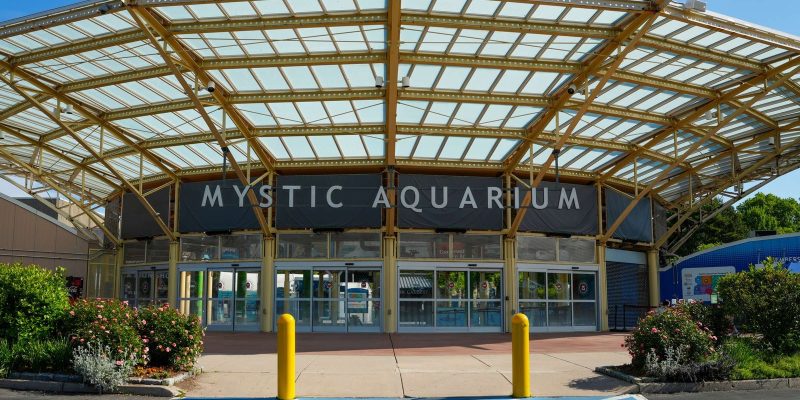
Mystic Aquarium has again been accredited by the Association of Zoos and Aquariums, which it has held continuously for more than 30 years. The word “accredited” appears in the boilerplate of almost every American zoo and aquarium, including ours, and it is almost never explained. Here is what Mystic actually had to do.
What does AZA accreditation involve?
Accredited institutions go through the full process every five years. It runs in four parts: an extensive written application, a detailed documentation review, a multi-day on-site inspection by an independent team of zoological professionals, and a final review by the AZA‘s independent Accreditation Commission. The commission, not the association’s staff, decides.
The standards reach well past animal care. Mystic was measured on veterinary programs, conservation and research, education, safety, facilities, guest services, staffing, financial stability, risk management and governance. An aquarium can keep its animals well and still fail on whether its books balance or who answers for what, which is the point of auditing all of it together.
The standards also move. They are revised as the science of animal welfare and the practice of zoological management change, so an institution reaccredited in 2026 is not being held to the 2021 bar it last cleared. That is the part that makes a five-year cycle meaningful rather than ceremonial. By the aquarium’s count, 240 institutions worldwide currently hold the accreditation.
What the aquarium said about it
“AZA accreditation represents an organization-wide commitment to excellence,” said Susette Tibus, President and Chief Executive Officer of Mystic Aquarium. “Maintaining this accreditation demonstrates that our commitment to our animals, our guests, our staff and our conservation mission is reflected throughout every part of the Aquarium.”
Dr. Allison Tuttle, Mystic’s Chief Zoological Officer, made the more useful point about where the work sits. “While the inspection itself culminates from an intensive period of preparation, maintaining AZA accreditation is really about the work that happens every day,” she said. “Our teams demonstrate their commitment to excellence every time they care for an animal, welcome a guest, conduct research, support conservation, educate a student or maintain the facilities that make our work possible.”
One piece of context the announcement does not carry: this accreditation was earned during a change of leadership. On September 24 the aquarium’s Board of Trustees named Rachel Metz, currently Vice President of Animal Wellbeing and Conservation at the Philadelphia Zoo, as its next president and chief executive. Metz succeeds Tibus, who has led Mystic since April 2023, and joins later this year on a start date the aquarium has not yet announced.
Mystic has had a busy year on the capital side as well, opening the Kishfy Coral Lab and an education exhibit built with a submarine builder’s funding. Accreditation is the less photogenic item on that list and the one the rest of it rests on.
Quick answers
- What is AZA accreditation?
A review every five years by the Association of Zoos and Aquariums, in four parts: an extensive written application, a detailed documentation review, a multi-day on-site inspection by an independent team of zoological professionals, and a final decision by the AZA's independent Accreditation Commission.
- How long has Mystic Aquarium been accredited?
More than 30 years, continuously.
- What does the inspection cover besides animal care?
Veterinary programs, conservation and research, education, safety, facilities, guest services, staffing, financial stability, risk management and governance.
- How many institutions hold AZA accreditation?
By the aquarium’s count, 240 worldwide.
- Who leads Mystic Aquarium?
Susette Tibus has been President and Chief Executive Officer since April 2023. On September 24, 2026 the Board of Trustees named Rachel Metz, of the Philadelphia Zoo, as her successor; Metz joins later this year on a start date not yet announced.