
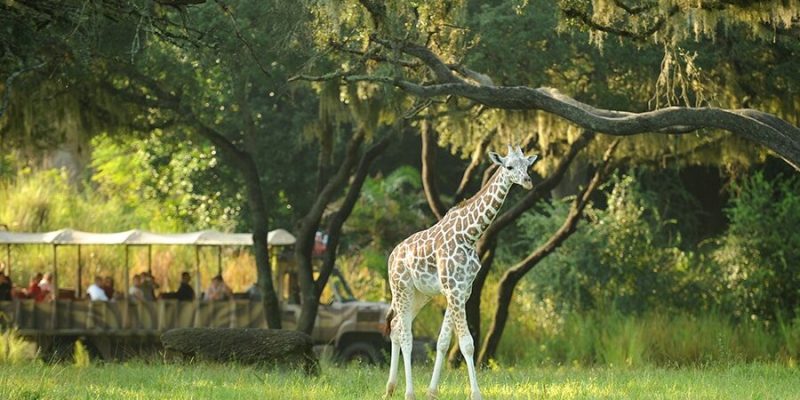
In 2023, 8.77 million people walked through Disney’s Animal Kingdom. No zoo or aquarium anywhere on earth comes close to that.
Almost none of them went for the conservation work. That is rather the point.
Where the number comes from
The figure is from the TEA/AECOM Theme Index, the annual global attractions attendance report published by the Themed Entertainment Association. Animal Kingdom placed 16th among the world’s top 25 theme parks in 2023, at 8.77 million, down 2.8 percent from 9.027 million in 2022. Magic Kingdom, five miles up the road, led the world at 17.72 million.
So within Walt Disney World, Animal Kingdom is the smaller sibling. Measured against zoos, it is not in the same conversation as anybody.
What that ticket is attached to
Behind the gate is a collection of roughly 5,000 animals across some 300 species, a nearly 150-person Animals, Science and Environment team, an animal nutrition center running 1,200 individual meal plans, and participation in the Association of Zoos and Aquariums Species Survival Plans that manage breeding across institutions.
And there is the Disney Conservation Fund, which has directed more than $125 million to conservation work since 1995.
That money does not go to Animal Kingdom. It goes out, to field organizations working on species most visitors will never see: okapi in the Democratic Republic of Congo, giant anteaters in Brazil, orangutans in Borneo, whale sharks in Mexico.
Is a theme park really a zoo?
Every attendance ranking files Animal Kingdom under theme parks, which puts it next to Universal Studios rather than next to San Diego. That classification is not wrong, and it is the reason almost nobody covers what the place actually does with animals.
Consider the alternative framing. A zoological institution that draws nearly nine million visitors a year, holds 300 species, employs a research and animal-care division of 150, and routes nine figures of philanthropy to field conservation is, by any measure that matters to the animals, one of the most consequential zoological institutions in the world. It just happens to have a rollercoaster.
The everyday part
Here is what that scale means in practice. A family from Ohio books a Disney holiday because their children want to see the castle. They spend one day of it at Animal Kingdom, ride the safari, look at the gorillas, and go home.
They were not asked to care about okapi. They will never meet the field team in the Ituri Forest. But the institution their ticket helped fund has been sending money to that forest since the 1990s, and the arithmetic that makes it possible only works at this scale.
Nine million people is what it takes to make the unglamorous work routine. That is the argument for charismatic megafauna in one line, and Animal Kingdom is the largest working example of it anywhere.
The same arithmetic shows up wherever we look closely. ZooTampa’s manatee hospital is carried largely by its own gate, and Loro Parque Fundacion has run field programs on visitor money since the 1990s. Animal Kingdom is the same model at ten times the scale.
Sources: TEA/AECOM 2023 Theme Index and Museum Index: The Global Attractions Attendance Report; Disney Parks Blog, Animals, Science and Environment; Disney Conservation Fund grant announcement.