
The organization that rehabilitates oiled African penguins in South Africa publishes a wall of supporter logos. Counting the accredited zoos and aquariums on it takes a while.
SANCCOB, the Southern African Foundation for the Conservation of Coastal Birds, is the reference institution for African penguin rescue, with centers at Table View near Cape Town and in Gqeberha. Its published supporter wall carries the logos of more than forty accredited zoos and aquariums, plus AZA and EAZA themselves.
Who is on it
From North America: Adventure Aquarium, the California Academy of Sciences, Cheyenne Mountain Zoo, the Cincinnati Zoo, Columbus Zoo, Dallas Zoo, Fort Wayne Children’s Zoo, Georgia Aquarium, Henry Vilas Zoo, Jacksonville Zoo, Jenkinson’s Aquarium, Lehigh Valley Zoo, Little Rock Zoo, the Maryland Zoo, Memphis Zoo, the National Aviary, the New England Aquarium, the NEW Zoo, Omaha’s Henry Doorly Zoo, Ripley’s Aquarium of the Smokies, Riverbanks Zoo, San Diego Zoo Wildlife Alliance, the SeaWorld Conservation Fund, Seneca Park Zoo, Tulsa Zoo, the WAVE Foundation and ZooTampa. Toronto Zoo and Magnetic Hill Zoo from Canada.
From Europe: ARTIS, Pairi Daiza, the Royal Zoological Society of Antwerp, Nausicaá, Zoo Duisburg, Wuppertal Zoo, Wroclaw Zoo, Zoo de La Palmyre, Aquazoo Löbbecke Museum and more than a dozen others. Sunshine Aquarium in Tokyo. Two Oceans Aquarium in Cape Town itself.
A caution on how to read that: SANCCOB does not publish a plain-text supporter list or any amounts, so what the wall demonstrates is breadth of institutional backing, not the size of any one gift.
Why it takes that many
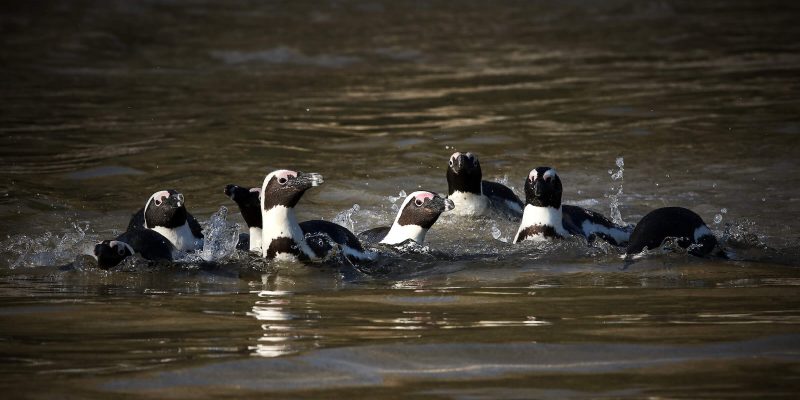
The African penguin was uplisted to Critically Endangered, and the trajectory behind that is stark. South Africa counted 15,187 breeding pairs in 2018. By the end of 2023 the estimate was roughly 8,750. Scientists have put the species’ predicted extinction in the wild at 2035, which is about one penguin generation away.
Against that, SANCCOB runs seabird hospitals, a chick-bolstering program that hand-rears abandoned eggs and chicks to fledging, and an oiled-wildlife response capability that has to exist before the spill happens. None of that is fundable by ticket sales, because SANCCOB does not sell tickets.
The transaction, stated plainly
Forty institutions that do sell tickets are paying for a seabird hospital on another continent. The visitor in Omaha or Wuppertal or Tokyo is not told about it and would mostly not notice if it stopped.
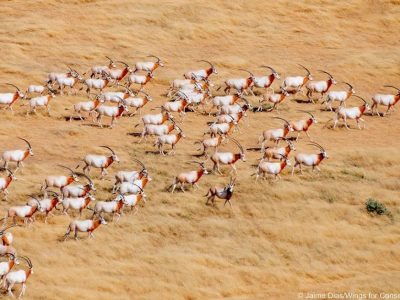
That is the arrangement the modern zoo runs on, and it is the reason arguments about zoos that ignore the funding question are arguments about something else. The same structure funds the scimitar-horned oryx recovery in Chad and the Wyoming toad program at Como Park.
Sources: SANCCOB; IUCN Red List. Institutional identifications are read from SANCCOB’s published supporter wall; the organization does not disclose individual amounts.