
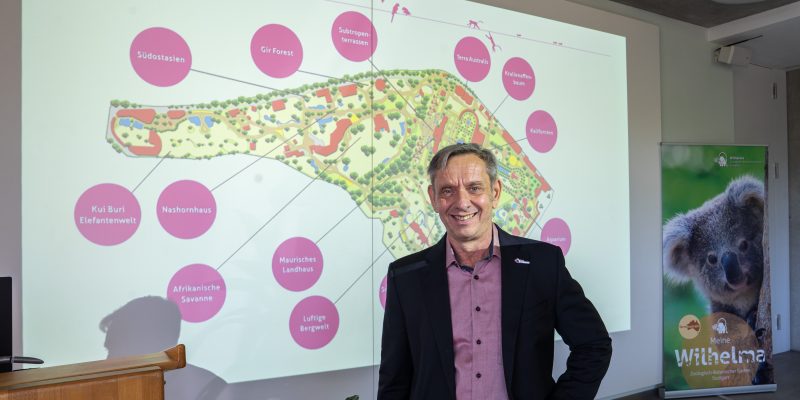
The Wilhelma in Stuttgart has adopted a development strategy running to 2035 and beyond. Director Dr. Thomas Kolpin presented the Masterplan 2035+ at a press conference on Tuesday, July 28, 2026. It is the first plan the zoo has written with every department contributing to a single picture of what the place should become.
The Wilhelma is the only zoological-botanical garden in Germany, which is the fact that shapes the whole document: it has to plan for roughly 1,200 animal species and more than 8,500 plant species and varieties at the same time, on a historic site.
The lighthouse project: Kui Buri
The largest item already under construction is a new elephant complex called Kui Buri, which broke ground in January 2026. The Wilhelma describes it as the first fission-fusion facility for Asian elephants, built around the way elephant groups repeatedly split apart and re-form rather than staying as one fixed herd. Construction is expected to take about three and a half to four years.
The state of Baden-Wurttemberg is investing around 68.5 million euros in the build. Of that, 15 million euros is being covered by the Wilhelma’s friends and supporters association, which has roughly 38,000 members.
The project takes its name from Kui Buri National Park in Thailand, and the zoo has been working toward the planting for six years already: sowing and growing on tree species native to that area began in 2020. The complete project covers an elephant house, large outdoor areas, and catering and visitor services.
What comes next, and when
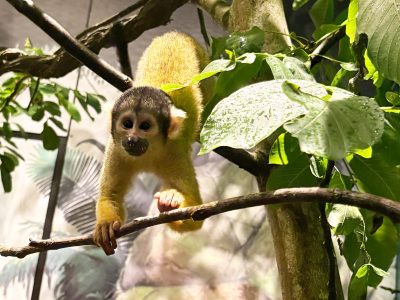
The plan sets out a sequence rather than a single opening. In the near term the existing Terra Australis area gains two new sections, Narawntapu and Tasmania, including a partly walk-through enclosure for southern bare-nosed wombats, Tasmanian eastern gray kangaroos and Bennett’s wallabies. A marmoset tree is planned in front of the Amazon house, and a project called Luftige Bergwelten, airy mountain worlds, will add aviaries for birds of prey and owls over several years.
The underlying design rule is what the Wilhelma calls the 100 percent habitat principle: recreating a natural habitat as completely as possible, with its associated plant species alongside its animals. For a garden that is also a botanical collection, that is less of a slogan than it would be elsewhere.
Further out, the rhinoceros house is to be renovated with a larger outdoor area once the neighboring old elephant facility is empty. In the medium term the site of today’s carnivore house becomes a themed area called Gir Forest, for Asiatic lions, striped hyenas and rusty-spotted cats. In the long term the aquarium and terrarium building, which dates from 1960, has to be comprehensively modernized or replaced.
The historic buildings
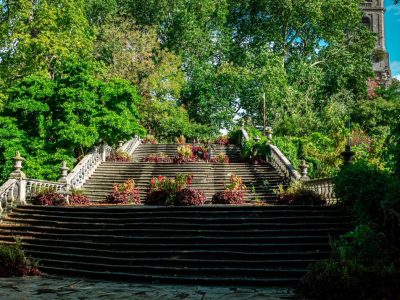
A stated goal of the plan is the careful preservation and further development of the listed buildings and grounds from the time of King Wilhelm I of Wurttemberg, whose private park is the root of the present site.
The staged renovation of the Subtropical Terraces has already begun, with new aviaries going in there. The long-term ambition is to convert the Moorish Country House, one of the architectural jewels of the Wilhelma, into a Madagascar dry forest house with nocturnal animal areas.
Beyond 2035
The plan deliberately does not stop at 2035. It sketches a new African savanna, the conversion of the present hippopotamus house into a Southeast Asia facility for Malayan tapirs, babirusas, orangutans and gibbons, and a freely accessible pygmy hippopotamus enclosure on the Neckar planned by the supporters association.
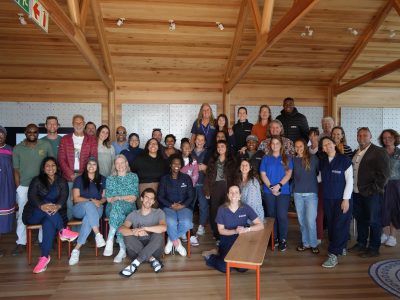
“Seit ihrer Gründung hat sich die Wilhelma immer weiterentwickelt und auf gesellschaftliche Veränderungen reagiert. Mit dem Masterplan 2035+ schlagen wir nun ein neues Kapitel unserer Geschichte auf. Erstmals haben alle Fachbereiche und Stabsstellen gemeinsam ein Zukunftsbild für die Wilhelma konzipiert.”
Since its founding the Wilhelma has always developed further and responded to changes in society. With the Masterplan 2035+ we are opening a new chapter in our history. For the first time all departments and staff units have jointly designed a picture of the future for the Wilhelma.
Dr. Thomas Kolpin, director of the Wilhelma, in a statement translated from German
One important qualification
The Wilhelma is explicit that the Masterplan is a strategic framework, not a construction schedule. Every project in it is subject to financing, and can only be advanced within the money and staffing actually available. That caveat is in the zoo’s own announcement, and it is worth carrying into any reading of the timeline.
Context
The Wilhelma draws more than 1.8 million visitors a year, making it one of the most popular attractions in Baden-Wurttemberg and the largest out-of-school learning site in Stuttgart. More than 330 people work across the garden and the outlying grounds-maintenance sites. The institution puts over one million euros a year into more than 40 international species conservation projects.
Two of the plan’s smaller steps have already landed. The facility for San Francisco garter snakes that the Masterplan cites as a completed step opened in July 2026, and the Wilhelma’s conservation funding was in the news again in August when the numbat was downlisted two categories on the IUCN Red List.
Source: Wilhelma, July 28, 2026. The Kolpin quotation is translated from German.
Quick answers
- What is the Wilhelma Masterplan 2035+?
A development strategy running to 2035 and beyond, presented by director Dr. Thomas Kolpin on July 28, 2026. It is the first Wilhelma plan written with every department contributing to one picture of the future.
- What is Kui Buri?
A new Asian elephant complex that broke ground in January 2026, described by the Wilhelma as the first fission-fusion facility for the species. Baden-Wurttemberg is investing around 68.5 million euros, of which 15 million comes from the zoo's supporters association. The build is expected to take three and a half to four years.
- What else is planned?
Near term, new Narawntapu and Tasmania sections in Terra Australis, a marmoset tree, and new raptor and owl aviaries. Medium term, a Gir Forest area for Asiatic lions, striped hyenas and rusty-spotted cats. Long term, modernizing the 1960 aquarium and terrarium building and converting the Moorish Country House into a Madagascar dry forest house.
- Is the plan funded?
No. The Wilhelma states that every project in the Masterplan is subject to financing and can only advance within available money and staffing.