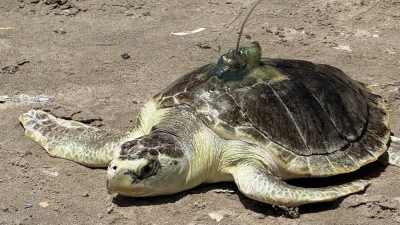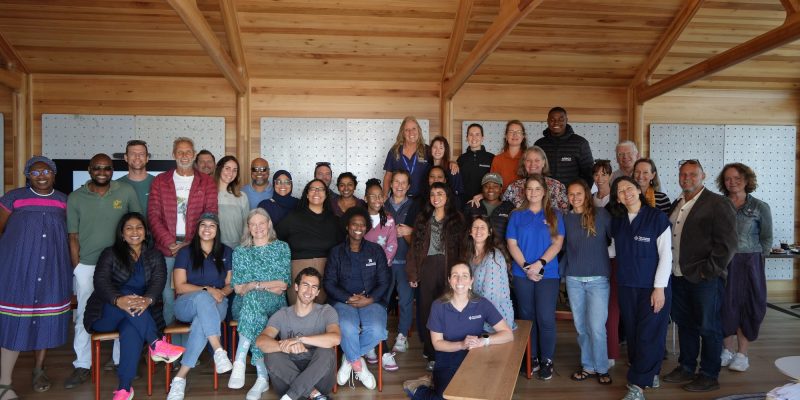
South Africa has been protecting sea turtles on its nesting beaches since 1963. What it has not had is a single agreed list of what to do next. Forty-five people from sixteen organizations spent three days at the Two Oceans Aquarium in Cape Town working on one, and the aquarium published its account of the meeting on October 23, 2026.
The National Sea Turtle Workshop ran from September 7 to 9. It was convened by the Two Oceans Aquarium Foundation’s Turtle Conservation Centre in its role within South Africa’s National Sea Turtle Working Group, and co-facilitated by Professor Ronel Nel, currently president of the International Sea Turtle Society.
Who was in the room
The working group was established in 2024 to connect the country’s three main turtle rehabilitation facilities with the people who study, monitor and regulate turtles. Those three are the Turtle Conservation Centre itself, the Bayworld Oceanarium in Gqeberha, and the South African Association for Marine Biological Research.
Around them at the workshop sat the Department of Forestry, Fisheries and the Environment, Ezemvelo KZN Wildlife, SANBI, CapeNature and CapMarine, plus academics and students, non-profits, citizen scientists, and filmmakers from Nature and Environment Wildlife Filmmakers. Discussion was organized around the six principles of the Indian Ocean and South-East Asian marine turtle conservation plan: threat reduction, habitat protection, population research, the relationship between people and turtles, coordination, and resources.
The part South Africa gets right
Ezemvelo KZN Wildlife has run one of the longest continuous turtle monitoring projects anywhere since 1963. Six decades of protecting and counting loggerhead sea turtles and leatherback sea turtles on the KwaZulu-Natal nesting beaches has substantially reduced the threats those animals face while ashore and, on the aquarium’s account, contributed significantly to the recovery of the country’s loggerhead population. It has also produced the long data series on loggerhead and leatherback reproductive ecology and population trends that satellite tracking, genetics and dispersal modeling now build on.
The newer finding is about turtles that never nest there at all. Surveys along the east coast between 2020 and 2022 logged more than 1,000 sightings on protected reefs, most of them juvenile and subadult green sea turtles and hawksbill sea turtles. South African waters, in other words, are a nursery for green turtle and hawksbill turtle populations that belong to other countries, which gives the country obligations it did not set out to take on.
The part it does not
The workshop was blunter about the gaps than most conference write-ups are.
Very little is known about how turtles use the south and west coasts or the estuaries, how many those habitats can support, or whether their condition is improving. Participants discussed working toward mapping Important Marine Turtle Areas in the region in 2028, under the IUCN framework for identifying critical habitat and migration routes.
And the threats have moved offshore, where they are much harder to count. Ghost fishing gear, bycatch, shark-control nets and plastic ingestion are already well documented in South Africa. The full effect of commercial fishing, climate change, vessel traffic and marine mining is not.
A third theme was about people rather than animals. Dr Nina Rivers and Loyiso Dunga argued that coastal communities with long cultural and spiritual connections to the sea have historically been left out of conservation planning, and pressed for marine protected areas to be managed in a way that brings local and Indigenous knowledge in rather than around it. Judy Mann-Lang made the communication case: caring for turtles means caring for people, and positive stories move more than warnings do.
“It was really quite wonderful to spend intentional time together, and we are so grateful for the time and effort each participant made to participate,” said Talitha Noble-Trull of the Turtle Conservation Centre. “We particularly appreciated the willingness to reflect honestly, have difficult conversations, and think together about where we are and where we need to go.”
Nine priorities
The workshop closed with nine agreed priorities. They include stronger national coordination, a shared database so monitoring and research data can actually be reached, wider turtle rescue networks and citizen science along the coast, reduced fisheries threats, better understanding of habitat use, and secure funding for long-term monitoring. The rest are about people: skills and livelihood opportunities for coastal communities, co-management, and public education.
Professor Nel ended by asking each participant what they personally would contribute, which is a harder question than it sounds at the end of three days of agreement.
Which zoos pay for this
The Turtle Conservation Centre is run by the Two Oceans Aquarium Foundation, the aquarium’s own non-profit, and the aquarium is a WAZA member and a founder member of the African Association for Wildlife in Human Care. We looked for an accredited zoo or aquarium outside South Africa funding the center or this workshop and did not find one named.
That is worth stating precisely, because overseas institutions do appear elsewhere on the foundation’s conservation pages. The Florida Aquarium, Georgia Aquarium and Zoos Victoria are named as supporters of its African penguin campaign. That is a different program, and none of the three is credited with the turtle work, so none of them is attached to this story.
The two South African facilities in the room are a different matter. Two Oceans hosted the workshop and runs one of the three rehabilitation centers; Bayworld runs another. Both are named in the aquarium’s own account.
The center’s rehabilitation and release work is the visible end of all this: we wrote about the last satellite update on Nori, a green turtle released after two years there, earlier this week.
The full workshop report is on the Two Oceans Aquarium site.
Quick answers
- What was the National Sea Turtle Workshop 2026?
A three-day meeting held from September 7 to 9, 2026 at the Two Oceans Aquarium in Cape Town, bringing 45 participants from 16 organizations together to agree shared priorities for sea turtle conservation in South Africa. The aquarium published its account on October 23, 2026.
- Who convened it?
The Two Oceans Aquarium Foundation’s Turtle Conservation Centre, in its role within South Africa’s National Sea Turtle Working Group, co-facilitated by Professor Ronel Nel, president of the International Sea Turtle Society.
- What is the National Sea Turtle Working Group?
A body established in 2024 that connects South Africa’s three primary turtle rehabilitation facilities, the Turtle Conservation Centre, the Bayworld Oceanarium and the South African Association for Marine Biological Research, with researchers, wildlife managers, monitoring teams and government authorities.
- How long has South Africa been monitoring sea turtles?
Since 1963. Ezemvelo KZN Wildlife runs one of the world’s longest continuous turtle monitoring projects, protecting and counting loggerhead and leatherback turtles on the KwaZulu-Natal nesting beaches.
- What gaps did the workshop identify?
How turtles use the south and west coasts and estuaries is largely unknown, as is how many animals those habitats can support. Offshore threats are the harder problem: bycatch, ghost gear, shark-control nets and plastic are documented, but the full effect of commercial fishing, climate change, vessel traffic and marine mining is not.
- What were the nine priorities?
Stronger national coordination, a shared research and monitoring database, wider rescue networks and citizen science, reduced fisheries threats, better understanding of habitat use, secure long-term funding, skills and livelihood opportunities for coastal communities, co-management with those communities, and public education.
- Which zoos fund the Turtle Conservation Centre?
We looked for an accredited zoo or aquarium outside South Africa funding the centre or this workshop and did not find one named. The centre is run by the Two Oceans Aquarium Foundation, the aquarium’s own non-profit. The Florida Aquarium, Georgia Aquarium and Zoos Victoria are named as supporters of the foundation’s African penguin campaign, which is a different program.