
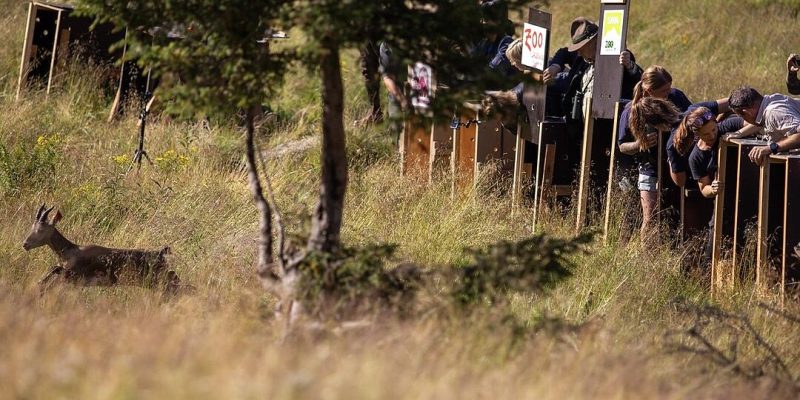
Ten Alpine ibex were released into the Sölktal in Austria at the end of July 2026, and one of them was a young female from Tierpark Hellabrunn in Munich. The crates were carried up in the early morning. The zoo says the animals were gone into the rocks and scree of the steep slopes moments after the doors opened.
Hellabrunn announced the release on August 5 and dated it to the previous week. It did not give the exact day.
Hellabrunn released the ibex together with Zoo Salzburg, the Wilhelma in Stuttgart and Zoo Ljubljana. It is the fourth time the Munich zoo has taken part in a release of this species.
What is the release actually for?
The goal is not to add ibex to the Alps. There are ibex in the Alps. The goal is to connect three populations that have been separate from each other, so that genes can move between them again.
An isolated population of a few hundred animals looks healthy from a distance and is quietly running down. Every generation, a little more of the variation is lost, and what is left is harder to replace because there is nowhere for new variation to come from. Dropping animals into the gap between populations is how you reopen the road. The Sölktal site was chosen in advance as ground that can support a stable herd and sits where it needs to sit.
Each released animal wears ear tags, so it can be identified and logged when somebody spots it later. That is the unglamorous half of a reintroduction: the part where you find out, over years, whether it worked.
A species that came back from a single valley
By the middle of the nineteenth century the Alpine ibex had been shot out of nearly the whole of the Alps. What survived was a small remnant in the Gran Paradiso area of Italy. Everything now walking the Alpine ridgelines descends from that.
Protection and a long series of reintroductions rebuilt the species over the following decades, which is why an ibex release in 2026 is a maintenance job on a recovery rather than a rescue. That is a good problem to have, and it is rare.
“Eine Auswilderung ist für uns als wissenschaftlich geführter Zoo der Moment, in dem Artenschutz unmittelbar sichtbar wird. Durch die Nachzucht unserer Tiere können wir wildlebende Populationen gezielt unterstützen und so zum langfristigen Erhalt einer Art beitragen.”
For us, as a scientifically run zoo, a release is the moment when species conservation becomes directly visible. By breeding our animals we can support wild populations in a targeted way and so contribute to the long-term survival of a species.
Rasem Baban, director of Tierpark Hellabrunn, in a statement translated from German
“Die Rückkehr des Alpensteinbocks in den Alpen ist eine echte Erfolgsgeschichte des Artenschutzes.”
The return of the Alpine ibex to the Alps is a real conservation success story.
Verena Dietl, Deputy Mayor of Munich and chair of the Hellabrunn supervisory board, in a statement translated from German
What is left at home
Nine Alpine ibex live at Hellabrunn now, including a yearling male and two young born this year. Planning for another release next year is already under way.
European zoos have been putting animals back on the ground all summer. Tiergarten Schönbrunn returned 8,000 moor frog tadpoles to Carinthia in July, and ZooParc de Beauval put 570 Critically Endangered snails back on a Madeiran island the same month.
Source: Tierpark Hellabrunn. Quotations translated from German.