
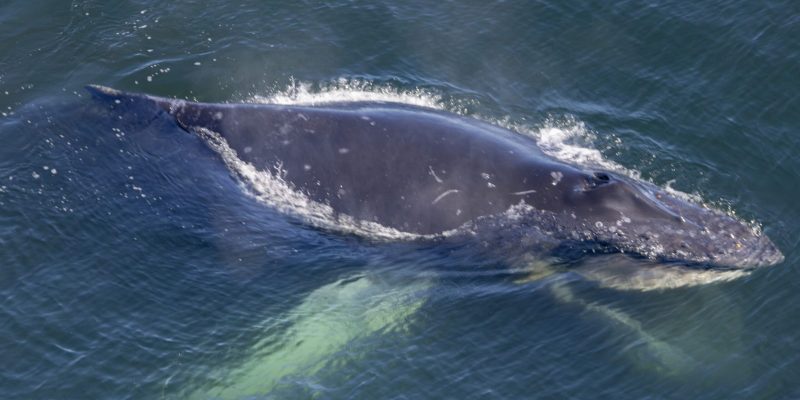
A humpback whale anchored to the seafloor by more than 3,000 feet of fishing line was cut free about 20 miles off the Oregon coast on July 26, 2026, by a team that included the crew of a working fishing boat.
The whale is alive and clear of the gear. It is also unlikely to survive, because the entanglement left its jaw stretched permanently open and it can no longer feed.
Spotted from a helicopter
Oregon State University research assistant Craig Hayslip saw the whale three days earlier from a U.S. Coast Guard helicopter surveying the coast for whales and fishing gear. He reported it to NOAA’s West Coast Entanglement Hotline, which calls out trained responders across the region.
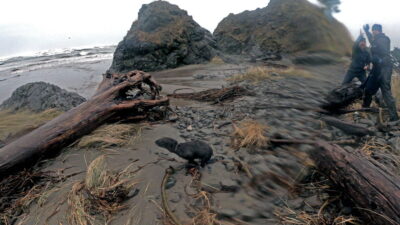
The gear holding the whale down was too heavy for the response team to lift. Responders asked local fisherman Poggy Lapham to bring his boat, the F/V Michele Ann, and use its hydraulic winch. That gave them the slack they needed to work.
The vessel brought up more than 3,000 feet of line, five sablefish pots, and individual commercial Dungeness crab traps from both Oregon and Washington. Responders and fishermen examined the gear together afterward. Its condition suggested it may have been derelict or lost, and NOAA Fisheries is following up with the owners.
What the case leaves behind
An online photo catalog identified the animal as a young humpback last seen in British Columbia in 2024.
“This is truly a heartbreaker because of the whale’s injuries, but we will learn so much from this case that can help us prevent future entanglements,” said Lauren Saez, who helped coordinate the response for NOAA Fisheries’ West Coast Region. “We disentangled the whale safely, got all the gear back, and had great collaboration with the fishing industry. Additionally, we got whale DNA samples from the gear to help identify which population it belongs to.”
Lapham put the question to his own industry. He said the entanglement should be a wake-up call to ask, “How can we better incentivize gear retrieval and tracking of lost gear to reduce this risk?”
The team had just trained for this
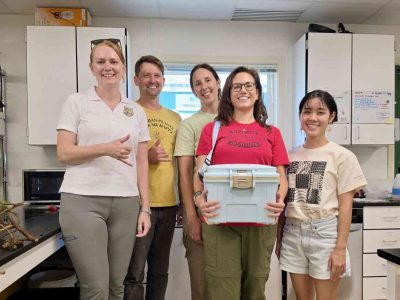
The responders from Oregon State University’s Marine Mammal Institute and the Oregon Coast Aquarium in Newport had recently trained with entanglement experts from Cascadia Research Collective in Olympia, Washington, who joined the response.
“The group readied their boats and gear for just such an incident,” said Jim Burke, director of animal care at the Oregon Coast Aquarium, who was on the team. A grant from the Oregon Wildlife Foundation paid for safety, documentation and response equipment, and NOAA Fisheries has funded training to widen the West Coast Large Whale Entanglement Response Program.
Only trained and authorized teams should approach an entangled whale.