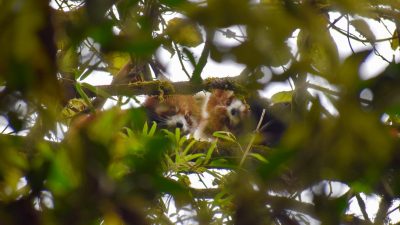

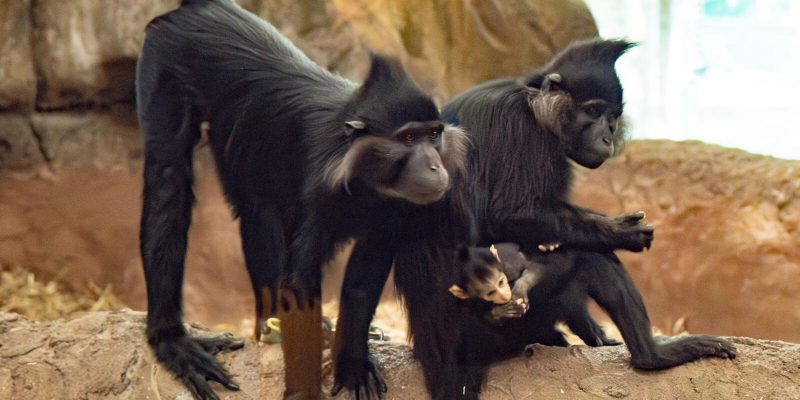
A black crested mangabey was born at Chattanooga Zoo on the evening of May 20, 2026. Suzy delivered a son, and the zoo is one of only eleven AZA-accredited institutions in the United States that keeps the species at all.
Suzy and Sam
Both parents are around 22 years old and both lived at other AZA zoos before Chattanooga. Sam arrived in 2012, Suzy in 2019. Each had reproduced before, but never with each other, and this is Suzy’s first offspring in a decade.
“Black crested mangabeys are fascinating and highly social primates,” said Darde Long, president and CEO of Chattanooga Zoo. “Suzy and Sam, the two mangabeys in our care, get along quite well and their baby is absolutely adorable. Suzy has had offspring at other zoos before and she is, once again, proving herself to be a great mother.”
Rare primates are having a strong year at American institutions: Central Park Zoo debuted twin critically endangered ruffed lemurs, and San Antonio Zoo raised cotton-top tamarin twins.
An animal most people have never heard of
Black crested mangabeys are slender, long-limbed monkeys found only in the rainforests of the Democratic Republic of the Congo. The name comes from the tuft of hair standing up on the head.
The IUCN lists them as vulnerable, one step from endangered, with the population down through poaching for meat and habitat loss. The IUCN’s own assessment says the species “is suspected to have declined by at least 30% over the past three generations (30 years).”
They are worth knowing about for what they do in a forest as much as what they are. Mangabeys are omnivores eating fruit, seeds, nuts, insects, lizards and snails, which makes them significant seed dispersers across the rainforests they live in.
What to listen for
Wild groups run to 10 or 20 animals and are highly vocal, with a vocabulary worth knowing before you visit. The staccato bark warns the group of danger. The whoop-gobble is performed only by adult males, and typically after conflict within the group, which makes it the sound of a male making a point after an argument.
Where to find them
Suzy, Sam and the baby can be seen in the Gombe Forest section, inside the Donovan Interpretive Center. The zoo asks guests to stay quiet in the building and behind the barriers at the viewing windows.
Newborn mangabeys weigh about a pound and spend nearly all their time clinging to their mother, starting to explore on their own after a few weeks and nursing until around six months. The zoo ran a public vote on the name, offering Simon, Sebastian or Sullivan, with the winner announced on June 23.