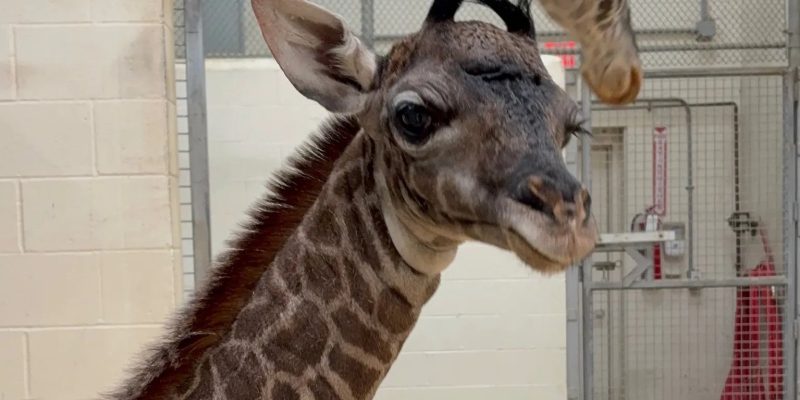
A giraffe calf was born at the Cincinnati Zoo & Botanical Garden just before midnight on 16 November, and for the first time in the zoo’s history, anyone who wanted to could watch it happen. Almost eight thousand people were on the livestream when twenty-year-old Tessa gave birth at Giraffe Ridge, and they stayed on it while the calf wobbled, stood and nursed.
The cams went up on YouTube in October, late in Tessa’s birth window, as an experiment. Four million people have watched them since.
Why was the birth on camera at all?
Because the zoo decided to try it, and then the audience arrived.
“We were blown away by the interest in the giraffe birth livestream. We launched the live cams on YouTube last month, toward the end of the birth window, and 4 million people have watched since then.”
That is Dave Jenike, the Cincinnati Zoo’s director. A giraffe birth is not a quick event to sit through, and it does not announce itself: the birth window runs for weeks, the labor is unpredictable, and a calf drops roughly six feet to the ground and then has to work out how to operate its own legs. Watching one in real time means watching a lot of nothing, and then everything at once.
What the audience actually saw was the part that worries people. A newborn giraffe does not stand immediately, and the gap between landing and standing is the most honest stretch of a birth broadcast.
“People were definitely worried at times when the calf took a while to move and stand, but that is part of the process. The baby is wobbly and still finding their footing, but we’ve been pleased to see nursing and good interactions with Tessa.”
That is Dr. Jessica Heinz, a veterinarian at the Cincinnati Zoo. Nursing and normal interaction with the mother are the two things keepers most want to see in the first hours, and both were on the stream.
What happens to the calf next?
A health check, and then a name. Veterinarians planned to examine the calf the day after the birth and said they would determine its sex then. The zoo will release details of the naming process after that. As of the announcement, the calf had no name and no publicly confirmed sex, which is the ordinary sequence for a newborn hoofstock calf rather than a sign of anything.
For now the cams are the only way to see either animal. The windows into the indoor habitat are covered to keep disruption down while mother and calf bond, and the giraffe deck is being kept quiet. The zoo has said it will post updates on when the pair are likely to be viewable in person.
The eighteenth calf since 1889
This is the eighteenth giraffe born at the Cincinnati Zoo, counting from 1889. The zoo states that the first giraffe calf born in any zoo in the Western Hemisphere arrived there in that year, which makes the lineage behind this birth about as long as the practice itself in this part of the world.
It is also Tessa’s fifth calf, and her last. At twenty, she is at the end of her breeding career, and the zoo has said so plainly rather than leaving it to be inferred.
Where giraffes actually stand
The IUCN Red List assesses the giraffe, Giraffa camelopardalis, as Vulnerable. That is the figure the zoo cited and it is the right one: habitat loss, trophy hunting, poaching and conflict across the species’ range are the pressures the assessment names. The animals at Giraffe Ridge are Masai giraffes, Giraffa camelopardalis tippelskirchi, according to the zoo’s own species page.
It is worth naming which list is being quoted, because giraffe taxonomy is unsettled and different authorities count different numbers of species and subspecies. The Vulnerable category above is the Red List’s assessment of the giraffe as a single species. We have not published a figure for the Masai giraffe specifically, because we have not opened an assessment that gives one.
Since 2014 the Cincinnati Zoo has partnered with the Wild Nature Institute, which works on giraffes and other wildlife in East Africa. That is the line connecting a calf in Ohio to the animals the Red List is worried about, and it is a real one rather than a gesture.
What the stream was really for
Four million views on a set of cams that were switched on as a late experiment is not a marketing result, it is an appetite nobody had measured. Eight thousand people chose to spend a Monday night watching a giraffe stand up for the first time, and then watched her nurse. The zoo is already planning the next update.
Written from the Cincinnati Zoo’s announcement of the birth at Giraffe Ridge, published 17 November 2026. For another giraffe calf story from this autumn, see our report on the two reticulated giraffe calves at Fossil Rim.
Quick answers
- Can you still watch the Cincinnati Zoo giraffe cam?
Yes. The zoo's live cams on YouTube are the only way to see Tessa and her calf at the moment, because the windows into the indoor habitat are covered to limit disruption while the two bond.
- Is the Cincinnati Zoo giraffe calf male or female?
It had not been announced at the time of the birth. Veterinarians planned a health check for the following day and said they would determine the calf's sex then, with details of the naming process to follow.
- How many giraffes have been born at the Cincinnati Zoo?
Eighteen, counting from 1889. The zoo states that the first giraffe calf born in any zoo in the Western Hemisphere arrived there that year.