Every autumn, polar bears gather along the shore of Hudson Bay near Churchill, Manitoba, and wait. They are waiting for sea ice, because sea ice is where the seals are, and a polar bear that cannot reach seals is a polar bear not eating. The wait now runs three to four weeks longer than it did in the 1980s.
That gathering is why Polar Bear Week exists, and why it falls when it does. Polar Bears International timed it to the bears’ annual congregation at Churchill, and this year it runs November 1 through 7. The Pittsburgh Zoo & Aquarium is marking it as a member of the organization’s Arctic Ambassador Center Network, which means the week is programming rather than a social media post.
What the extra weeks actually cost
The mechanism is unglamorous and worth understanding, because it explains the whole problem. Polar bears hunt from the ice. They also breed on it, and in some regions den on it and raise cubs there. When the ice-free season lengthens, the bears are pushed onto land for an extra month out of the year, and on land the food they are built to catch does not live.
Two consequences follow. The first is nutritional, and the zoo puts it plainly: longer stretches ashore, with far less to eat. The second is social, and it is the one people tend not to anticipate. Hungry bears spending more of the year on land spend more of the year sharing that land with people, and the risk of a dangerous encounter rises for both.
The driver is the ordinary one. Burning fossil fuels puts carbon dioxide into the atmosphere, where it holds in heat that would otherwise escape, and the Arctic sea ice responds. The zoo’s framing is that protecting that ice is not a single-species question: an entire circumpolar ecosystem is built on it.
What the Red List says, and which Red List
This is a case where naming the assessment matters, because there are two and they say different things.
The global assessment of Ursus maritimus lists the species as Vulnerable under criterion A3c. It was carried out on August 27, 2015, gives the population trend as Unknown, provides no global count of mature individuals, and carries an IUCN annotation saying it needs updating. A separate European regional assessment, dated December 9, 2022, also lists the species as Vulnerable but reports a stable trend and 1,300 to 2,500 mature individuals.
Those figures are not in conflict and neither is the global number. The European assessment counts the European subpopulation only, which is a fraction of a circumpolar range that also takes in Canada, Alaska, Russia and Greenland. A stable European subpopulation and a globally Vulnerable species are both true at once, and anyone quoting 1,300 to 2,500 as the world total is quoting the wrong document.
Why a zoo is the one telling you this
The Arctic Ambassador Center Network is Polar Bears International’s answer to a practical problem: almost nobody is going to Churchill. The bears most Americans will ever stand in front of are the ones in accredited zoos, and the network exists to turn those encounters into something more durable than a photograph. The role the Pittsburgh Zoo and Aquarium has taken on is to work on its own city, with its own bears.
The zoo has been building out this kind of field-linked programming for a while, including the role its staff play in the AZA SAFE red panda program.
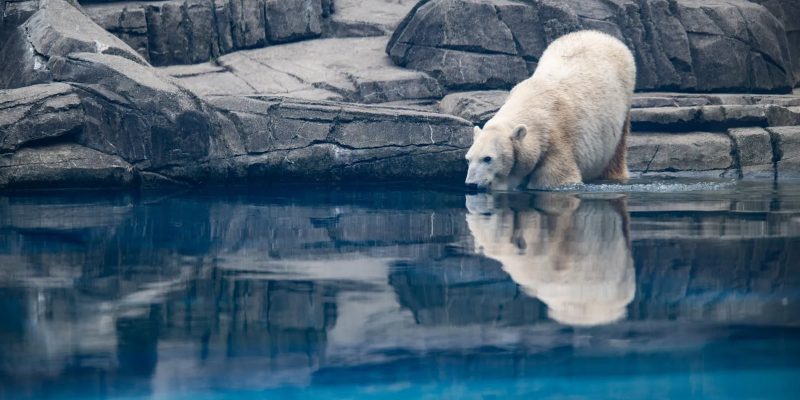
Polar Bear Week runs through Saturday. If you are in Pittsburgh before then, the bears are the reason the week has a name, and standing in front of one is still the most effective argument anybody has made for the ice they need.
Source: Pittsburgh Zoo & Aquarium, “Icy Icons Worth Protecting,” November 5, 2026.
Quick answers
- When is Polar Bear Week 2026?
November 1 through 7. Polar Bears International timed it to the bears' annual gathering near Churchill, Manitoba, where they wait on shore for Hudson Bay to freeze so they can hunt seals from the ice.
- How much longer are polar bears spending on land?
Three to four weeks longer than in the 1980s in some regions, because the ice-free summer has lengthened by that much.
- Why does time on land matter to a polar bear?
They hunt, breed and in some regions den on sea ice. On land the prey they are built to catch is not there, so a longer ice-free season means a longer fast. It also puts hungry bears near people for more of the year, which raises the risk of dangerous encounters for bears and people alike.
- Is the polar bear endangered?
The IUCN Red List global assessment lists Ursus maritimus as Vulnerable under criterion A3c. That assessment was carried out on August 27, 2015, gives the population trend as Unknown, provides no global count of mature individuals, and carries an annotation saying it needs updating.
- What are the 1,300 to 2,500 polar bears some sources cite?
That figure is from the separate European regional assessment, dated December 9, 2022, which also lists the species as Vulnerable but reports a stable trend. It counts the European subpopulation only, not the global population, whose range also takes in Canada, Alaska, Russia and Greenland.
- What is an Arctic Ambassador Center?
A zoo or aquarium in Polar Bears International's network that commits to conservation action and to turning visits with its own polar bears into engagement with wild ones. The Pittsburgh Zoo & Aquarium is a member.