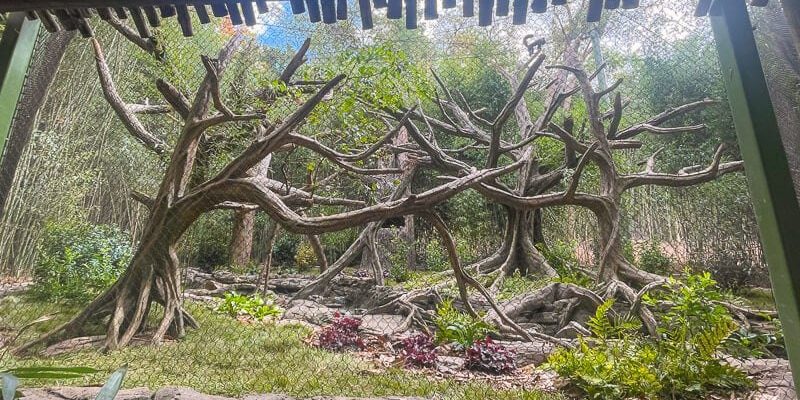
Nashville Zoo has put nine red-backed bearded sakis into a new habitat on Bamboo Trail, and the thing to understand about it is the trees. They are climbing structures with feeders built inside them, so the food is distributed through the canopy rather than put down in a bowl.
Nashville Zoo at Grassmere unveiled the exhibit on Saturday, September 26, 2026. It sits on Bamboo Trail between the clouded leopards and the red-ruffed lemurs.
Why build the yard upward
A bearded saki is a highly arboreal monkey, which means it spends essentially its whole life above the ground. Designing for that animal is a different problem from designing a paddock. The zoo filled the space with trees that work as climbing structures and elevated pathways, so that moving between two points is a matter of climbing, jumping and traversing rather than walking across a floor.
The feeders inside the tree work are what turn the structure into something an animal has to read. Food and enrichment go into different points in the canopy, so a saki covers the habitat searching for them the way it would forage through a forest. Keepers can move the feeding points around, which means the same yard poses a slightly different question week to week.
What the zoo says it is for
“We wanted to bring bearded sakis to the Zoo because they are a really interesting species that gives our guests the opportunity to learn more about the diversity of species in the Amazon rainforest,” said Rick Schwartz, Nashville Zoo’s president and CEO. “They are highly arboreal, social animals with many natural behaviors for guests to see. Most importantly, they are a great ambassador animal for the Amazon Rainforest and can help us connect guests to the importance of protecting rainforest habitats and the wildlife that depends on them.”
That ambassador argument is doing real work here, because the species itself is not a conservation emergency and the zoo does not claim it is. The animal is a way into the forest it lives in.
What is a red-backed bearded saki?
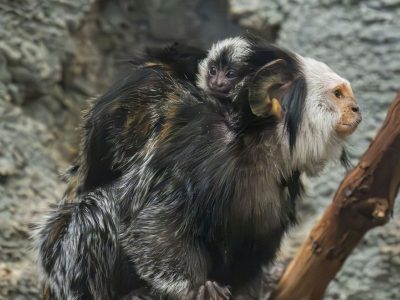
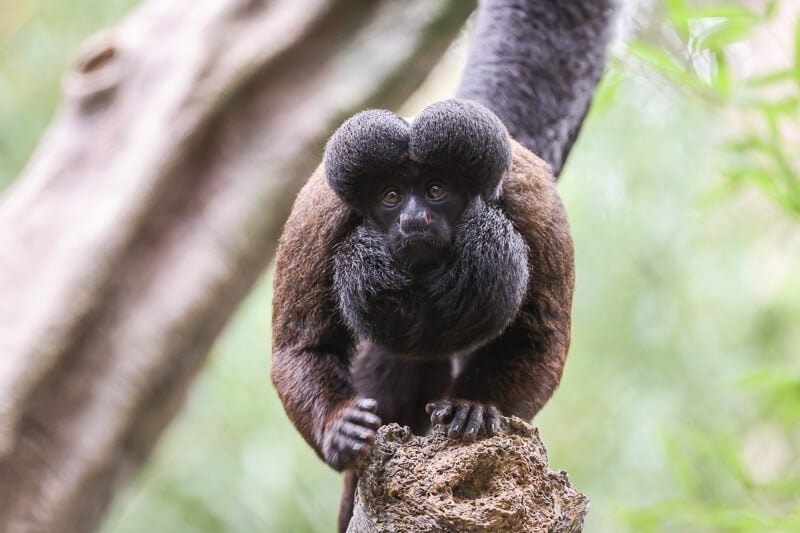
The red-backed bearded saki, Chiropotes chiropotes, is a New World monkey from Brazil, French Guiana, Guyana, Suriname and Venezuela. It has a thick beard and a rounded tuft of hair on each side of the head, and dense body fur running from red to yellowish gold. The tail is as long as the body, bushy, and not prehensile, which for a monkey that lives in the canopy means the hands and feet do all of the holding.
Bearded sakis are mainly seed and fruit eaters, with insects, larvae and spiders in the diet as well. They take food from roughly 100 plant species and have dental adaptations that let them crack open hard pods, which is the part that explains the feeders: this is an animal that expects to work for a meal. They prefer the interior of intact upper primary rainforest, often near streams, and are rarely found at forest edges.
Where the listing stands
The zoo describes the species as least concern on the IUCN Red List, and that is correct. The assessment of Chiropotes chiropotes lists it as Least Concern with a stable population trend, and gives the same five range countries the zoo names.
One qualifier is worth having. That assessment was carried out on January 26, 2015 and published in 2018, and the Red List itself annotates it “needs updating.” It also records no figure for the number of mature individuals. So least concern is the current answer, drawn from a decade-old look at an animal whose forest has been under pressure throughout, and the zoo’s own list of long-term threats, habitat loss and fragmentation, hunting and climate change, is the reason that gap is worth naming.
What else Nashville does with primates
The zoo pairs the exhibit with field partnerships: RAREC in Peru, which rescues, rehabilitates and releases Amazonian wildlife and runs community education, and Proyecto Tití in Colombia, which works on the critically endangered cotton-top tamarin. Nashville also has a long record with confiscated and rescued primates, including three infant spider monkeys taken out of the illegal pet trade and placed through the AZA Wildlife Confiscations Network.
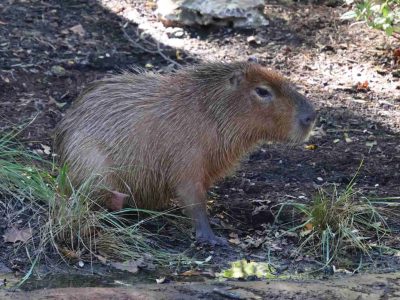
The saki yard is the second piece of South American habitat the zoo has opened in a month. It followed the multi-species grassland built on the old tapir yard, which opened three weeks earlier with capybara, a giant anteater, rhea and screamers in it. Between the two, a visitor walking the south end of the zoo now passes a fair amount of South America.
Quick answers
- When did Nashville Zoo's bearded saki habitat open?
The zoo unveiled it on Saturday, September 26, 2026, announcing it the day before. The habitat is on Bamboo Trail, between the clouded leopards and the red-ruffed lemurs.
- How many bearded sakis does Nashville Zoo have?
Nine red-backed bearded sakis live in the new habitat.
- What is different about the habitat's design?
It is built upward rather than outward, because the species is highly arboreal. The climbing trees carry built-in feeders, so food and enrichment are spread through the canopy and the animals have to move through the space to find them. Keepers can change where the feeding points are.
- What is a red-backed bearded saki?
Chiropotes chiropotes, a New World monkey from Brazil, French Guiana, Guyana, Suriname and Venezuela. It has a heavy beard, a rounded tuft of hair on each side of its head, and a bushy tail as long as its body that is not prehensile. It eats mainly seeds and fruit and can crack hard pods.
- Is the red-backed bearded saki endangered?
No. The IUCN Red List assesses Chiropotes chiropotes as Least Concern with a stable population trend. The assessment was carried out on January 26, 2015, published in 2018, and carries an IUCN annotation saying it needs updating.
- What conservation work does Nashville Zoo do in South America?
The zoo partners with RAREC in Peru, which rescues, rehabilitates and releases Amazonian wildlife and runs community education, and with Proyecto Titi in Colombia, which works on the critically endangered cotton-top tamarin.